
A lava dragon
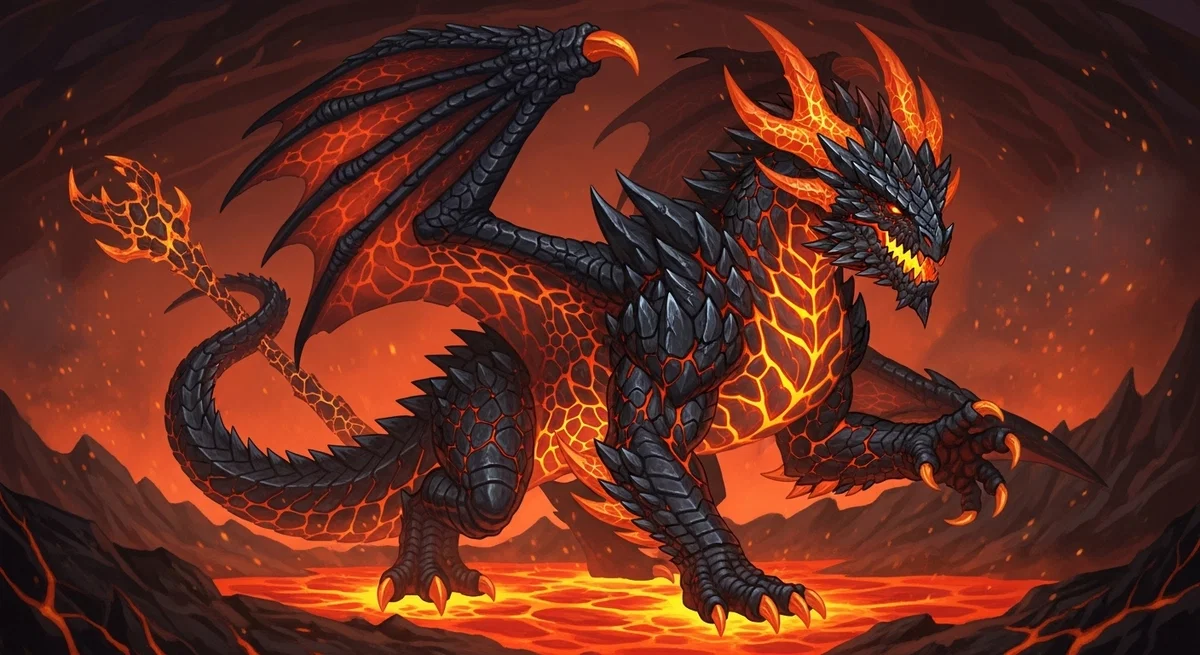
Species Name: Igndraco pyroclastus
Common Name: Lava Dragon
Classification:
Magmaborn Pyrodraconid
Homeworld / Habitat:
Lava Dragons dwell deep within active volcanic calderas, flowing lava tubes, and subterranean magma chambers scattered across Thalassor. They thrive in extreme heat zones where molten rock reshapes the land and volcanic vents release sulfurous gases.
Physical Characteristics:
Average Height: 3.5 meters at the shoulder
Average Length: 14–16 meters, robust and heavily muscled
Scales: Thick, obsidian-black with glowing fissures that pulse like molten lava veins; scales radiate intense heat but are nearly impervious to fire
Eyes: Fiery orange with slit pupils, seeming to flicker like burning embers
Distinctive Features: Massive, jagged horn crests resembling cooled lava flows; tail tipped with a molten-glass club used for smashing and forging; claws like volcanic glass shards, razor sharp and heat-hardened
Lifespan:
400+ years. Their growth is slow but steady, and they become more powerful as they age and absorb geothermal energy.
Biology:
Lava Dragons have specialized heat-resistant organs that recycle geothermal energy into metabolic power. Their blood contains molten minerals that remain liquid at extreme temperatures, allowing them to survive immersion in lava flows. Internal chambers can superheat gases, enabling them to expel fiery blasts or streams of molten rock.
Diet:
Primarily consume sulfur-rich minerals, volcanic gases, and occasional rock-boring creatures. They may also absorb raw geothermal energy during periods of rest within magma pools. Carnivorous tendencies emerge during scarcity, with hunting of large magma-tolerant fauna.
Culture & Society:
Social Structure: Territorial and solitary except during the rare “Firestorm Conclave” where elder dragons congregate at active volcanic vents for mating and knowledge exchange
Language(s): Use low-frequency rumblings, crackling sounds like cooling lava, and flame gestures emitted through their breath and tail movements
Technology Level: Masters of natural forging; fashion armor and weapons from volcanic glass and cooled lava rock; create vast obsidian nests and fortresses near lava lakes
Customs / Rituals: Engage in the “Molten Rite,” where young dragons must dive into flowing lava and emerge without injury to prove their strength and resilience
Notable Beliefs: View lava as the “heartfire” of the world’s spirit; believe their role is to shape and renew the earth through destruction and creation, embodying the cycle of death and rebirth
Abilities / Powers:
Exhale torrents of molten rock and superheated gases capable of melting stone and steel
Skin radiates intense heat, deterring predators and melting obstacles
Can manipulate localized magma flows, reshaping terrain or creating barriers of molten rock
Highly resistant to thermal extremes, able to swim through lava as easily as air
History / Lore:
Ancient inscriptions tell of Lava Dragons as primeval forces who forged mountain ranges and valleys in their fiery dance. Legends say some dragons became living volcanoes themselves, their hearts igniting eruptions that reshaped continents. Revered and feared by many cultures as both destroyers and creators.
Relations with Other Species:
Complex relations with Fire Dragons—sometimes rivals, sometimes allies in volcanic territories. Earth Dragons respect their role in reshaping landscapes. They rarely interact with aquatic species except when rivers meet lava flows. Human societies near volcanoes worship or fear them, offering sacrifices to appease their wrath.
Current Status:
IUCN Status: Vulnerable (VU) – Increasing volcanic activity and human mining in volcanic regions threaten habitats. Conservation involves protecting volcanic ecosystems and establishing buffer zones around known lava dragon territories.
Created Jun 27, 2025
Updated Jun 27, 2025
Published Jun 27, 2025