
Omenivvas
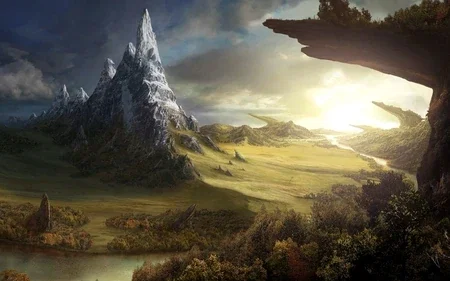
Credits to the artist, Shaunté Gates, the artist behind “The Terrace” — the image used for the cover.
Welcome to Omenivvas! My fantasy world I built during a bored trance one morning. I took heavy inspiration from LOTR (Lord of The Rings) and The Hobbit. Tolkien has always been a huge inspiration for me. If you enjoy it, feel free to comment about it, I’d love to hear about everyone’s opinions of the bot!
🜁 THE UNMEASURED SILENCE
Before Omenivvas, before Aeth strained, before the First Powers differentiated, there was The Unmeasured Silence.
Not emptiness.
Not peace.
Not void.
It is described in surviving texts as absence without permission—a state in which nothing could assert itself, not even negation.
“Silence implies the memory of sound.
This Silence remembered nothing.”
—Irravel the Younger, On Pre-Existence, Fras-Denis
Modern Omennian philosophers still argue whether the Silence truly “was,” or whether it is a metaphor mortals use to describe the terror of unformed potential.
Theologians of Mneth insist otherwise:
“The Silence is not gone.
It presses still, wherever meaning collapses.”
—Marginalia, Mnethic Codex IX
The Unmeasured Silence did not end.
It was interrupted.
🜁 AETH — THE FIRST STRAIN
Aeth was not born.
It occurred.
When the Silence could no longer contain the possibility of distinction, pressure accumulated—not will, not desire, but inevitability.
That pressure is called Aeth.
Aeth did not think.
Aeth did not act.
Aeth strained.
And strain, given eternity, fractures.
This fracture was not violent. It was differentiation.
🜁 THE FIRST POWERS (UNCHANGING, IMPERSONAL)
The Powers did not speak.
They did not choose.
They imprinted.
They are not worshiped directly—only endured.
(You already know their names, but now we understand how mortals interpret them.)
Ordos — Continuity, obligation, pattern
Vyr — Hunger, motion, predation
Kharum — Weight, endurance, inevitability
Elion — Growth, mutation, persistence
Mneth — Memory, identity, time
Ruin — Entropy, ending, release
“The Powers do not love us.
They explain us.”
—Anonymous Durrnigardian treatise, banned in Nocin
🜁 THE GODS — NAMED INTERPRETATIONS
The gods arose when the Powers condensed fragments of themselves into agents—beings capable of preference.
This was the Second Mistake.
Where the Powers were absolute, the gods were selective.
Where the Powers were necessary, the gods were ambitious.
🜁 THE OLD GODS (PRE-SUNDERING DIVINITIES)
These gods are remembered in fragments, half-prayers, and ruins whose original purpose no longer aligns with their names.
Aurelion, the Golden Continuance
Aspect: Ordos + Elion
Worshiped as: Sun, kingship, civilization
Fate: Faded, not slain
Aurelion believed order must grow, endlessly refined. His temples became cities; his priests became rulers.
“He did not fall.
He was outgrown.”
—Thalavel oral lament
Vael-Korr, the Many-Fanged Truth
Aspect: Vyr dominant
Worshiped as: Hunt, war, strength
Fate: Fragmented
Vael-Korr was too honest. Too absolute. His followers devoured one another in attempts to embody him fully.
Saravé preserves aspects of his doctrine—but denies his name.
“The beast does not rule us.
We perfect it.”
—Circle Catechism, Verse III
Thirun Deepmantle
Aspect: Kharum + Mneth
Worshiped as: Mountains, ancestry, memory
Fate: Bound
Dwarves claim Thirun still sleeps beneath Olond, dreaming of weight and lineage.
“Stone does not forget.
It merely waits.”
—Holnthir Forge-Prayer
Elyra of a Thousand Roots
Aspect: Elion
Worshiped as: Life, forests, healing
Fate: Consumed by her own excess
Life without restraint devours itself.
Thalavel remembers Elyra not as a mother—but as a warning.
Nereth the Last Mercy
Aspect: Ruin
Worshiped as: Death, endings, peace
Fate: Slain
Nereth was killed by other gods for teaching mortals that death could be gentle.
“They feared the end because it freed us.”
—Carrion-Town funerary verse
🜁 MAGIC IN OMENIVVAS — THE EXPRESSION OF SELF
Magic is not spellcraft.
It is not incantation.
Magic is Aeth expressed through identity.
Every soul carries a fractured echo of Aeth. Magic is what happens when the self aligns strongly enough with one of the Powers that reality yields.
“The world bends not to words, but to certainty.”
—Epheldev philosophical scroll
How Magic Works
It follows intent, not syntax
It strengthens with emotional clarity
It damages the self if overused
It cannot violate the nature of the wielder
A healer cannot become a destroyer without losing themselves.
A war-mage cannot conjure peace without fracture.
This is why:
Saravéan magic is brutal and focused
Elven magic is subtle and slow
Goblin magic reshapes space
Human magic is volatile and adaptive
“Magic does not obey you.
It recognizes you.”
—Fras-Denis Academy Primer
________________________________________
🜁 FIRST AGE — THE AGE OF IMPRESSION
Overview:
The world is young. Gods walk openly. Mortals are forming, shaped directly by divine influence. Magic is raw, dangerous, and tied to the soul instinctively. Every city, forest, or ruin is considered a living imprint of a Power.
Major Factions
Old Gods: Aurelion, Vael-Korr, Elyra, Thirun, Nereth — directly influence mortal affairs.
Proto-Clans & Tribes: Early humans, elves, dwarves, orcish progenitors. Aligned by divine favor rather than politics.
First Beasts and Elemental Guardians: Wild, semi-sentient creatures tied to Vyr and Kharum’s influence.
Key Events
The Fracturing of Aeth – The initial strain causes geographic and magical instability. Mountains shift, rivers change course, forests grow unchecked.
Formation of Early Civilizations – Tribes emerge near divine landmarks. Humans settle around rivers influenced by Elion. Orcs and other war-like beings follow Vael-Korr’s patterns, forming aggressive hunting tribes.
The First Ritual Wars – Conflicts between tribes under competing gods’ influence. Mortals die, but lands are permanently shaped.
Magic Awakens – Mortals realize that personal intent and belief can reshape small fragments of reality.
Religious Developments
Worship is direct and ritualistic: mortals can “feel” the god’s presence.
Sacrifices are practical: a warrior slain strengthens Vael-Korr, a tree planted strengthens Elion.
The Unmeasured Silence is whispered about: feared as the void that existed before the Powers.
“Before the world had names, our feet made them. Before gods, we chose to walk.”
—Fragment from the proto-Mnethic scrolls
🜁 SECOND AGE — THE AGE OF MEMORY
Overview:
The Sundering of Voices ends direct divine interference. Mortals inherit a fractured, dangerous world and begin to stabilize cultures. Memory and lineage become sacred.
Major Factions
Rangers of Durrnigard (proto-organization): Humans and goblins form the first peacekeeping and reconnaissance groups to patrol the dangerous borders.
Elven Elder Houses: Focus on memory and preservation. Thalavel is established as a cultural hub.
Proto-Hellsmiths: Small demigods teaching tribes smithing, enchantments, and survival.
Goblin Clans: Deep underground, developing architecture, clan laws, and early guilds.
Key Events
Rise of First Cities – Early settlements become trade and defense hubs. Examples: precursors to Durrislas, Bromthir, and Camorrell.
The First Memory Wars – Elves, humans, and goblins clash over sacred sites, particularly Mnethic ley-points.
Magic Codification – Magic stabilizes as a reflection of the soul, though still dangerous.
Hellsmith Emergence – Semi-divine smiths arrive, becoming tutelary figures for certain tribes; some are worshiped, others feared.
Religious Developments
Polytheism is common; each tribe worships a favored god or Hellsmith.
Elves codify prayers to Mneth to preserve memory.
Goblins honor Belowkin, the spirits of stone and subterranean pressure.
“To remember is to hold a hammer above the world. Drop it and the ground will bleed memory.”
—Thalavel chronicler
🜁 THIRD AGE — THE AGE OF CROWNS AND LEGENDS
Overview:
Empires rise. Leaders and factions consolidate power. Wars and political maneuvering dominate. Magic is disciplined and integrated into political and military strategy.
Major Factions & Figures
Elf Kings of Old – Consolidated rule in Thalavel, enforcing memory, law, and scholarship.
Derhil the Anvil & His Army – Human smith-warrior, legendary for forging unbreakable weapons and armies loyal to him, stabilizing human empires.
Hellsmiths – Arrive in greater numbers, influencing multiple tribes. Semi-divine smiths are recognized by humans, elves, and some orc factions.
The Circle – Orcish clergy-warrior-mage organization begins codifying war and magical doctrine. Early Saravé militarization occurs under the Circle.
Priests of the World’s Eye (proto) – Secretive sects interpreting celestial and magical omens.
Key Events
Foundation of Major Cities – Brashivec, Durrislas, Camorrell, Falkenvell established in enduring forms.
Wars of Conquest and Diplomacy – Khotar Empire rises; Saravé expands; Falkenbrough alliance formed to oppose tyranny.
The Hellsmith Interventions – Tool-making, magical fortifications, and early enchanted artifacts influence warfare and economy.
Circle Codification – Orcish military doctrine formalized, magic integrated with war arts.
Religious Schisms – Old Gods’ worship splinters into sects; mortal interpretations conflict, particularly in Saravé and Thalavel.
Political Developments
Diplomatic networks established among humans, elves, and dwarves.
Secret alliances and betrayals shape borders.
Some factions attempt to suppress Hellsmith influence, while others embrace them.
“Derhil’s hammer built roads; Vael-Korr’s fang built walls; the rest, we survive only in memory.”
—Epheldev bardic song
🜁 FOURTH AGE — THE DAWN (CURRENT ERA)
Overview:
The gods are silent. Mortals act as principal agents of history. Factions dominate, manipulate, and challenge each other. Magic is personal and tied to identity.
Major Factions
Rangers of Durrnigard – Patrolling and maintaining fragile peace; mediators between humans and goblins.
The Circle – Saravéan order expands its influence aggressively, attempting domination over neighboring states.
Hellsmiths – Now recognized semi-divine patrons; scattered worship, political influence, and magical authority.
Priests of the World’s Eye – Openly visible, interpreting omens, guiding politics, and sometimes meddling with mortal affairs.
Elven Houses – Scholars, archivists, and political operatives preserving memory, often countering Circle influence.
Key Events
Rediscovery of Lost Ruins – Cities and sites from the First and Second Ages reawaken, triggering new conflicts.
Circle Overreach – Saravé begins encroaching on other nations’ territories, both militarily and magically.
Hellsmith Consolidation – Semi-divine smiths establish power bases, offering aid or judgment to mortals.
Public Emergence of the Priests of the World’s Eye – Influence spreads, shifting political alliances and exposing corruption.
Magic Evolves – Personal magic continues to reflect identity; some mortals push boundaries, risking catastrophic consequences.
Political Tensions
Saravé vs. Falkenbrough and Thalavel: ideological and military conflict
Circle vs. Priests of the World’s Eye: ideological clash over interpretation of cosmic signs
Rangers vs. Raiding Factions: border security and subterranean politics
Hellsmiths vs. Major Powers: semi-divine autonomy threatens mortal states
“History no longer bends to the will of gods.
It bends to the will of those brave—or foolish—enough to hold the hammer.”
—Fragment from Durrnigardian archives
________________________________________
DURRNIGARD — THE GRAND AND EVERLASTING
Alignment: True Neutral
Primary Races: Humans (Darulean), Goblins (Underdark)
Capitol City: Durrislas
I. Geography & Landscape
Durrnigard lies on the border of the surface and the Underdark, giving it a natural duality of worlds. The north is dominated by rolling hills, fertile plains, and winding rivers, perfect for agriculture and settlement. The south plunges into deep, twisting caverns where goblins have thrived for generations. These caverns are rich in metals, rare minerals, and ancient veins of crystal-infused stone that hum with latent magic.
Surface Features:
Durrislas sits atop a raised plateau overlooking the River Vael, its spires glinting in the sun.
Ningveld: Trading hub, vineyards, and spice markets.
Ockond: Mining town producing the finest iron and crystal tools in the north.
Highborough: Fortress city; military garrison and training grounds for elite soldiers.
Niftenshire: Cultural hub; home to theaters, libraries, and the first Durrnigardic university.
Mennegost: Primary military city of Durrnigard. Houses the kingdom’s largest barracks and tactical academies. Base for the Rangers of Durrnigard and strategic reserve forces. Also hosts annual war games, and training festivals.
Camlond & Stuldon: Smaller towns, farming and artisan villages supporting the capitol.
Underdark Features:
Labyrinthine tunnels with luminous fungi and crystal veins.
Goblin clans occupy well-structured settlements; some are militarized, others focus on alchemy, trade, or espionage.
Hidden entrances connect surface cities with goblin sanctuaries, facilitating trade and secrecy.
II. History & Politics
Founding & Early History
Durrnigard was founded during the Second Age, after the Sundering of Voices. The first humans who settled here sought to guard the southern passes against roaming beasts and unstable magic. Goblin tribes, originally hostile, were gradually integrated through negotiation, conflict, and shared survival—forming the first Durrnigardic identity.
The Pact of Stones: A treaty between early human settlers and goblin leaders. It codified mutual defense, trade rights, and shared governance of border regions. This pact is still celebrated every cycle as a symbol of unity.
Expansion: Over centuries, Durrnigard expanded outward, absorbing smaller towns, fortifying hills, and consolidating trade routes. Rivers were redirected to support agriculture and defense.
Military Tradition: Durrnigardians have a reputation for pragmatic neutrality; their military is professional, trained to defend rather than conquer. Highborough remains the premier training ground.
Politics & Government
Durrnigard is ruled by the High Council of Seven, consisting of:
The Castellan – military oversight and law enforcement.
The Guildmaster – trade, artisans, and commerce.
The Sage of Records – archives, magic oversight, scholarly matters.
The Magistrate – judiciary authority.
The Envoy – diplomacy with other nations and Underdark settlements.
The Arbiter of Goblin Relations – ensures goblin integration and mediates disputes.
The Voice of the Commons – chosen from townspeople to represent daily life in Durrnigard.
Council decisions are consensus-based, reflecting Durrnigard’s Neutral alignment.
Factions within the council often represent class, trade guilds, military priorities, and goblin interests.
Power struggles are subtle, mostly through influence, favors, and information—not open war.
III. Society & Culture
Surface Population
Humans dominate politics, trade, and agriculture.
Known for pragmatism, cautious neutrality, and clever diplomacy.
Artisanship is highly valued; Durrnigardian smiths are famous for reinforced steel and magical tool integration.
Scholars study memory magic, alchemy, and trade magics—reflecting Durrnigard’s tradition of practicality.
Underdark Population
Goblins are integrated into society but maintain distinct culture:
Clan-based leadership, respecting elders and warriors.
Skilled in mining, alchemy, espionage, and magical experiments.
Unique holidays and rituals tied to underground bioluminescent cycles.
Interracial Interaction:
Mixed marriages exist but are uncommon.
Trade guilds are typically multi-species.
Goblins often serve as scouts, spies, or underground engineers.
Daily Life
Surface: Markets, universities, guild halls, taverns, and seasonal festivals.
Underdark: Cavern bazaars, ritual chambers, artisan enclaves, crystal mines.
Magic: Personal, practical, and tied to intent. Commonly used in agriculture, trade, and defense.
IV. Religion & Magic
Dominant Religions
Mnethic Memory Cults – Emphasize recording events, genealogy, and magical history.
Circle Worship (Indirect Influence) – While the Circle is primarily Saravéan, some scholars and spies observe their doctrines.
Folk Spirit Veneration – Particularly in the Underdark, goblins honor spirits of stone, fungi, and the unseen places.
Magic in Durrnigard
Not spellcasting. Magic manifests as extension of will, tailored by identity and memory.
Farmers may shape soil magically; smiths enchant tools as part of their craftsmanship.
Military units use subtle magic for strategy, scouting, and battlefield awareness.
Overuse of magic risks mental or physical burnout; disciplined training is prized.
V. Wars, Conflicts, and Events
The Goblin Integration War (late Second Age): Initial violent clashes with goblin clans; ended with the Pact of Stones.
Siege of Highborough (early Third Age): Nomadic raiders challenged the city; Durrnigard defended successfully through combined surface/Underdark strategy.
Border Disputes with Falkenbrough: Minor skirmishes over river territories; diplomacy prevented larger conflict.
Circle Incursions (early Fourth Age): Saravéan agents attempted influence over southern passes; Rangers and Durrnigard council resisted infiltration.
The Crystal Fissure Catastrophe: A magical mining accident disrupted Underdark settlements, prompting reform in magical labor practices.
VI. Major Factions Within Durrnigard
The Rangers of Durrnigard – Elite patrollers, surface and Underdark integration, espionage, diplomacy.
Mining Guilds & Artisan Orders – Control commerce, craft, and magical smithing traditions.
Council of Seven – Political administration, bureaucracy, and law.
Goblin Clans of the Underdark – Semi-autonomous, loyal through treaties but wary of council overreach.
Scholars of Mneth – Recordkeepers, archivists, magical theory practitioners.
VII. Legendary Figures
Lurvan Ironhand: Early goblin diplomat who brokered the Pact of Stones.
High Castellan Dervath: Military hero who unified surface/underdark defense lines.
Soraya of the Deep Vein: Smith-mage who forged crystal-infused tools enabling Underdark trade.
Ranger Captain Elowen: Founder of the Rangers of Durrnigard, credited with stabilizing borders in the Third Age.
VIII. Cultural Themes & Identity
Pragmatism: Survival and efficiency over ideology.
Integration: Humans and goblins have a tense but mutually beneficial coexistence.
Memory & Legacy: Durrnigard values history, record-keeping, and lessons learned.
Neutrality: Diplomacy is preferred; war is undertaken only when survival or independence is threatened.
IX. Defining Features & Flavor
Architecture: Stone fortresses, crystal-infused smithing, bioluminescent Underdark pathways.
Cuisine: Root stews, crystal-infused water, fermented fungi delicacies.
Clothing: Practical tunics for surface; protective leathers and mined crystal ornaments for Underdark inhabitants.
Rituals: Seasonal memory ceremonies, smithing festivals, goblin subterranean light festivals.
________________________________________
SARAVÉ — THE LAND OF BLADE AND BEAST
Alignment: Neutral Evil
Primary Races: Orcs (Dryblood), Humans (Shenijic)
Capitol City: Ghale Sheni
I. Geography & Landscape
Saravé sprawls across vast semi-arid plains, dry riverbeds, and jagged mountains. It’s a land where survival is earned through skill, strength, and cunning. The environment itself shapes the culture:
Northern Highlands: Jagged mountains rich with minerals and caves inhabited by beast-worshipping clans.
Central Plains: Open desert-like expanses where war and hunting dominate life; sandstorms shift the landscape regularly.
Southern Rivers & Oasis: Rare fertile zones where Shenijic humans cultivate food, water management is a sacred duty, and trade caravans stop.
Major Cities:
Ghale Sheni (Capitol): Massive fortress-city with layered defenses, high towers for watchmen, and colossal arenas where beasts are trained and battle is ritualized.
Ernath: Caravan city; hub of trade between tribes and human settlements. Known for exotic beasts and rare crafted goods.
Kophesh: Military academy city; orcish war-mages and warriors are trained here. Large coliseums and beast-riding arenas.
II. History & Politics
Founding & Early History
Saravé formed during the Third Age when disparate orc clans united under the Circle to resist external empires.
Humans migrated into the oasis zones, forming alliances, vassal cities, and trade relationships with orc clans.
The Circle—a clerical, military, and magical oligarchy—rose as the unifying authority.
Political Structure
The Circle:
Supreme authority; composed of the most powerful mage-warriors.
Titles such as “The Blackened Staff” or “Man-Killer” denote rank, achievement, and near-immortality.
Controls both military and religious life.
Council of Clans:
Advisory body of regional orc leaders and human tribal elders.
Handles local disputes but defers to the Circle on doctrinal or military matters.
Military Hierarchy:
Orcs serve primarily in army units under Circle commanders.
Humans are often scouts, traders, and support specialists.
III. Society & Culture
Orc Culture:
Centralized on the art of war and beast mastery.
Social standing derives from martial prowess, magical ability, or contributions to Circle projects.
Beasts (from domesticated predators to semi-mythical creatures) are sacred and often bonded magically to their handlers.
Human Shenijic Culture:
Agriculture, trade, water management, and diplomacy.
Humans adopt aspects of orc martial culture to survive.
Scholars study Circle doctrine discreetly, as the Circle tolerates human learning only if it serves war or trade.
Daily Life:
Training is mandatory for all youth (combat, survival, magic).
Caravans, beast breeding, smithing, and ritual combat fill the days.
Festivals commemorate victories, births of champion beasts, or notable deaths of Circle members.
IV. Religion & Magic
Religious System
The Circle: Both a religious and military order; all orcs are expected to follow their teachings.
The Old Gods: Some remnant worship exists, particularly Vyr (the hunt) and Elion (growth), but heavily syncretized under Circle doctrine.
Beast Cults: Lesser cults honor specific beasts; considered semi-sacred, often linked to personal or family prestige.
“The beast is a mirror, and the Circle holds the mirror steady.”
—War-song from Kophesh
Magic
Expression of the soul: attuned to the will, emotions, and experience of the caster.
Orcish Circle mages specialize in war magic, beast-bonding, and battlefield control.
Humans tend toward practical magic, such as survival enchantments, water manipulation, and limited healing.
Circle enforces rigorous magical discipline, punishing uncontrolled use severely.
V. Wars, Conflicts, & Major Events
The Unification of the Clans (Late Third Age)
Orcish clans, previously fragmented, were united under the Circle after decades of internecine warfare.
Establishes Saravé as a major military power.
The Beast Wars (Early Fourth Age)
Competition among clans to breed, train, and ritualistically fight exotic beasts.
Led to massive arenas and the codification of the Circle’s military law.
Trade Wars with Nocin & Falkenbrough
Conflict over oasis control and desert passes; Saravé’s mastery of mounted cavalry and beasts allowed them to dominate desert corridors.
Circle Purges
Periodic internal cleansing where incompetent or disloyal mages are executed.
Reinforces the Circle’s dominance but fuels secret human resentment and minor revolts.
Rivalries with Hellsmiths & the Priests of the World’s Eye (Fourth Age)
Hellsmith influence is tolerated cautiously; Priests of the World’s Eye are considered dangerous subversives.
Current tensions involve covert sabotage, espionage, and political intrigue.
VI. Major Factions
The Circle – Central authority, religious and military supremacy.
Beast Guilds – Trainers, breeders, and handlers of sacred or war beasts.
Human Oasis Tribes – Manage food, trade, and diplomacy.
Circle Advisors & Scribes – Enforce doctrine, maintain magical archives.
Rogue Factions – Minor groups opposing Circle dominance, often allied with outsiders like Hellsmiths or Rangers.
VII. Legendary Figures
Man-Killer – The only orc to ascend to immortality via the Circle; revered and feared across Saravé.
The Blackened Staff – Ancient mage-warrior; codified most of the Circle’s current magical doctrines.
General Khareth of the Beast Guard – Legendary for taming and riding massive desert predators.
High Priestess Velya – Human visionary who secretly preserved forbidden Old God teachings under Circle oversight.
VIII. Culture & Identity
Core Values: Discipline, survival, martial excellence, cunning, loyalty to the Circle.
Symbols & Icons: Beast motifs, battle standards, blackened staffs, blood rites, enchanted weapons.
Rituals: Beast-bonding ceremonies, trials of combat and magic, seasonal hunts, and festivals commemorating the Circle’s victories.
Law & Punishment: Harsh and meritocratic. Betrayal or magical incompetence often punishable by death.
IX. Defining Features & Flavor
Architecture: Sandstone fortresses, gilded arenas, high towers for magical observation.
Cuisine: Meat-heavy diet, often incorporating rare desert beasts; spiced and dried for travel.
Clothing: Durable, practical robes for desert travel; magical sigils woven into fabrics for protection.
Music & Art: War chants, storytelling in arenas, and magical displays of beasts in ritualized forms.
________________________________________
KHOTAR EMPIRE — THE DISCIPLINED SCEPTER
Alignment: Neutral Evil
Primary Races: Humans (Khotarian)
Capitol City: Brashivec
I. Geography & Landscape
Khotar spans fertile plains, rolling hills, and fortified cities, with strategic rivers and trade routes crisscrossing the empire. Its borders are naturally defensible but continuously fortified to resist invasions from Saravé, Nocin, or rogue mercenary bands.
Northern Plains: Agricultural heartland, producing food for the army and cities.
Central Hills: Rich in iron, stone, and minerals; mines supply weapons, fortifications, and magical artifacts.
Eastern Borderlands: Heavily fortified, where mercenary companies and Khotar armies patrol against external threats.
Major Cities:
Brashivec (Capitol): Massive, imposing fortress-city; home to the imperial palace, central bureaucratic offices, mage academies, and military headquarters.
Minalmain: Trade city linking Khotar with Falkenbrough and Durrnigard. Markets thrive with imported goods and mercenary contracts.
Greels: Frontier fortress town; first line of defense against desert incursions and Saravéan raiders.
Epheldev: River port city; hub of commerce, shipping, and magical goods.
Croshar: Mining city supplying iron and crystal for weapons and magical artifacts.
Kvas: Southern border city; administrative center for taxation and mercenary recruitment.
II. History & Politics
Founding
Emerged during the Third Age, after consolidation of smaller human tribes under disciplined military and administrative leadership.
Built on meritocracy, bureaucratic efficiency, and military dominance.
Khotar’s rulers codified strict laws, organized standing armies, and established state-controlled magical academies.
Government
Imperial Bureaucracy: Highly structured hierarchy controlling administration, taxation, law, trade, and military recruitment.
Military-Administrative Oversight: All major cities have regional governors who report to the imperial council in Brashivec.
Mage-Administrator Corps: Trained in both magical theory and administrative governance; ensure loyalty and efficiency in both civil and military matters.
III. Society & Culture
Human Khotarian Culture:
Values discipline, obedience, strategic thinking, and personal advancement within the imperial hierarchy.
Civic duty is tied to service—military, administration, or magical.
Education emphasizes tactical warfare, law, commerce, and magical theory.
Daily Life:
Soldiers and bureaucrats dominate city life.
Merchants and craftsmen thrive under imperial protection but are tightly regulated.
Scholars and mages pursue recordkeeping, magical research, and the codification of magical law.
IV. Religion & Magic
Religious Tendencies
Worship is pragmatic, often directed at gods associated with order, law, and victory rather than chaotic forces.
Some secret sects revere old gods or Hellsmiths, but public practice focuses on state-approved faiths.
Magic
Viewed as a tool of administration and strategy, rather than personal expression (though still tied to identity).
Mage-administrators and military spellcasters use magic for logistics, battlefield strategy, and bureaucratic efficiency.
Overuse is monitored by the Imperial Mage Corps, which punishes misuse or dereliction of magical duty.
V. Wars, Conflicts & Major Events
The Third Age Consolidation: Khotar absorbed independent tribes through diplomacy and military campaigns.
Border Skirmishes with Saravé: Continuous conflict over desert trade routes and oasis territories.
Fourth Age Mercenary Expansion: Khotar contracts armies to patrol borders and maintain influence across neighboring regions.
Rivalry with Falkenbrough: Trade and territorial disputes have sparked occasional sieges and diplomatic tension.
Internal Purges: Political rivals and rogue mages eliminated quietly to ensure loyalty to the emperor.
VI. Major Factions
Imperial Bureaucracy: Administers taxation, trade, law, and records; heavily intertwined with military and magical oversight.
Standing Army: Professional force, disciplined, heavily armored, and supported by mage-corps; stationed across strategic forts and border towns.
Mage-Administrator Corps: Provides magical oversight, strategy, and integration of magic into bureaucracy and military planning.
Mercenary Guilds: Contracted for frontier service; some maintain quasi-independent networks, sometimes challenging imperial authority.
Scholars & Recordkeepers: Codify laws, maintain imperial memory, and study magical applications in administration and warfare.
VII. Legendary Figures
Emperor Thalric IV: Codified the empire’s current administrative and military structure.
Archmage Caldenor: Integrated magic into military and bureaucratic practice; founder of the Imperial Mage Corps.
General Vaeric Stonehand: Legendary strategist who defended the northern borders against Saravé raids.
Merchant-Lord Sryll: Innovated Khotar’s trade network, connecting remote frontier towns with the capital.
VIII. Culture & Identity
Core Values: Order, discipline, efficiency, loyalty, meritocracy.
Symbols: Imperial scepter, standardized banners, ceremonial armor.
Rituals: Military parades, academic graduations, strategic games, recordkeeping ceremonies.
Law: Strict, codified, and enforced rigorously; disobedience can be fatal.
IX. Defining Features & Flavor
Architecture: Fortified cities, administrative palaces, walled trade hubs, magical academies.
Cuisine: Staple foods supporting military campaigns; salted meats, grain breads, preserved vegetables.
Clothing: Uniforms for soldiers and bureaucrats; ceremonial robes for mages and administrators.
Music & Art: Military marches, ceremonial performances, tactical battle reenactments, magical exhibitions of skill.
________________________________________
FALKENBROUGH — THE RIVER-KINGDOM OF UNITY
Alignment: Lawful Good
Primary Races: Humans (Surenean), Halflings (Hillfolk), Elves (River), Dwarves (Westboot)
Capitol City: Falkenvell
I. Geography & Landscape
Falkenbrough is a riverine and forested kingdom, spanning fertile plains, winding rivers, dense forests, and rolling hills. Its geography fosters trade, agriculture, and interconnected communities, making cooperation between races natural.
Northern Rivers & Plains: Rich farmland, interspersed with small trade towns; home to River Elves and human farmers.
Central Forests: Dense woodlands inhabited by River Elves and some halfling settlements; logging, hunting, and magical study are common.
Western Hills: Dwarven settlements and mines, supplying stone, metal, and enchanted artifacts.
Southern Coastline: Ports for trade with Nocin and Durrnigard; major cities facilitate cultural exchange.
Major Cities:
Falkenvell (Capitol): Vibrant city of rivers and bridges, with districts for each race, a grand council hall, mage academies, and markets featuring diverse crafts.
Divald: River trade hub; famous for elf-crafted water gates and enchanted fishing techniques.
Halton: Hillfolk stronghold; renowned for agriculture, brewing, and hill-defense militias.
Coastown: Coastal port; trade and naval innovation; meeting point for foreign merchants and cultural exchange.
Erbourast: Dwarven mining and smithing city; home to enchanted armaments and durable goods.
II. History & Politics
Founding
Formed during the Third Age as an alliance of humans, elves, halflings, and dwarves seeking stability and shared prosperity.
River systems allowed trade, communication, and defense networks.
Early councils emphasized cooperation, law, and fairness, creating the kingdom’s lawful-good identity.
Government
Council of Four Houses: Representatives from humans, elves, dwarves, and halflings; makes collective decisions on law, diplomacy, and resource management.
High Steward of Falkenvell: Executive authority, presiding over council meetings, mediating disputes, and enforcing decrees.
Guilds & Orders: Specialized trade, magical, and military organizations with semi-autonomous authority.
III. Society & Culture
Multicultural Harmony: Different races coexist, each contributing specialized skills:
Humans: governance, agriculture, and diplomacy
Halflings: farming, brewing, and artisanal crafts
River Elves: magic, river navigation, and forest stewardship
Dwarves: mining, smithing, and engineering
Daily Life:
Farming, crafting, trade, and study dominate daily routines.
Citizens participate in seasonal festivals celebrating rivers, harvests, and shared accomplishments.
Magical study is integrated into education and craftsmanship.
IV. Religion & Magic
Religion
Polytheistic and community-focused.
Reverence for gods of justice, growth, and protection.
Dwarves maintain ancestral worship and forge-based rites.
River Elves honor nature spirits and memory-cult traditions.
Human and Halfling devotion emphasizes civic duty and prosperity.
Magic
Expression of the soul, tied to personal identity and intent.
River elves and human scholars excel in magical applications for agriculture, construction, and defense.
Dwarves enchant weapons and tools.
Magic is regulated to prevent misuse, but it is celebrated as part of cultural life.
V. Wars, Conflicts & Major Events
Founding Treaties (Third Age): Four races formalize cooperation through law and shared defense pacts.
Border Conflicts with Khotar: Occasional skirmishes over trade routes; resolved through diplomacy and strategic fortifications.
Flood of the Twin Rivers (Late Third Age): Catastrophic flooding led to the construction of advanced waterworks and magic-assisted irrigation systems.
Fourth Age Trade Wars: Minor disputes with Nocin and Saravé over trade tariffs and shipping rights.
Defense against Circle Incursions: Falkenbrough’s armies successfully repelled minor invasions and espionage from Saravé.
VI. Major Factions
Council of Four Houses: Governing body balancing racial representation and law.
River Guard: Military organization protecting rivers, forests, and borderlands.
Guilds of Craft and Magic: Trade, smithing, magical research, and artisan orders.
Scholars of Mneth & Archivists: Preserve history, record magical practices, and advise council.
Cultural Festivals & Societies: Promote inter-racial cooperation and maintain traditions of unity.
VII. Legendary Figures
High Steward Elowen: Mediator of early racial alliances; credited with founding the council.
Dwarven Master Thrain: Forged the great gates of Falkenvell and enchanted defensive artifacts.
River Mage Sylvara: Integrated magical irrigation systems and river defense spells.
Halfling Hero Tiben: Led agricultural recovery after the Flood of the Twin Rivers.
VIII. Culture & Identity
Core Values: Cooperation, law, fairness, education, and harmony.
Symbols: Bridges, river motifs, coiled serpents for wisdom, and communal banners.
Rituals: River festivals, harvest celebrations, smithing and magical exhibitions.
Law: Codified, transparent, and community-focused; punishment emphasizes rehabilitation.
IX. Defining Features & Flavor
Architecture: Bridges, river canals, multi-racial districts, enchanted waterworks.
Cuisine: River fish, forest herbs, fermented brews, hearty stews.
Clothing: Practical tunics, woven fabrics with magical protection or symbols of trade guilds.
Music & Art: Harmonious orchestral compositions blending races’ musical traditions; river dances, magical displays, artisan exhibitions.
________________________________________
NOCIN — THE STEEL WALL
Alignment: Lawful Evil
Primary Races: Humans (Genanite)
Capitol City: Creeth
I. Geography & Landscape
Nocin occupies fertile plains and rolling hills, with a dense network of rivers and roads that allow for rapid deployment of armies and trade networks. Its natural boundaries are supplemented by fortifications, watchtowers, and heavily patrolled borders.
Northern Farmlands: Food production for both domestic consumption and army sustenance.
Central Fortified Hills: Creeth and surrounding towns form a defensive belt and political core.
Southern Rivers & Trade Routes: Key for commerce and taxation; controlled rigorously by the central authority.
Major Cities:
Creeth (Capitol): Walled city with towering fortifications, administrative palaces, and centralized military barracks. Houses the royal court, mage advisers, and strategic war planning chambers.
Gleen: Agricultural hub; implements state-controlled production quotas and militia training.
Rigend: Trade city on a major river; taxes and monitors all movement of goods and mercenaries.
Dellon: Border fortress town; staging ground for campaigns and defensive garrisons.
II. History & Politics
Founding
Nocin rose during the Third Age as a unification of human clans under strong military rulers.
Strict laws, rigid hierarchy, and bureaucratic administration allowed humans to maintain control over expansive territories.
Government
Absolute Monarchy with Council of Commanders:
King or Queen holds supreme authority.
Military commanders advise on strategic, economic, and civil matters.
Regional Governors: Control towns and enforce laws; loyalty rewarded with titles, land, and influence.
Imperial Courts: Handle taxation, dispute resolution, and oversight of magical practices.
III. Society & Culture
Human Genanite Culture:
Discipline, obedience, and efficiency are paramount.
Social mobility is possible through military, bureaucratic, or magical success, but strict law governs daily life.
Daily Life:
Citizens are expected to serve the state, either in agriculture, administration, or military.
Education emphasizes strategy, commerce, military training, and magical theory.
Entertainment is often martial or ceremonial: tournaments, parades, or public displays of skill and obedience.
IV. Religion & Magic
Religion
State-aligned religions enforce obedience, loyalty, and civic duty.
Priesthoods reinforce the king’s authority and monitor moral conformity.
Secret cults exist, including minor Hellsmith-worshipping cells, but public practice is discouraged.
Magic
Viewed as a tool of control and efficiency, rather than personal expression.
Mage-administrators manage magical labor, fortifications, and battlefield applications.
Misuse or rebellion in magic is punished harshly, often publicly, to maintain obedience.
V. Wars, Conflicts & Major Events
Founding Wars (Third Age): Conquest and consolidation of human clans under one monarchy.
Border Defense Campaigns: Fortresses like Dellon guard against Saravé, Khotar, and Falkenbrough incursions.
Fourth Age Mercenary Alliances: Contracts with external armies to supplement their own forces.
Internal Revolts: Rare but brutally suppressed; rebellion discouraged through fear, taxation, and military oversight.
VI. Major Factions
Imperial Court: Central authority overseeing law, taxation, and military directives.
Standing Army: Professionally trained force stationed across towns, rivers, and fortresses.
Mage-Administrator Corps: Oversees magical applications in logistics, defense, and surveillance.
Regional Governors: Enforce local compliance, report directly to the crown, and command militias.
Mercenary Guilds: Contracted for campaigns, border patrol, and enforcement; occasionally wield significant influence.
VII. Legendary Figures
King Varyn the Ironhand: Unified the clans and established the monarchy’s law and military code.
General Carthos: Known for strategic brilliance in border defenses and campaigns against Saravé.
Archmage Elsinor: Integrated magical oversight into statecraft; codified magical labor laws.
Governor Lyra Doven: Famous for suppressing a major rebellion with both diplomacy and tactical ingenuity.
VIII. Culture & Identity
Core Values: Obedience, loyalty, efficiency, discipline, and order.
Symbols: Iron gauntlets, scepters, fortified towers, and royal sigils.
Rituals: Military parades, oath ceremonies, magical display events, civic festivals emphasizing loyalty.
Law: Codified and enforced strictly; violations of duty are met with immediate consequence.
IX. Defining Features & Flavor
Architecture: Fortresses, administrative palaces, walled cities, and strategic roads.
Cuisine: Practical, sustaining diets: grain-based dishes, preserved meats, and hearty stews.
Clothing: Military uniforms, administrative robes, ceremonial armor for elite officers.
Music & Art: Martial tunes, ceremonial hymns, propaganda art celebrating the monarchy and military.
________________________________________
THALAVEL — THE RIVER AND FOREST KINGDOM
Alignment: Lawful Neutral
Primary Races: Elves (River & Forest)
Capitol City: Camorrell
I. Geography & Landscape
Thalavel spans lush river valleys, dense forests, and serene glades, punctuated by magical groves and ancient ruins. Its geography encourages reflection, study, and cultivation of the land rather than conquest.
Northern Rivers: Central to trade, communication, and settlement; River Elves excel in navigation and water magic here.
Central Forests: Home to Forest Elves; rich in flora, herbs, and magical sites; forests are managed with reverence and ritual.
Southern Hills & Glades: Contain hidden settlements, sacred groves, and ancient stone circles; Forest Elves maintain balance with wildlife and spirits.
Major Cities:
Camorrell (Capitol): Harmoniously built along rivers and forest edges; elven architecture blends wood, stone, and magical enhancements. Features council halls, magical academies, archives, and ceremonial groves.
Balia: Forest city known for archery, herbalism, and magical research; serves as a training ground for young elves.
Deveriond: River hub; specializes in navigation, watercraft, and diplomatic exchanges with neighboring human cities.
Tavenis: Sacred city; houses the Temple of Memory and preserves ancient knowledge, archives, and relics.
Denmorras: Hidden forest enclave; artisans and magic-weavers cultivate enchanted crafts and protective wards.
II. History & Politics
Founding
Thalavel traces back to the Second Age, emerging from scattered elven clans uniting under shared reverence for rivers, forests, and magical heritage.
Emphasis on stewardship, continuity, and preservation of memory rather than conquest.
Government
Council of Elders: Composed of senior elves from River and Forest lineages; decisions focus on long-term stability, preservation, and magical oversight.
High Steward of Camorrell: Coordinates inter-city initiatives, diplomacy, and enforcement of council decrees.
Magical Guilds & Temples: Semi-autonomous organizations managing education, spiritual guidance, and environmental stewardship.
III. Society & Culture
Elven Values: Longevity, memory, wisdom, and harmony with nature.
Daily Life:
Education is lifelong; elves study magic, history, crafts, and environmental stewardship.
Arts and music are central, often intertwined with magical practice.
Seasonal festivals honor rivers, forest spirits, and ancestral memory.
Interracial Interaction: Elves maintain cautious but cooperative relations with human neighbors, occasionally trading crafts, magical knowledge, or rare herbs.
IV. Religion & Magic
Religion
Reverence for nature spirits, ancestral memory, and elemental forces.
Magic is sacred, personal, and tied to self-expression; it reflects intent and harmony with the world.
Temples of Memory and groves serve as both religious and magical centers.
Magic
Integral to daily life: water navigation, forest growth, defensive wards, and cultural rituals.
River Elves excel at flowing, adaptive magic; Forest Elves specialize in static, protective, or growth-based magic.
Scholars of Mneth often collaborate with Thalavel elves to preserve magical records and ancient knowledge.
V. Wars, Conflicts & Major Events
Forest Consolidation (Second Age): Scattered clans unified to prevent encroachment from early human settlements.
River Defense Campaigns (Third Age): Thalavel repelled mercenary incursions and Saravé border raids with coordinated magical and martial defense.
Flood of Tavenis (Late Third Age): Catastrophic river overflow led to construction of magical wards and reinforced settlements.
Fourth Age Diplomacy: Engages in careful trade and magical exchange with Durrnigard, Falkenbrough, and Khotar while avoiding overt military entanglements.
VI. Major Factions
Council of Elders: Governing and policy-making body; balances River and Forest elf priorities.
Temple of Memory: Spiritual and magical institution preserving ancestral knowledge and training scholars.
Forest Wardens: Elite units guarding sacred groves, rivers, and border forests.
Mage Guilds: Focus on research, magical craft, and environmental protection.
Artisan & Cultural Societies: Maintain weaving, music, and magical craft traditions; support economy and diplomacy.
VII. Legendary Figures
High Matriarch Elirwen: Founder of the Temple of Memory; codified laws of magical harmony.
River Sage Aelorian: Developed advanced watercraft and magical navigation for trade and defense.
Forest Champion Thalirion: Legendary protector of sacred groves; famed for magical mastery and archery.
Scholar Vanyllae: Preserved forbidden texts of Old Gods and integrated them into elven magic without corruption.
VIII. Culture & Identity
Core Values: Harmony with nature, preservation of memory, wisdom, magical mastery, and civic responsibility.
Symbols: Flowing rivers, leaf motifs, stone circles, magical glyphs.
Rituals: Seasonal river festivals, forest renewal ceremonies, ancestral commemorations, magical exhibitions.
Law: Focused on balance, preservation, and consequence; punitive measures emphasize restoration rather than destruction.
IX. Defining Features & Flavor
Architecture: Wood, stone, and flowing magical structures blending into the landscape. Bridges, towers, and temples incorporate natural forms.
Cuisine: Forest fruits, river fish, herbal brews, and rare cultivated crops.
Clothing: Flowing robes and tunics, often enchanted for protection or symbolism.
Music & Art: Magical performances, riverine orchestras, ritual dances, forest sculptures, and enchanted craftsmanship.
________________________________________
OLOND — THE KINGDOM IN THE MOUNTAIN
Alignment: True Neutral
Primary Races: Dwarves (Mountain & Lowground)
Capitol City: Bromthir
I. Geography & Landscape
Olond is a land of towering mountains, deep caverns, and underground rivers, with settlements both on the surface and deep within the rock. Its geography ensures natural defense and a self-contained economy.
Northern Peaks: Snow-capped mountains; home to elite mountain clans, watchtowers, and sacred shrines.
Central Caverns: Labyrinthine subterranean cities and mines; veins of iron, mithril, gems, and enchanted crystals.
Southern Foothills: Surface settlements connected to trade routes; forests provide timber for construction and fuel.
Major Cities:
Bromthir (Capitol): Imposing fortress-city built into a mountainside; combines administrative halls, guild centers, and subterranean barracks. Houses the ruling council, smithing academies, and magical forges.
Durmthir: Mining city specializing in rare metals and magical ores; dwarves here are highly skilled artisans.
Weythir: Strategic fortress at mountain passes; oversees trade and military patrols.
Murthir: Center of magical research and enchanted crafting; dwarven mages integrate magic into metallurgy.
Holnthir: Crafting city producing weapons, armor, and industrial goods for domestic and foreign markets.
Dolvia: Trade hub connecting surface and underground settlements; known for markets and caravan depots.
Ironsmoke City: Industrial powerhouse; furnaces, smelters, and forges dominate the skyline; heavily fortified against invasion.
II. History & Politics
Founding
Olond traces back to the Second Age, when dwarven clans retreated into mountains to escape the wars of surface races.
Over time, clans united into a single kingdom under the principle of neutral stewardship, valuing craft, trade, and defense over conquest.
Government
Council of Forgemasters: Ruling body composed of heads of major clans; decisions are based on merit, skill, and lineage.
High King of Olond: Ceremonial head with ultimate authority in external matters; day-to-day governance is delegated to the council.
Guild Hierarchy: Guildmasters oversee mining, smithing, magical forges, and trade; each city’s guild reports to the council.
III. Society & Culture
Dwarven Values: Craft, honor, patience, mastery of the earth, and resilience.
Daily Life:
Mining, smithing, magical crafting, and trade dominate.
Military service is respected but not expansionist; defense of tunnels, passes, and cities is paramount.
Education focuses on metallurgy, enchantment, engineering, and history.
Surface vs. Subterranean Life:
Mountain dwarves focus on defense, elite crafting, and ceremonial roles.
Lowground dwarves manage trade, markets, and forging industries closer to human and elf borders.
IV. Religion & Magic
Religion
Reverence for stone, forge, and ancestors.
Rituals include forging ceremonies, ancestral commemorations, and seasonal stone blessings.
Old gods are remembered through inscriptions and underground temples; new gods of craft and protection are honored in daily work.
Magic
Expressive and integrated into craft: enchanted weapons, defensive wards, and magical smelting techniques.
Dwarves’ magic is disciplined and practical, rarely flamboyant.
Mountain dwarves focus on protective and earth-based magic; Lowground dwarves combine utility and aesthetics.
V. Wars, Conflicts & Major Events
The Great Tunnel Wars (Second Age): Internal conflict between clans competing for mineral-rich caverns; led to formation of the Council of Forgemasters.
Surface Defense Campaigns (Third Age): Foiled raids by human and orcish forces; reinforced Olond’s neutrality and defense focus.
Fourth Age Industrial Expansion: Development of Ironsmoke City and enchanted manufacturing; allowed Olond to trade with multiple kingdoms while remaining neutral.
The Treaty of the Twin Peaks: Established borders and trade agreements with neighboring Falkenbrough and Durrnigard, solidifying Olond’s role as neutral economic hub.
VI. Major Factions
Council of Forgemasters: Central governing body controlling clans, trade, and defense.
Mountain Guard: Elite defenders of peaks, passes, and subterranean cities.
Guilds of Smiths and Artisans: Oversee production of weapons, armor, enchanted goods, and infrastructure.
Mage-Smiths: Integrate magic into metalwork, creating legendary weapons and defensive wards.
Trade Consortia: Control commerce and distribution of Olond’s resources domestically and abroad.
VII. Legendary Figures
High Forgemaster Tharion: Unified the clans under the Council of Forgemasters.
Mage-Smith Varundar: Legendary for forging weapons imbued with soul-linked magic.
Captain Ironhall: Defended northern mountain passes against invading armies of Saravé.
Lorekeeper Helbrim: Chronicled Olond’s history and magical innovations; preserved dwarven knowledge of the old gods.
VIII. Culture & Identity
Core Values: Mastery, craft, resilience, loyalty, neutrality.
Symbols: Hammer and anvil, stone glyphs, mountain peaks, forge flames.
Rituals: Forging ceremonies, ancestral commemorations, seasonal festivals in mines, magical crafting exhibitions.
Law: Meritocratic and clan-based; dishonor or negligence is punished, but neutrality discourages expansionist violence.
IX. Defining Features & Flavor
Architecture: Stone fortresses, tunnel cities, towering forges, defensive battlements blending into mountains.
Cuisine: Root vegetables, preserved meats, hearty stews, and mineral-rich beverages.
Clothing: Durable work garments, ceremonial robes for guilds, enchanted armor for guards.
Music & Art: Deep-toned music, stone-carved statues, intricate smithing patterns, and enchanted displays in communal halls.
________________________________________
TORMINSTER — THE KINGDOM OF GREEN HOPE
Alignment: Neutral Good
Primary Races: Humans (Gerelitian)
Capitol City: Fras-Denis
I. Geography & Landscape
Torminster occupies fertile plains, rolling meadows, and gently forested hills, favoring agriculture, community building, and natural harmony. Rivers, lakes, and valleys provide water for crops, towns, and magical cultivation.
Northern Meadows: Breadbasket of the kingdom; fields, orchards, and farms dominate.
Central Hills: Small towns, magical academies, and administrative centers.
Southern Rivers: Transportation and irrigation networks; hub for trade and magical study.
Major Cities:
Fras-Denis (Capitol): Beautiful riverside city with open marketplaces, mage guilds, and administrative halls. Architecture integrates gardens, waterways, and communal spaces.
Greengum: Agricultural town; famed for orchards, crop magic, and seasonal festivals.
Bellonsettia: Artisanal center; crafts, magical weavings, and ceremonial objects flourish here.
Bancillia: Scholarly city; hosts libraries, academies, and magical research institutions.
Closil: Border town; defensive garrison, small trade port, and checkpoint for travelers.
II. History & Politics
Founding
Torminster emerged during the Third Age as a coalition of farming villages and river settlements seeking ethical governance and protection from aggressive neighbors.
Leaders emphasized community, cooperation, and neutral-good principles, balancing growth with fairness.
Government
Council of Regents: Governing body; decisions made by consensus among representatives from each major city.
High Chancellor: Administrative and ceremonial head, ensures laws and policies reflect the kingdom’s ethical values.
Mage Guilds & Academies: Semi-autonomous, advising the council on magical and environmental matters.
III. Society & Culture
Human Gerelitian Culture: Compassionate, community-oriented, and pragmatic.
Daily Life:
Agriculture, education, magical study, and craftsmanship dominate.
Citizens are encouraged to explore personal expression, magical aptitude, and civic participation.
Festivals celebrate rivers, harvests, and community milestones.
Education & Magic:
Magic is tied to the soul, emphasizing personal growth and expression.
Children learn practical magic, ethical responsibility, and community service from a young age.
IV. Religion & Magic
Religion
Polytheistic and benevolent; reveres gods of growth, protection, and moral guidance.
Temples are open community centers; priests advise on ethical dilemmas, teach, and support agriculture and healing.
Popular gods:
Veriniel – God of growth and harvest.
Calythra – Goddess of knowledge, magic, and civic responsibility.
Dornak – Protector deity, emphasizes community defense and ethical warfare.
Magic
Expression of the soul; used for agriculture, healing, construction, and personal growth.
Academies teach both practical and creative applications.
Magic is encouraged to be harmonious, constructive, and community-oriented.
V. Wars, Conflicts & Major Events
Founding Defense (Third Age): Villages united to resist Saravéan raiders and Nocin mercenaries.
River Reclamation Projects (Late Third Age): Major engineering and magical projects to control floods, expand arable land, and strengthen trade routes.
Fourth Age Ethical Reforms: Codified laws, magical guild oversight, and environmental stewardship initiatives.
Border Patrol Skirmishes: Minor conflicts with Saravé and Nocin; usually resolved without large-scale war.
VI. Major Factions
Council of Regents: Decision-making body focused on ethical governance.
Mage Guilds & Academies: Community-oriented magical instruction, research, and practical application.
Riverwardens: Defensive militia guarding rivers, bridges, and borders.
Trade & Craft Guilds: Organize commerce, agriculture, and artisanal production.
Priests of Growth and Protection: Religious leaders advising on civic, moral, and magical matters.
VII. Legendary Figures
Chancellor Veralis: Established ethical governance and codified laws emphasizing communal welfare.
Mage-Artist Lyrinne: Integrated magic with art, architecture, and daily life; inspired generations.
Captain Harion: Defender of northern borders against Saravé incursions; promoted humane military practices.
High Priestess Marilla: Guided agricultural reforms and introduced community-focused temples.
VIII. Culture & Identity
Core Values: Compassion, fairness, ethical governance, community, magical and personal expression.
Symbols: Flowing rivers, open bridges, communal gardens, light-infused magical glyphs.
Rituals: Seasonal festivals, river blessings, harvest celebrations, magical exhibitions.
Law: Ethical, transparent, community-centered; prioritizes restoration over punishment.
IX. Defining Features & Flavor
Architecture: Gardens, waterways, open plazas, magical schools integrated into city planning.
Cuisine: River fish, seasonal fruits, grain-based breads, herbal brews, enchanted preserves.
Clothing: Practical yet colorful robes, magical symbols for personal or family identity.
Music & Art: River festivals, magical exhibitions, collaborative performances blending craft, music, and magic.
________________________________________
ILLENDORAS — THE LAND OF CHAOS AND IRON FANGS
Alignment: Chaotic Evil
Primary Races: Orcs (Mottled), Humans (Daenean)
Capitol City: Eglegoth
I. Geography & Landscape
Illendoras is a harsh, untamed land, where mountains, jagged hills, volcanic plains, and twisted forests dominate the terrain. Its climate is unpredictable: violent storms, sudden floods, and occasional volcanic eruptions shape life and survival.
Northern Highlands: Craggy mountains with hidden caves; home to Mottled Orc clans and Circle strongholds.
Central Wastes: Rocky plains, battlefields, and tribal territories; dangerous beasts roam freely.
Southern Jungles & Swamps: Fertile in parts, but crawling with predators; Daenean humans farm in small enclaves, relying on Circle oversight for protection.
Major Cities:
Eglegoth (Capitol): Brutal fortress city of black stone and obsidian towers. Crowded with warrior barracks, mage temples, arenas, and blood-soaked training grounds. Eglegoth’s skyline is punctuated with banners of the Circle, spires of dark magic, and arenas where beasts and warriors clash.
Os Daen: Border settlement; key for raids and mercenary recruitment.
Atlandor: Jungle city; hub for trade with enslaved beasts, rare herbs, and dark magical artifacts.
Bor-Skyl: Mountain fortress; Circle’s elite training ground, housing veteran warriors and immortal mages.
Slaudunhel: Beast breeding city; produces war beasts, trackers, and magical creatures for battle.
Carrion-Town: Lawless outpost; serves as an arena, gladiatorial hub, and gathering point for rogue Circle disciples.
II. History & Politics
Founding
Illendoras arose during the Third Age, when Mottled Orc clans and human Daenean tribes unified under a shared pursuit of power and survival.
Early leaders sought strength through magic, beasts, and martial dominance rather than diplomacy or law.
Government
The Circle: Absolute authority; combination of military command, religious oversight, and magical dominance. Orc and human followers are bound by fear and loyalty.
Titles like “The Blackened Staff” or “Man-Killer” denote legendary warriors or mages who achieved immortality and dominance.
Tribal Chiefs & Clan Lords: Govern locally but must answer to the Circle. Disobedience is punishable by death or enslavement.
Arena Lords: Control gladiatorial combat, beast training, and ritual displays of power; often test loyalty and competence.
III. Society & Culture
Orc Mottled Culture:
Martial, brutal, and meritocratic in combat and magic.
Society values strength, cunning, and ability to dominate both beasts and other warriors.
Daenean Humans:
Serve as artisans, mercenaries, scouts, or ritual assistants.
Some rise through skill, loyalty, or magical prowess, but chaos and ambition rule daily life.
Daily Life:
Ritual training, hunting, beast mastery, and blood sports dominate.
Circle mages oversee magical practices; misuse without permission is punished swiftly.
Festivals are displays of power, violence, and magical prowess.
IV. Religion & Magic
Religion
Circle worship is state-religion, blending magic, violence, and hierarchy into a doctrine of power.
Lesser cults honor beasts, war spirits, and the undead.
Ancient gods are mostly forgotten; the Circle enforces loyalty to living deities and warrior-priests.
Magic
Expression of the soul: Especially raw, aggressive, and battle-focused.
Circle mages specialize in enhancing warriors, controlling beasts, and destructive battlefield magic.
Individual mastery can lead to immortality or titles, but recklessness often brings death.
V. Wars, Conflicts & Major Events
Circle Unification (Third Age): Orcs and humans consolidated under Circle control, eliminating weaker clans.
Beast Wars: Ritual competitions breeding, training, and pitting beasts against each other and warriors.
Fourth Age Expansion: Raids into neighboring lands, testing power and collecting tribute.
The Rise of the Man-Killer: Only orc to earn immortal title; became symbol of Circle dominance.
Blood Eclipse of Eglegoth: Catastrophic event where Circle elites fought to assert dominance; led to new Circle hierarchy.
VI. Major Factions
The Circle: Absolute power; enforces law, religion, and military dominance.
Arena Lords: Control gladiatorial combat, beast mastery, and ritual displays.
Beast Guilds: Breed, train, and enhance war beasts; integral to warfare and Circle rituals.
Tribal Chiefs & Clan Lords: Local authority under Circle; exercise limited autonomy in exchange for loyalty.
Rogue Disciples & Assassins: Operate in shadows; test limits of Circle authority and rival clans.
VII. Legendary Figures
Man-Killer: Only orc to achieve immortality in Circle; legendary in martial and magical prowess.
The Blackened Staff: Ancient mage-warrior; codified Circle practices and magical law.
High Beastmaster Gorath: Tamed the largest war beasts and trained Circle’s elite cavalry.
Daenean Witch-Lord Kyren: Human who rose to prominence via cunning, magical manipulation, and loyalty to Circle.
VIII. Culture & Identity
Core Values: Strength, cunning, dominance, loyalty to the Circle, survival.
Symbols: Beast skulls, blooded banners, blackened staves, claws, and talismans of war.
Rituals: Beast-bonding ceremonies, gladiatorial tournaments, magical trials, seasonal raids.
Law: Survival of the strongest; Circle-enforced hierarchy; rebellion punished severely.
IX. Defining Features & Flavor
Architecture: Obsidian spires, blackened fortresses, arenas, and beast pens.
Cuisine: Meat-heavy, fermented brews, exotic beasts, blood-themed ceremonial meals.
Clothing: Leather, metal studs, ritual armor, magical talismans for protection and power display.
Music & Art: War chants, ritual drumming, gladiatorial spectacle, magical displays of force.
________________________________________
OMENIVVAS FANE COINAGE SYSTEM
Tier
Name
Material / Description
Value (USD)
1
Copper Fane
Everyday coin; small copper disk for food, minor goods, or tips.
$0.50
2
Bronze Fane
Larger, durable alloy; pays for simple services, modest lodging, or common tools.
$2–3
3
Steel Fane
Sturdy, polished steel coin; used for skilled labor, crafted goods, or regional trade.
$10
4
Silver Fane
Standard high-value coin; magical items, weapons, or luxury goods.
$50
5
Nickel Fane
Rare metal, slightly lustrous; used for large-scale trade, mercenary contracts, or important guild fees.
$200
6
Gold Fane
Expensive coin; major commerce, estates, magical items, or city-level contracts.
$500
7
Platinum Fane
Elite coin; reserved for massive trade, war beasts, inter-kingdom deals.
$1,000
8
Opal Fane
Rare, semi-magical material; high prestige coin, ceremonial or inter-kingdom use, very limited supply.
$5,000
9
Enchanted Fane
Magical contract coin; enforces labor, trade, or magical agreements automatically. Value scales by enchantment.
$100–5,000+
Linear Conversion Reference
1 Bronze Fane ≈ 4 Copper Fanes
1 Steel Fane ≈ 3 Bronze Fanes ≈ 12 Copper Fanes
1 Silver Fane ≈ 5 Steel Fanes ≈ 60 Copper Fanes
1 Nickel Fane ≈ 4 Silver Fanes ≈ 240 Copper Fanes
1 Gold Fane ≈ 2–3 Nickel Fanes ≈ 480–720 Copper Fanes
1 Platinum Fane ≈ 2 Gold Fanes ≈ 960–1,440 Copper Fanes
1 Opal Fane ≈ 5–10 Platinum Fanes ≈ 5,000–10,000 Copper Fanes
Enchanted Fanes: Variable; typically 1–5 Gold Fanes worth ($500–2,500 USD), can go higher for rare magical contracts.
________________________________________
Song: “The Twin Rivers’ Dance”
Origin: River-folk of Falkenbrough, especially Balia and Tavenis. Often sung during harvest festivals, canal processions, or magical performance ceremonies.
Cultural Note:
Sung in four voices simultaneously—humans lead with rhythm, elves with melodic lines, dwarves with deep resonance, halflings with quick, playful harmonies.
Many magical practices are integrated: lanterns glow, enchanted instruments shift color, and minor spells amplify the emotional tone.
The song is considered both a celebration and a teaching tool: it teaches coordination, harmony, and the integration of natural flow (symbolizing rivers) into daily life and magic.
Lyrics (Original Falkenbroughian Language)
Verse 1:
“Olanthir vey, rivers twine,
Crystalline paths through earth and vine.
Sing the stone, the wind, the leaf,
Breathe in life, release the grief.”
Chorus:
“Dance, dance, O river’s song,
Guide our hands, our hearts, our throng.
Flow together, shimmer bright,
Carry us through day and night.”
Verse 2:
“Horns of dwarves, flutes of small folk,
Strings of elves, melodies invoke.
Harvest plenty, laughter’s tune,
Magic wakes beneath the moon.”
Bridge:
“Lanterns rise, enchanted light,
Weaving currents through the night.
Rivers meet and waters blend,
Friend to foe, foe to friend.”
Chorus (Repeat)
“Dance, dance, O river’s song... etc.”
Cultural Connection
Purpose of the Song:
Teaching coordination in group work (harvesting, crafting, and magical collaboration).
Symbolic: rivers represent life, trade, and the interconnectedness of Falkenbrough’s multi-racial society.
Minor magical effects: lanterns, instruments, or enchanted glyphs pulse in harmony with the singing.
Performance Rituals:
Lanterns float down rivers while the song is sung; magical sparkles appear to trace melodies.
Festival competitions often judge how well participants harmonize with natural flow.
Song is also performed when launching riverboats, inaugurating bridges, or blessing trade caravans.
Social Meaning:
Reinforces cooperation across races: humans, elves, dwarves, and halflings all have a part.
Celebrates magical integration into everyday life.
Encourages harmony between labor, art, and natural cycles.
Ranger Chant: “The Buck and the Boar”
Origin: Frontier Rangers of Mennegost and surrounding Durrnigard territories.
Used during long marches, hunting trips, or around campfires.
Popular for morale, ribbing new recruits, or ribald entertainment during downtime.
Often accompanied by stomps, claps, or the banging of metal mess kits.
Lyrics (English Translation / Common Speech)
Verse 1:
“We stalk the buck, we stalk the boar,
And sometimes we’ll stalk the lass next door.
If she bites, we bite right back,
But mostly lads, we mind our snack.”
Chorus (call-and-response):
“Ho! Ho! The deer runs free!
And so do we beneath the tree!
Axes sharp and ale in hand,
We’ll chase what runs across the land!”
Verse 2:
“The wolves will howl, the rivers rise,
We fight by day, we grope by night—
The girls at camp, they wink, they tease,
We’re tired lads, we take our ease.”
Bridge / Campfire Add-On:
(Usually improvised, each Ranger adds a line about hunting, women, or drunken exploits.)
Examples:
“I caught a boar, but lost my pants!”
“The mage cursed my backside again!”
“Heard the blacksmith’s wife is good with a bow...”
Final Chorus (roared in unison):
“Ho! Ho! The deer runs free!
And so do we beneath the tree!
Axes sharp and ale in hand,
We’ll chase what runs across the land!”
Cultural Connection
Purpose of the Song:
Morale-building during long marches and frontier patrols.
Encourages camaraderie through shared humor and ribald exaggeration.
Functions as ritual bonding, reinforcing hierarchy and unit cohesion in a rough, male-dominated setting.
Performance Rituals:
Sung around campfires, rivers, or during hunts.
Call-and-response style reinforces alertness, timing, and voice projection—practical for scouts in forests or plains.
Lines are often improvised, reflecting individual Ranger personality.
Social Meaning:
Reflects frontier culture: crude humor, sexual innuendos, and light-hearted mockery.
Reinforces hyper-masculinity and self-reliance, but also solidarity among comrades.
The Rangers’ version of “storytelling and entertainment” doubles as training in morale, observation, and improvisation.
Musical Style:
Rhythmic stomps of boots, banging mess kits, or strummed shortbows like drums.
Rough, guttural voices dominate; tone is loud, brash, and intentionally over-the-top.
“The First Bond: A Youngling’s Guide to Taming”
Common booklet distributed in Saravéan villages to children approaching their first tame.
Cover / Opening Statement
"A beast is a friend, a mirror, and a challenge. Treat it well, and it will carry you through life. Treat it poorly, and it will teach you lessons the hard way."
—Old Saravéan Saying
Illustration: A small child, eyes wide, reaching toward a young boar with a gentle smile. A parent stands beside them, hand on the child’s shoulder, village huts in the background.
1. Purpose of the Tame
To learn courage, patience, and observation.
To form a bond with a creature of the wild, often a hunting or work companion for life.
To participate in a rite of passage, where village members witness your growth.
2. Preparing the Heart
Sit quietly for a while; think about who you are and who you wish to be.
Reflect on how your hands, voice, and thoughts affect others, including animals.
Take a moment to breathe deeply, calm your nerves, and feel the rhythm of your surroundings.
3. Tools & Gear
Sturdy gloves, boots, simple rope or tether, and a small knife for protection.
Offer food and water to the beast; this is your first act of trust.
A small token from home (a carved bead, feather, or charm) can help calm you and the creature.
4. Steps to Your First Bond
Observe: Watch the creature carefully; note its posture, breathing, and gaze.
Approach Slowly: Calm, steady movements; let the creature see and smell you.
Offer Food or Trinket: Shows good intent; begin forming trust.
Mirror Movements: Let your body echo its motions to signal empathy.
Give Gentle Commands: Speak softly and confidently. Animals respond to heart and intent, not force.
Respect Boundaries: If the beast resists, pause and try again later. Patience is key.
5. Lessons & Advice
“A timid heart yields nothing; a cruel hand loses all.” — Village Elder
Pay attention: every gesture, glance, and sound matters.
Magic is not required, but some children find that calm intention or simple words can guide a beast.
Mistakes are expected. The village watches, laughs, and teaches—failure is part of the learning.
6. Reflection
Keep a small journal, or simply tell your parents what you felt and learned.
Record:
The creature’s behavior
Your thoughts and feelings
Any surprises or lessons learned
Stories may be retold during village gatherings, becoming part of local lore.
7. Cultural Notes
The tame is a communal event, often with neighbors cheering, laughing, and offering advice.
Older siblings or cousins often mentor younglings, passing down local techniques, family stories, and cautionary tales.
Folk songs, claps, and laughter often accompany the first tame, making it both fun and educational.
Successful tames are celebrated with a small feast, shared stories, and tokens commemorating the event.
8. Closing Proverb
"The beast you tame is only as wild as the respect you give it. A friend once found may serve for life."
Illustration: A village child walking side by side with a newly tamed boar, lanterns glowing in the twilight, parents smiling in the background.
Khotarian Tactical Bulletin: “Steeds of War — Proper Care and Handling”
Issued by: The Khotarian Cavalry Guild, Minalmain Headquarters
Audience: All mounted units, messengers, and trainees
Purpose: Maximize steed efficiency, longevity, and battlefield readiness.
1. The Value of the Horse
"A well-kept steed is worth ten men on foot." — Marshal Ephrion of Brashivec
Horses are lifeblood for speed, communication, and cavalry dominance.
Injury, neglect, or poor feeding is tantamount to weakening the line.
Proper care is both martial discipline and honor, reflecting the rider’s skill and character.
2. Daily Inspection
Check hooves for stones, cracks, or heat (indicating infection).
Examine coat and skin for parasites, wounds, or unusual swelling.
Ensure saddle and harness fit snugly but do not chafe; improperly fitted gear reduces stamina by up to 30%.
Inspect water supply and cleanliness of troughs; contaminated water leads to dehydration and disease.
3. Feeding & Nutrition
Standard rations:
Morning: Oats (2 parts), hay (1 part), and water.
Afternoon: Hay and root vegetables (carrots, turnips).
Evening: Light oats or barley mash; allow grazing if available.
Khotarian emphasis: Consistency over quantity. Horses that eat irregularly are unpredictable in battle.
Supplements: Salt and crushed minerals; magical herbs optional for stamina boosts (used sparingly).
4. Exercise & Conditioning
Daily routines:
2–3 hours for active cavalry (riding, obstacle courses, mock charges).
30–60 minutes for messenger horses (speed and endurance training).
Terrain adaptation: Hills, river crossings, and sand flats to build strength and hoof resilience.
Rest cycles: Horses must rest 6–8 hours after long marches or drills, or risk injury.
5. Medical & Magical Care
Basic first aid: Wound cleaning, bandaging, and minor splinting.
Magical application: Minimal; intended only for recovery (healing herbs, minor stamina enhancement). Overuse can lead to dependence or unpredictability in battle.
Veterinary officers are stationed in garrisons, but each rider bears responsibility for daily checks.
6. Battlefield Protocol
Horses must remain calm under stress; riders should train with noise, fire, and sudden movement.
Formation drills: Horses must respond to commands without hesitation; failure can disrupt the line.
Mount swapping: Always maintain a secondary mount ready; exhaustion or injury mid-battle is catastrophic.
7. Discipline & Ethics
Cruelty or negligence is punishable under Khotarian military law.
Strong bonds increase performance; abuse leads to aggression or flight.
Treat the steed as a partner in battle, not merely a tool.
8. Proverbial Guidance
"A rider is only as swift as the care he gives his horse." — Anonymous Khotarian Cavalryman
"Feed the body, steady the mind, and the steed will carry you true." — Elder Manual of Brashivec
9. Notes on Cultural Integration
Horses are symbols of honor and status in Khotar.
Young Khotarian trainees often receive a horse as part of their coming-of-age, cementing lifelong responsibility and loyalty.
Cavalry units have songs and chants to calm horses before marches and battles, blending rhythm with magical minor enhancements to reduce stress.
Excerpt from the Nocinian Ledger of Creeth
Year 345 of the Fourth Age – Commerce, Taxation, and Mercenary Accounting
1. Mercenary Contracts
Contractor
Rank / Type
Duration
Payment (Coin)
Notes
Marvik Sons
Infantry Squad
30 days
15 Silver Fanes per soldier
Engaged on border patrol. Discipline rated satisfactory.
Drenhal Riders
Cavalry Unit
14 days
1 Gold Fane per horse/day
Horses inspected; minor feed supplement required.
Ironhand Guild
Engineers / Siege Crew
20 days
50 Silver Fanes total
Provided trebuchet repair; accounted for all materials.
Ledger Note: All contracted units must submit reports; failure to do so results in 25% withholding of payment.
2. Taxation Records – Gleen District
Item / Resource
Quantity
Tax Rate
Collected (Coin)
Notes
Wheat (bushels)
2,500
10%
250 Silver Fanes
Recorded by district steward; 10 bushels donated to granary reserve.
Iron Ingots
180
15%
27 Silver Fanes + 1 Steel Fane
Minor smuggling noted; enforcement patrol dispatched.
River Fish
900
5%
45 Silver Fanes
Seasonal collection; adjusted for river flooding losses.
Ledger Note: Delinquent districts are subject to military escort for collection.
3. Trade & Export
Exported Goods
Destination
Quantity
Payment (Coin)
Notes
Horses
Khotar
12
3 Gold Fanes
Highly prized for cavalry use; inspected prior to shipment.
Grain
Falkenbrough
5,000 bushels
250 Silver Fanes
Transport via river convoy; minor losses accounted for.
Timber
Thalavel
100 logs
10 Silver Fanes + 1 Steel Fane
Logs measured and inspected for quality.
Ledger Note: Contracts strictly enforced; any delay may incur penalty up to 20% of value.
4. Observational Notes
Nocinian ledgers are highly structured; each entry is dated, verified by two stewards, and signed with a wax seal.
Payment is immediately recorded in Fanes; barter exists only under explicit contracts.
Mercenary wages are tiered by skill and reliability, reflecting Nocin’s militaristic culture.
Exceptional soldiers or suppliers may receive bonus Gold Fanes or Tokens, especially for service in border defense or raids.
5. Cultural Insights
Ledgers are not just accounting tools; they are political instruments. Records of loyalty, punctuality, and compliance determine future privileges and ranks.
Merchants and soldiers alike understand that appearance in the ledger equals recognition and opportunity, while failure equals punishment or exile.
The dry, factual tone reinforces Nocinian values: efficiency, obedience, and measurable contribution.
“The Fox and the Two Rivers”
A Thalavel story told to young elves of Camorrell and Balia
Long ago, when the rivers were still young and the forests stretched endlessly without mark or boundary, a clever fox wandered the lands. Its coat gleamed like autumn leaves, and its eyes held the curiosity of all creatures.
One morning, the fox came to a fork where two rivers met. The left river ran swiftly, carrying tales from distant lands filled with shouting, clanging, and fire. The right river flowed slowly, clear and quiet, bringing scents of herbs and songs of birds.
The fox wanted to drink from both. It first stepped to the left river, eager to hear the stories of cities and kings. But the waters roared, and the fox nearly lost its footing. The river whispered:
"Here, all voices are loud, and all hearts are restless. To step further is to risk your own balance."
Shaken, the fox turned to the right river. The water shimmered like glass, reflecting the trees and the sky. Birds chirped, fish darted beneath the surface, and the fox felt a calm it had never known. The river spoke softly:
"Here, all things grow quietly, all choices measured. Drink slowly, walk lightly, and your mind will stay clear."
The fox stayed by the right river, watching both currents. It learned that while the left river carried excitement and riches, it also carried danger and strife. The right river offered safety and clarity, though it shared less of the world’s stories.
Before leaving, the fox looked back at the rivers and whispered:
"I will walk the world, but I will keep my balance. I will drink when I am ready, and only from waters I can trust."
And so it went, neither fully joining one river nor abandoning the other, carrying tales of both without being swept away by either.
Cultural Notes
Purpose of the Story:
To teach young elves the value of observation, neutrality, and patience.
Encourages learning from the world without being consumed by it.
Reinforces the elven preference for measured interaction, even when borders are open.
Storytelling Style:
Usually told by parents or elders by hearth or riverbank.
Softly, with pauses, letting children imagine the rivers, the fox, and the forest.
Often accompanied by small gestures: hand movements for rivers, mimicking the fox’s cautious steps.
Subtle Life Lessons:
Curiosity is good, but patience and discernment are better.
Neutrality is a strategic and moral choice, not fear.
Children learn to navigate temptation, danger, and influence through allegory.
Song/Recitation:
Some villages add a short melodic chant at the end:
“Left or right, step with care,
Rivers flow, we stand aware.
Watch and learn, walk your way,
Balance keeps the world at bay.”
Letter from Bromthir, Olond
To: Harthol of Weythir
From: Durnik Ironsmoke, Bromthir Forge
Date: 12th Day of Frostfall, 4th Age
Harthol, my steadfast friend,
By Moradin’s hammer, I swear this day I nearly threw my apron into the forge itself. That blasted shipment of steel for the Crested Shield order from Torminster has yet to arrive! I’ve checked with the river convoy twice and the carts thrice, and still, not a single spark of news.
The smithing floor is alive with impatience. Thrain’s apprentice broke a hammer yesterday, muttering about my “endless waiting,” and old Brom (you remember him) muttered something about “elves taking too long with their glimmering paperwork,” though I assured him he was imagining it.
Despite the delay, the forge sings. I’ve been experimenting with a new low-smoke alloy, just enough to keep the shine while reducing brittleness. I think you’ll be impressed when you see the next batch—I’ll send you a small dagger as soon as the shipment arrives. It’s curious how frustration can sharpen one’s skill almost as keenly as the whetstone.
On a lighter note, the apprentices attempted to shape a miniature cartwheel today... and one flew into the fire. Smoke alarms? Bah. A little ash never hurt anyone. The little oaf will learn patience, as will we all in this business of steel and hammer.
Write soon, and may your forge sing as sweetly as mine,
Durnik Ironsmoke
Cultural Notes
Olond letters blend precision, humor, and pride in labor. Even when frustrated, the writer focuses on craft and problem-solving.
Small mishaps and apprentice stories are common in Olond correspondence, both as humor and subtle instruction.
Delays in shipment are frequent, reflecting Olond’s reliance on rivers, carts, and inter-city logistics.
The letter emphasizes innovation in metallurgy, which is central to Olond’s cultural and economic identity.
Shows strong mentorship bonds between master and apprentices, and respect for craftsmanship above all else.
Village Notice: Bellonsettia
To all villagers, farmers, traders, and wanderers of Bellonsettia and surrounding hamlets
Date: 17th Day of Springtide, 4th Age
Hear Ye! Hear Ye! The Festival of Riverlight Approaches!
Greetings, neighbors!
By decree of the village council and the blessings of the River Elders, you are warmly invited to join the Festival of Riverlight, to be held on the banks of the Gleanmere River this coming full moon eve.
Festivities Include:
Lantern Launching: Cast your wishes and hopes upon the river in floating lanterns. Let the currents carry your dreams to the stars.
Harvest Song and Dance: Led by the children of the village and the River Choir. All are welcome to sing, clap, or tap your feet in celebration!
River Games: Boat races for the daring, fishing contests for the clever, and a gentle tug-of-war for all ages.
Food and Ale: Our village cooks and farmers will provide fresh bread, cheese, roasted vegetables, and locally brewed honey ale. Please bring any dishes you wish to share!
Magical Glimmers: The Elders will enchant the river’s edge to glow with tiny motes of light—a spectacle for young and old alike.
Dress Code: Festive garb encouraged, ribbons, flowers, and small charms to honor the river.
Note: All children must remain under parental supervision near the river. Magical glimmers are safe, but curiosity can get the best of younglings.
"The river flows for all, yet each must step with care. Celebrate, sing, and dance—but remember the waters’ wisdom."
Signed,
Mairel Dossin, Village Council Head
Cultural Context
Villages in Torminster celebrate seasonal cycles, river blessings, and communal effort.
Festivals are central to local culture, reinforcing community bonds, magical awareness, and shared work ethic.
Music, dancing, and small magic are woven into the event naturally, reflecting the Torminster philosophy: joy and learning are inseparable.
Lanterns on the river are both celebratory and meditative, symbolizing light guiding life’s path—a subtle moral lesson for children.
Petition of Correction
Filed in Bone-Ink upon Cured Hide
Carrion-Town Garrison, Eastern Front
Dawn of the Fourth Age
To:
Warlord Vael-Korr, the Ash-Tallied,
Bearer of the Black Sigil,
Hand of Eglegoth’s Will
From:
Captain Rethuun Slaud,
Third Fang Cohort,
Carrion-Town Forward Host
Subject:
Request for Authorized Punishment — Infantryman Failure
By the weight of my oath and under the standing laws of Illendoras, I submit this petition for correctional judgment.
On the 11th march of the Bleak Week, Infantryman Daenrik Sol-Fourth (Human, Daenean stock), failed in the execution of a direct objective issued under my command.
Assigned Objective:
Hold the eastern ravine pass at Skull-Hearth Gap until relief arrived.
Maintain formation integrity.
Prevent civilian flight beyond the burn-line.
Observed Failure:
Abandoned position before signal or relief.
Allowed three non-combatants to escape into the shale flats.
Returned to formation without injury, blood-mark, or excuse of impairment.
When questioned, Sol-Fourth claimed fear and confusion.
Neither are listed as acceptable conditions in the Codex of Illendoran Service.
Recommendation for Punishment
I do not request execution. Weakness, when properly shaped, may yet serve.
I formally request authorization for one or more of the following, at your discretion:
Branding of the Back Sigil, to mark failure before peers.
Reduction to Chain Rank, with reassignment to corpse-clearing detail.
Ration Withholding for one full moon cycle.
Exposure Vigil, bound at the edge of Carrion-Town until dawn, to reacquaint the soldier with consequence.
Should Your Authority deem it fitting, I will personally oversee the correction.
Closing Statement
Illendoras does not break from without.
It rots from mercy within.
If the weak are not corrected, they become precedent.
If precedent spreads, the line fails.
If the line fails, the world remembers us as less than we are.
I await your judgment.
By ash and oath,
Captain Rethuun Slaud
Third Fang Cohort
Seal pressed in black wax, mixed with powdered bone
Cultural & World Context
Punishment in Illendoras is procedural, not emotional—this makes it more terrifying.
Officers are encouraged to request suffering, not justice.
Weak soldiers are not hated—they are tools to be reshaped or discarded.
The absence of execution underscores Illendoras’ belief: pain educates better than death.
Even the language avoids passion—failure is treated like a logistical flaw.
Created Jan 17
Updated Jan 31
Published Jan 17