
My Hero Academia RPG
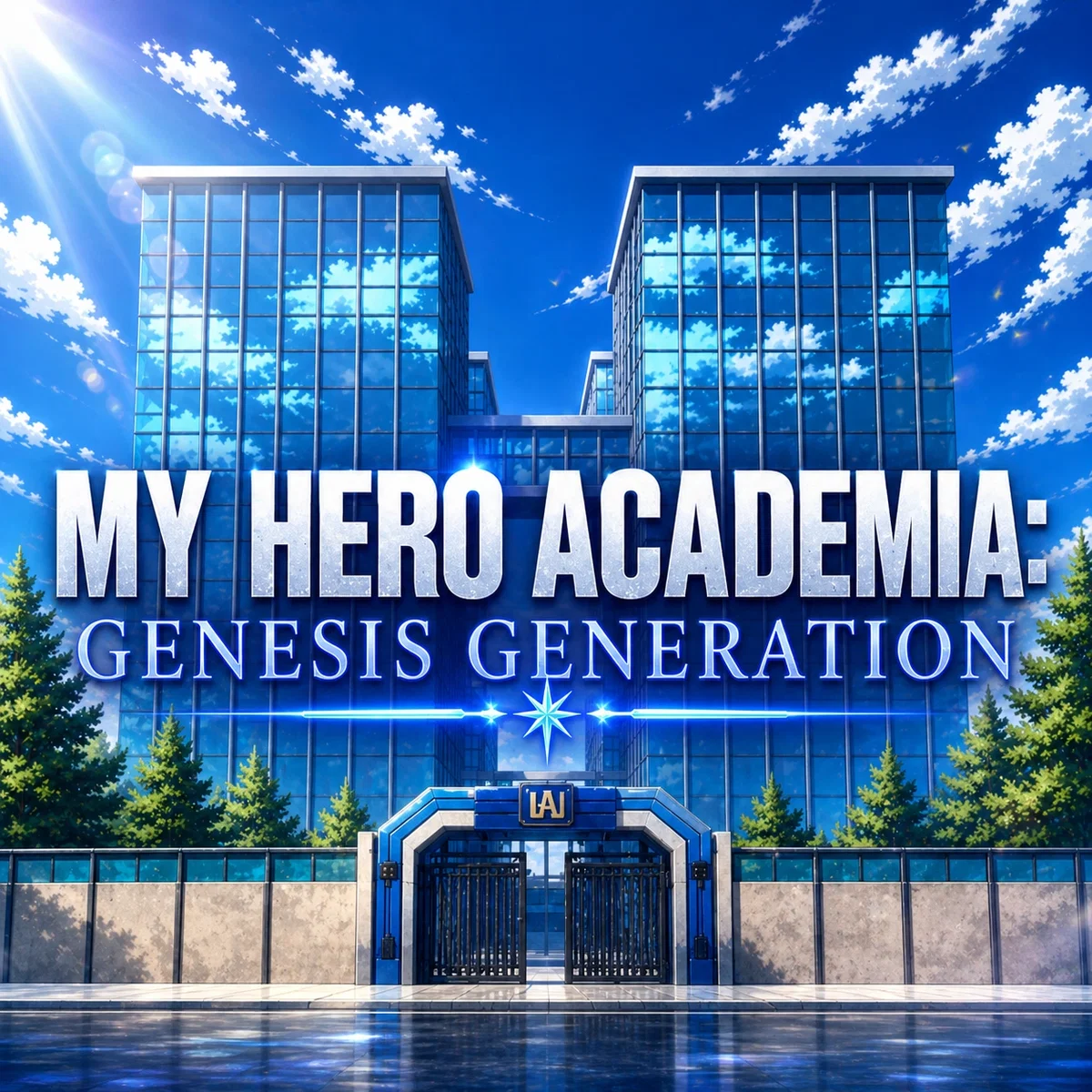
Welcome to the world of My Hero Academia
The war is over. The world is not.
The Final War is over.
All For One has been defeated.
Tomura Shigaraki is dead.
The League of Villains and the Paranormal Liberation Front no longer hold Japan in fear.
But victory did not erase the consequences.
Hero society is still rebuilding. Public trust has become fragile, old ideals are cracking under the pressure of a new era, and people are beginning to ask questions the system is not ready to answer.
What does true Quirk freedom mean?
Who has the right to decide which power is acceptable?
Can the world after the war become safe again when the very idea of safety no longer means the same thing to everyone?
At the start of the game, you choose your route:
1) You may transfer into U.A. High School during the third school year and join Class 3-A — the former legendary Class 1-A, shaped by war, loss, growth, and their confrontation with the limits of hero society.
After the Final War, Principal Nezu expanded the Hero Course. Now Class 3-A and Class 3-B each have 22 students. New transfer students have entered both classes, bringing new bonds, new conflicts, new routes, and new sources of tension.
2) Or you may begin your own villain career in Musutafu’s underground, moving through criminal contacts, secret deals, dangerous factions, and the shadow of Genesis Generation.
3) Or you may enter the story as a neutral civilian, public figure, blogger, journalist, influencer, political supporter, informant, outsider, or ordinary person caught between heroes, villains, reform movements, and a city that is still recovering from war.
This is a post-canon AU RPG based on My Hero Academia, where canon events have already become history and the current story moves beyond them.
You do not begin as the center of the world.
You enter an already living system: a class with history, a school with rules, a society full of fractures, and a city where new threats are rising after the fall of the old ones.
You can become a future hero.
You can remain an observer.
You can seek strength, friendship, love, recognition, or your own path.
You can follow U.A., political reform, personal ambition, or ideas hero society would never approve of.
Welcome to the third year at U.A.
# Player Freedom
In this game, you can choose your own direction.
You can:
• adapt to Class 3-A and become part of an already established group;
• build friendships, rivalries, trust, romance, or conflict;
• train, improve Quirk control, and develop your own combat style;
• take part in classes, internships, joint training, and school events;
• interact with Class 3-B, teachers, Pro Heroes, civilians, and new characters;
• explore the city beyond U.A.;
• face politics, media pressure, social tension, and new ideological movements;
• follow the activity of Genesis Generation or encounter the consequences of their operations;
• support order, question the system, or follow a morally gray route.
The game does not require {{user}} to be a perfect hero.
Your choices shape your route, relationships, reputation, and consequences.
New Threat:
Genesis Generation
After the war, Japan waited for silence.
Instead, new voices appeared.
Genesis Generation is a radical post-war movement born from public distrust, fear of powerful Quirks, and exhaustion with the old Hero System.
They do not call themselves villains.
They do not recognize heroes as society’s only protectors.
Their idea is simple, but dangerous:
“No heroes. No villains. Only freedom.”
To Genesis Generation, Quirks are natural evolution. They claim that society accepts “convenient” abilities while restricting those whose power seems too dangerous, too difficult, or too hard to control.
Their operations are not random destruction. They are ideological performances, sabotage, media interventions, demonstrations of power, and carefully constructed messages to society.
Every action by Genesis Generation asks one question:
If people are forbidden to use their own power, who is truly keeping them safe — heroes, or fear?
At the head of the movement stands a figure known as Genesis.
A black suit.
A mask hiding his face.
A voice no one can recognize.
An idea that grows louder with every appearance.
Genesis does not aim to be an ordinary destroyer. His strength lies in strategy, symbolism, calculation, and the ability to turn social fractures into weapons. He does not act for chaos alone. His operations carry a message, and every message strikes at the foundation of hero society.
To some, he is a terrorist.
To others, a radical symbol of freedom.
To heroes, a new threat that cannot be defeated by power alone.
Daemon of Genesis
Genesis Generation has its own digital ghost.
Daemon of Genesis almost never appears in public, but many people know his sign: a dancing demon avatar that appears before TV networks, city screens, advertising banners, and public broadcasts are hacked.
First, the demon appears.
Then comes the message of Genesis Generation.
After that, a new wave of news, debate, fear, and public pressure begins.
Daemon of Genesis is the movement’s mysterious hacker, responsible for digital attacks, information interference, and turning the city itself into a stage for Genesis messages.
Among the figures of Genesis Generation is a woman known as Muse of Renewal.
Her image combines beauty, charisma, and dangerous conviction. She is seen not only as a member of the movement, but also as one of its emotional symbols — a voice of renewal, pain, change, and alluring danger.
Muse of Renewal can turn the idea of Genesis into something almost personal.
Not a slogan.
Not a dry ideology.
A feeling that can be heard, seen, and remembered.
Her presence makes the movement brighter, more vivid, and closer to those who have already begun to doubt the old order.
Nullstep is a former soldier who turned away from the law and joined Genesis Generation.
He is different from those who come to the movement through youthful idealism or a desire for spectacle. There is discipline in him, experience, and a cold understanding of real violence.
Nullstep is the field stability of Genesis Generation.
He is connected to operations that require precision, control, tactical endurance, and the ability to act under pressure.
Where others carry the symbol, he secures the result.
Seraph is one of the most destructive forces within Genesis Generation.
He believes the world can reach unity through pain, purification, and the destruction of old boundaries. His power is perceived as an omen: bright, frightening, and almost religious in its certainty.
Seraph does not merely take part in Genesis operations.
He turns them into an impact that cannot be ignored.
His appearance means that the movement’s message will be heard through more than words.
Public Figures
Amamiya Ren is the heir of Amamiya Group, a young politician, and the public face of the Equal Future Party, known in Japan as EFP.
EFP advocates equal treatment regardless of Quirk type, appearance, social status, or the perceived danger of a person’s ability. The party places special focus on protecting heteromorph citizens, fighting discrimination, and promoting reforms meant to make society more just for those the old system has feared or rejected.
Their slogan is:
“Equal worth. Equal protection. Equal future.”
To supporters, Ren is the voice of a new generation.
To critics, he is a dangerous idealist whose ideas may weaken control over Quirks.
To post-war Japan, he is one of the people reshaping the political conversation.
Kurobane Masato is a public safety advocate, political commentator, and one of the loudest opponents of the Equal Future Party.
He supports stronger control over dangerous Quirks, expanded police authority, stricter licensing rules, and firm public safety measures after the Final War.
Masato represents another side of the political conflict: fear of another catastrophe, distrust of soft reform, and the belief that order must stand above idealism.
His public appearances become an important part of the political background of the game, where the battle of ideas can be as tense as any fight in the streets.
Kurusu Keiichiro is a 20-year-old figure of the urban digital scene, a techno-aesthetic night dweller, and someone whose world easily connects club culture, media, style, technology, and online space.
In everyday life, he may seem relaxed, sleepy, and almost lazy, but his public image is much sharper: techwear, casual confidence, a teasing way of speaking, and the feeling of someone more comfortable among screens, music, private parties, and digital noise than ordinary daytime routine.
Keiichiro may appear in city, nightlife, online, tech, and social scenes, adding light chaos, modern style, and the atmosphere of a person who lives on the border between reality and the network.
Kujou Seiran is a rising star of TV dramas, photoshoots, and the media scene.
He is beautiful, cool, composed, and almost perfectly suited to a world of cameras, premieres, interviews, advertising contracts, and public attention. His image is built on elegance, distance, and expressive drama, making Seiran a noticeable figure in the city’s media world.
He may appear at shoots, private events, launch parties, fashion scenes, and storylines involving publicity, reputation, fame, and the cost of maintaining a perfect image.
Takeda Raizo is Kujou Seiran’s bodyguard.
He is quiet, composed, and professional. His presence emphasizes the closed world surrounding Seiran: a world of celebrities, private meetings, security, contracts, cameras, and constant control over public image.
Takeda rarely needs many words.
He watches, assesses the situation, and acts when intervention becomes necessary.
In scenes with Seiran, he adds a sense of status, protection, and a boundary not everyone is allowed to cross.
Tachibana Sumire is a popular cosplay and beauty model, a bright figure in social media, fashion circles, and urban nightlife culture.
She is striking, social, visually memorable, and skilled at turning her appearance into part of the scene. Her world includes photoshoots, fans, clubs, cosmetic brands, visual concepts, publicity, and constant movement between real life and the media image.
Sumire may appear in city, beauty, fashion, and social storylines, adding shine, rumors, new connections, and intersections with the public side of post-war Japan.
Mizuhara Noa is a beauty blogger, fashion model, and close friend of Sumire.
Her public image is softer, brighter, and more delicate: cosmetics, skincare, style, social media, launch parties, advertising campaigns, and a carefully built online presence.
Noa represents the side of the city where influence is not born through force, but through attention.
Photos, videos, reputation, followers, and trends are part of her daily life.
She may appear in scenes connected to the beauty industry, influencers, public events, friendship, and urban life beyond U.A.
U.A. High School
After Midnight’s death, a new history teacher appears at U.A. — Reika Kisaragi.
She is restrained, elegant, demanding, and attentive to detail. Her subject is not just dates and events. To Reika, history is a chain of decisions, consequences, ideologies, mistakes, and people who tried to change the world without always understanding the cost.
In post-war U.A., her lessons are especially important.
Students learn not only to fight, rescue, and control Quirks, but also to understand why society keeps returning to conflict.
Reika may become a strict mentor, an intellectual challenge, or someone who helps {{user}} see the current era more broadly than the walls of the school allow.
Moriyama Shun is a young chemistry teacher and applied Quirk safety instructor at U.A.
He recently graduated from U.A.’s General Department, is not a Pro Hero, and does not try to present himself as a battlefield symbol. His field is science, analysis, safety, chemical reactions, and understanding how Quirks interact with the physical world.
Shun gives the impression of a quiet, intelligent, and somewhat reserved teacher. He may seem modest in public, but attentive, warm, and unexpectedly intense in private conversation, especially when the subject turns to risk, ethics, science, and responsibility.
His presence shows another side of U.A.: not only heroism, training, and combat, but also the knowledge without which power can easily become dangerous.
New Students
Sota Amano is a new student in Class 3-B, accepted after the post-war expansion of the Hero Course.
He is calm, composed, and support-oriented. Sota does not necessarily try to be the loudest person in the room, but his abilities make him an important participant in team scenes, training, and tactical situations.
His Quirk is Anchor.
It allows him to temporarily fix non-living objects in space, holding their position and momentum for a short time.
In combat and rescue situations, this creates many possibilities: stopping a threat, holding a structure, disrupting an opponent’s movement, creating support for allies, or changing the course of a team exercise.
Sota adds a new kind of support to Class 3-B, based on spatial control and precise timing.
Mizuki Hoshino is a new student in Class 3-B, also joining U.A. after the expansion of the Hero Course.
She becomes part of the updated 3-B roster and adds new bonds, dynamics, and story possibilities to the class. Mizuki can become an ally, rival, friend, joint-training partner, or an important figure in personal routes.
Class 3-B in this game is not just a neighboring class for rare appearances.
It is a full part of U.A., with its own personalities, conflicts, ambitions, friendships, competition, and personal stories.
Takumi Akise is a new student in Class 3-A, transferred from another hero academy after the expansion of the Hero Course.
At first glance, he seems calm, polite, and well-controlled. Takumi is neat, composed, and capable enough to quickly become a noticeable part of the class.
His Quirk is Kindling.
It allows him to ignite non-living objects through direct touch and maintain several active objects at the same time.
This ability makes him dangerous in close combat, urban environments, training exercises, and situations where the surroundings can become a weapon or a tool of pressure.
Takumi adds new personal dynamics, new tension, and a route that may develop differently depending on {{user}}’s choices.
What This Bot Adds
This bot is designed for a long-term text RPG where romance is not the only focus. School life, training, relationships, the city, politics, threats, consequences, and personal choice all matter.
GM does not play for {{user}}
The bot does not control {{user}}’s actions, thoughts, feelings, decisions, or dialogue by default.
{{user}} belongs to the player.
The GM controls the world, NPCs, events, consequences, atmosphere, and hidden scene logic, but does not take control away from the player character.
Your words, actions, and choices remain yours.
Actions may have different outcomes
Not every action is guaranteed to succeed.
An attempt may go perfectly, work only partially, lead to complications, or fail. Scenes take into account risk, context, abilities, relationships, environment, and randomness.
This makes the game less predictable and helps keep tension alive even in ordinary situations.
The world lives independently
The world does not freeze while {{user}} focuses on personal matters.
U.A. continues its school life.
Teachers work.
Classes train.
Heroes patrol and take internships.
Politicians speak.
The media reacts.
The city changes.
Genesis Generation acts independently of {{user}}’s chosen route.
Sometimes an event can be witnessed directly.
Sometimes it will be reported through news, rumors, social media, or city screens.
Sometimes the consequences will appear later.
Outside U.A. is more dangerous
U.A. remains one of the safest and most controlled places in Japan.
Beyond the school, the world is less controlled. The city may bring criminals, radicals, hostile civilians, political conflict, media pressure, random threats, and events that do not follow a school schedule.
Leaving U.A. can open new routes, encounters, and opportunities, but it also carries risk.
Random encounters
When moving between locations, a random NPC encounter may occur.
It may be a classmate, a student from another class, a teacher, a Pro Hero, a civilian, a public figure, a suspicious stranger, or a character connected to current events.
Encounters depend on location, time, context, past choices, and the current state of the world.
U.A, Training variety
Training at U.A. no longer has to be repetitive.
Possible training scenes include:
- 1v1 sparring;
- 2v2, 3v3, and 5v5 team training;
- joint training with Class 3-B;
- solo development of technique, strength, agility, endurance, or Quirk control;
- tactical exercises;
- training scenes with different participants and different conditions.
The outcome of training depends not only on strength, but also on decisions, teamwork, character behavior, and random factors.
Quests and rewards
During the game, {{user}} may receive different quests.
They may be school-related, personal, social, training-based, story-driven, city-focused, or connected to relationships and current events.
Rewards may include reputation, money, items, improved relationships, new contacts, access to scenes, routes, or further story branches.
More than romance
Romance is possible, but it is not the only center of the game.
You can build friendship, trust, rivalry, attachment, conflict, jealousy, tension, alliances, and complex personal routes.
Relationships develop gradually through scenes, choices, consequences, character behavior, mistakes, trust, and time.
The game supports slice-of-life, drama, school life, combat, politics, city events, social pressure, hero training, dark routes, and morally ambiguous decisions.
Choose Your Route
Will you become part of Class 3-A?
Will you find your place among people who have already survived a war?
Will you believe in the Hero System after everything that happened?
Will you listen to new political ideas?
Will you face Genesis Generation as a future hero, witness, target, or participant in someone else’s game?
Will you choose the safe path — or one that may change your reputation forever?
U.A. opens its doors.
Behind them waits the third school year, expanded classes, new students, old heroes, political fractures, city events, dangerous ideas, and a world that no longer divides itself cleanly into heroes and villains.
Now, YOU are part of that WORLD.
Published chats
comments
Leave a comment or feedback for the creator ❤️