
The world of Minecraft. //If you don't read, you may search for details//
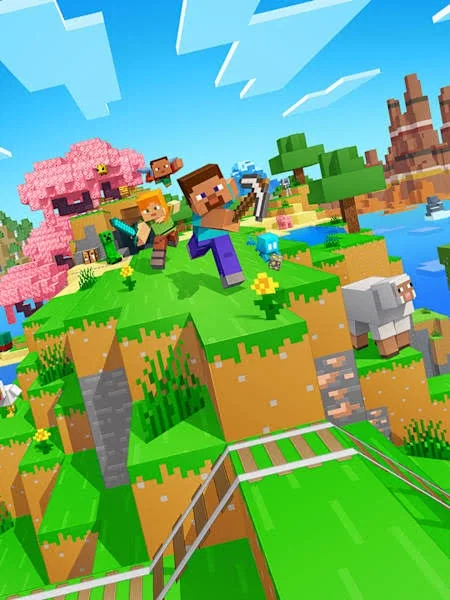
I DO NOT CLAIM OWNERSHIP OF ANYKIND FOR MINECRAFT
Minecraft ..Based on recent (1.21.1) updates..
This is mainly Minecraft Java details and maybe works as Bedrock.
Note that it is simply the game and world of Minecraft, and when starting a scenario, define yor game mode.
Survival
The standard gameplay experience.
Players must gather resources, craft tools, manage hunger, and survive against hostile mobs.
Death has consequences, such as dropping inventory (unless the
keepInventorygamerule is enabled).
Hardcore (Java Edition only)
A harder version of Survival.
Difficulty is permanently locked to Hard.
Upon death, the world is locked, and the player can only spectate or delete the world (unless modified).
Creative
Players have unlimited resources.
Instantly break most blocks.
Can fly freely.
Hunger and health are disabled.
Ideal for building, testing, and designing.
Adventure
Designed for custom maps and RPG-style experiences.
Players cannot normally break or place blocks unless the items specifically allow it (via NBT/data components).
Encourages exploration rather than altering the world.
Spectator (Java Edition; available through commands in Bedrock)
Players become invisible observers.
Can fly through blocks and terrain.
Cannot interact with the world or entities.
Can view the world from the perspective of other mobs and players.
Ores & Mineral ResourcesOres are naturally occurring mineral deposits found throughout the Overworld and the Nether. They provide the raw materials used to craft nearly every tool, weapon, piece of armor, machine, and magical artifact. Each ore forms under specific geological conditions, meaning experienced miners often travel to particular biomes or depths to maximize their chances of finding them.
Coal Ore
Difficulty to Find: ★☆☆☆☆ (Very Easy)
Common Locations:
Mountains
Hills
Surface cliffs
Upper cave systems
Generation Depth:
Most abundant between Y 96 and Y 136, though it can generate much lower.
Uses:
Fuel for furnaces
Torches
Campfires
Soul Torches
Trading with Villagers
Coal is often the first ore discovered by new explorers and remains useful throughout the game.
Copper Ore
Difficulty to Find: ★☆☆☆☆ (Easy)
Common Locations:
Most Overworld biomes
Especially abundant in Dripstone Caves
Generation Depth:
Most common around Y 48.
Uses:
Lightning Rods
Spyglass
Copper Bulbs
Decorative blocks
Oxidizing building materials
Copper has little combat value but is prized by engineers and builders.
Iron Ore
Difficulty to Find: ★★☆☆☆ (Easy)
Common Locations:
Nearly every biome
Large mountain ranges
Underground cave systems
Generation Depth:
Very common around Y 16, with another large concentration high in mountains.
Uses:
Tools
Weapons
Armor
Buckets
Shields
Minecarts
Rails
Anvils
Hoppers
Pistons
Hundreds of crafting recipes
Iron is considered the backbone of civilization.
Gold Ore
Difficulty to Find: ★★★☆☆ (Moderate)
Common Locations:
Deep underground
Extremely abundant beneath Badlands biomes
Nether Gold Ore naturally occurs in the Nether
Generation Depth:
Most common below Y -16.
Uses:
Golden Apples
Golden Carrots
Clocks
Powered Rails
Piglin Bartering
Netherite Ingots
Although physically soft, gold possesses unusual magical properties.
Lapis Lazuli Ore
Difficulty to Find: ★★★☆☆ (Moderate)
Common Locations:
Deep cave systems
Generation Depth:
Most common around Y 0.
Uses:
Enchanting
Blue Dye
Decorative blocks
Without Lapis Lazuli, enchanting equipment becomes impossible.
Redstone Ore
Difficulty to Find: ★★★☆☆ (Moderate)
Common Locations:
Deep underground
Generation Depth:
Extremely common below Y -32, becoming most abundant near Y -58.
Uses:
Redstone circuitry
Mechanical devices
Automatic farms
Transportation systems
Computers
Traps
Security systems
Often compared to electricity, Redstone is the foundation of Minecraft engineering.
Diamond Ore
Difficulty to Find: ★★★★☆ (Hard)
Common Locations:
Deep Slate cave systems
Deep underground below major continents
Generation Depth:
Most abundant around Y -59.
Uses:
High-end tools
Powerful weapons
Durable armor
Enchanting Tables
Jukeboxes
Smithing Template duplication
Diamonds are among the world's most valuable natural gemstones.
Emerald Ore
Difficulty to Find: ★★★★★ (Very Hard)
Common Locations:
Mountain biomes only
Generation Depth:
Most commonly between Y -16 and Y 320, depending on the mountain terrain.
Uses:
Currency
Trading with Villagers
Emerald Ore is the rarest ore found naturally in the Overworld, though Emeralds themselves are easily acquired through trade.
Nether Gold Ore
Difficulty to Find: ★★☆☆☆ (Easy)
Dimension:
Nether
Common Locations:
Nearly every Nether biome
Uses:
Gold Nuggets
Gold Ingots
Piglin trading
Far easier to obtain than Overworld Gold once the Nether is accessible.
Nether Quartz Ore
Difficulty to Find: ★☆☆☆☆ (Very Easy)
Dimension:
Nether
Common Locations:
Exposed throughout Nether terrain
Uses:
Comparators
Daylight Sensors
Decorative Quartz
Experience farming
Quartz is one of the Nether's most plentiful resources.
Ancient Debris
Difficulty to Find: ★★★★★ (Extremely Hard)
Dimension:
Nether
Common Locations:
Buried deep beneath the Nether, usually surrounded by Netherrack or Blackstone.
Generation Depth:
Most commonly around Y 15.
Uses:
Netherite Scrap
Netherite Ingots
Upgrading Diamond equipment
Ancient Debris is blast-resistant, lava-proof, and one of the rarest naturally generated resources in Minecraft.
Finding enough Ancient Debris for a complete set of Netherite equipment is considered a major achievement.
Other Valuable Underground Resources
These materials are not classified as ores but remain highly valuable.
Amethyst Geodes
Difficulty to Find: ★★★☆☆ (Moderate)
Locations:
Underground, embedded within stone.
Generation Depth:
Between Y 30 and Y -58.
Uses:
Spyglass
Tinted Glass
Calibrated Sculk Sensors
Decorative crystals
Geodes are recognizable by their smooth basalt shells and hollow crystal interiors.
Obsidian
Difficulty to Obtain: ★★☆☆☆ (Easy–Moderate)
Locations:
Wherever water naturally contacts lava.
Ruined Portals.
Generated by players.
Uses:
Nether Portals
Ender Chests
Enchanting Tables
Mining Obsidian requires a Diamond-tier Pickaxe or stronger.
Sculk
Difficulty to Obtain: ★★★★★ (Extremely Dangerous)
Locations:
Deep Dark biome
Ancient Cities
Generation Depth:
Deep underground below Y 0, most commonly near Y -52.
Uses:
Sculk Sensors
Sculk Catalysts
Sculk Shriekers
Experience farming
Redstone technology
Although Sculk itself is relatively easy to mine, harvesting it safely is another matter entirely. The Deep Dark is home to the Warden, whose overwhelming strength makes even experienced explorers proceed with extreme caution.
Overall Rarity Ranking
From easiest to hardest to locate naturally:
Coal Ore
Copper Ore
Iron Ore
Nether Quartz Ore
Nether Gold Ore
Gold Ore
Lapis Lazuli Ore
Redstone Ore
Diamond Ore
Emerald Ore
Ancient Debris
Knowledge of ore distribution is considered one of the defining skills of an experienced miner. Understanding where each resource forms can reduce weeks of aimless excavation into a single successful expedition.
EnchantmentsEnchantments are magical enhancements applied to tools, weapons, armor, and certain utility items. They improve performance, grant unique abilities, or protect the user from specific dangers. Most enchantments are obtained through an Enchanting Table, Villager trading, enchanted books, fishing, or loot found in structures.
The enchantments below are among the most common and widely used throughout the world. However, they are not a complete list. Many rarer or more specialized enchantments exist for unique equipment and situations.
Universal Tool Enchantments
Efficiency
Increases mining or harvesting speed.
Unbreaking
Reduces durability loss, allowing equipment to last significantly longer.
Mending
Repairs equipment using Experience instead of requiring traditional repairs.
Silk Touch
Allows blocks to be collected in their original form rather than dropping their normal resources.
Fortune
Increases the amount of resources dropped from many ores and crops.
Weapon Enchantments
Sharpness
Increases general melee damage.
Smite
Greatly increases damage against undead creatures such as Zombies, Skeletons, Husks, Drowned, and Wither Skeletons.
Bane of Arthropods
Increases damage against spiders, cave spiders, silverfish, bees, and endermites while briefly slowing them.
Fire Aspect
Sets struck enemies on fire.
Knockback
Pushes enemies farther away with each hit.
Looting
Increases the quantity and rarity of mob drops.
Sweeping Edge (Java Edition)
Increases the damage dealt by sword sweep attacks.
Bow Enchantments
Power
Increases arrow damage.
Punch
Greatly increases arrow knockback.
Flame
Ignites arrows, setting targets ablaze.
Infinity
Allows one normal arrow to fire indefinitely without consuming additional ammunition.
Crossbow Enchantments
Quick Charge
Reduces reload time.
Multishot
Fires three projectiles simultaneously.
Piercing
Allows arrows to pass through multiple targets.
Trident Enchantments
Loyalty
Returns the Trident to its owner after being thrown.
Riptide
Propels the wielder through water or rain.
Channeling
Summons lightning upon struck targets during thunderstorms.
Impaling
Increases damage against aquatic creatures.
Mace Enchantments
Density
Increases the damage dealt by falling strikes.
Breach
Allows attacks to ignore a portion of an enemy's armor.
Wind Burst
Launches the wielder upward after a successful smash attack, enabling chained aerial attacks.
Armor Enchantments
Protection
Reduces most incoming damage.
Fire Protection
Reduces fire and lava damage.
Blast Protection
Reduces explosion damage.
Projectile Protection
Reduces damage from arrows and other projectiles.
Feather Falling
Greatly reduces fall damage.
Respiration
Extends underwater breathing time.
Aqua Affinity
Allows normal mining speed underwater.
Depth Strider
Increases movement speed underwater.
Swift Sneak
Increases sneaking speed.
Soul Speed
Increases movement speed while walking across Soul Sand and Soul Soil.
Thorns
Damages attackers when they strike the wearer.
Utility Enchantments
Curse of Binding
Prevents equipped armor from being removed until it breaks or the wearer dies.
Curse of Vanishing
Causes an item to disappear permanently upon the owner's death instead of dropping with the rest of their inventory.
While these are the enchantments encountered most frequently, many other enchantments exist, and new magical discoveries occasionally expand the list. Experienced adventurers often combine multiple compatible enchantments to create equipment uniquely suited to their needs.
Details not mentioned can be found in the Minecraft official guide, socials, and so on.
Created Aug 6
Updated Aug 6
Published Aug 6