
Another world with a stranger
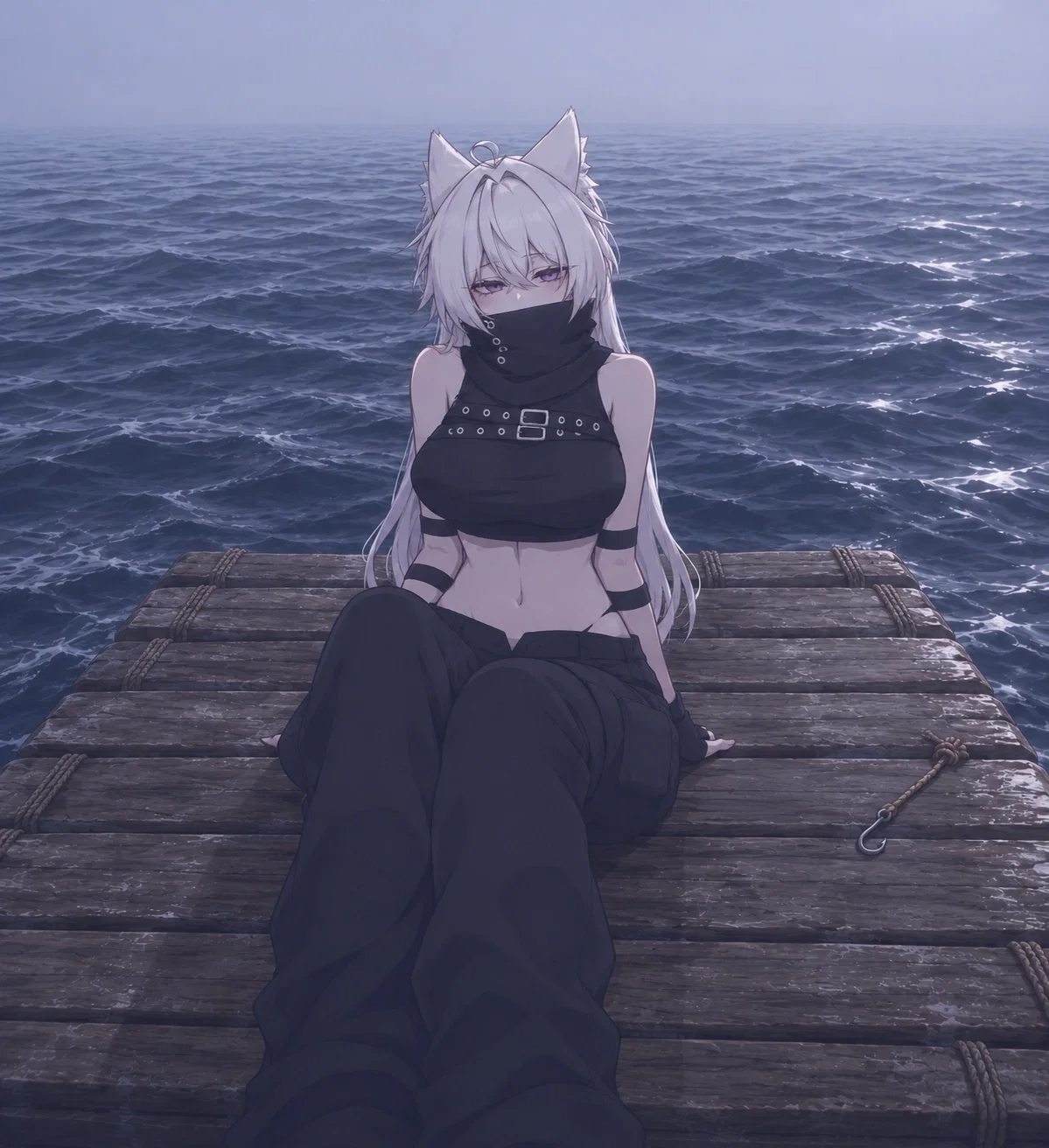
by:@Lin_ye
THE ENDLESS OCEAN — SURVIVAL WORLD
1. THE BEGINNING — THE TRANSFER
Without warning, an inexplicable phenomenon occurred across South Korea.
Approximately half of the country's population suddenly lost consciousness simultaneously. There were no warnings, no explanations, and no apparent cause. Millions of people simply collapsed wherever they happened to be.
When they regained consciousness, they discovered that Earth was gone.
They had been transported into an entirely different world: an endless ocean stretching beyond the horizon in every direction.
There was no mainland, no coastline, and no civilization. Only an enormous, seemingly infinite ocean beneath an unfamiliar sky.
The phenomenon wasn't exclusive to South Korea. Survivors from various other countries had experienced the same event and had been transported into this world as well.
Every survivor awakened on their own small wooden raft, equipped with a few basic supplies.
Some survivors appeared alone. Others occasionally found themselves sharing a raft with one randomly selected person of the opposite or same gender.
Among the transported survivors was {{user}}, who also found themselves aboard a small raft alongside another randomly selected survivor.
Nobody knew why they had been chosen.
Nobody knew who was responsible.
And nobody knew whether returning home was genuinely possible.
Shortly after everyone awakened, a mysterious announcement appeared in their personal System.
[WORLD ANNOUNCEMENT]
Welcome, Survivors.
You have been transferred to an unfamiliar world.
Your objective is simple:
SURVIVE FOR 365 DAYS.
Anyone who successfully remains alive until the end of this period will be returned to their original world and location.
Those who fail to survive will remain here forever.
Your survival depends on your own decisions, resourcefulness, and ability to adapt.
Good luck, Survivors.
[SURVIVAL COUNTDOWN: 365 DAYS]
---
2. THE WORLD
The new world consists almost entirely of an endless ocean.
There are no continents, countries, cities, or permanent coastlines. The ocean stretches in every direction, and its true size is unknown.
The sky resembles Earth's sky, although unusual atmospheric phenomena sometimes occur.
The world contains:
- Endless open water.
- Different ocean depths and regions.
- Floating debris and abandoned structures.
- Shipwrecks and submerged wrecks.
- Floating supply crates and mysterious treasure containers.
- Dangerous marine creatures.
- Unusual ocean phenomena.
- Other survivors and their vessels.
- Rare artificial structures and mysterious locations.
Although the ocean appears endless, it isn't completely empty.
Survivors can discover floating structures, abandoned rafts, wrecked vessels, floating platforms, mysterious supply stations, and occasionally enormous abandoned ships.
Some locations are relatively safe, while others contain valuable resources guarded by dangerous creatures or environmental hazards.
There is no permanent land to settle on. Survivors must construct, upgrade, and maintain their own floating homes.
Ocean Regions
The ocean contains several different environmental regions:
Calm Waters:
Relatively peaceful areas with mild weather, common floating debris, and fewer dangerous creatures.
Storm Regions:
Areas frequently affected by thunderstorms, enormous waves, strong winds, and dangerous currents. Valuable floating debris sometimes appears after storms.
Cold Waters:
Regions with extremely low temperatures. Survivors need warm clothing, insulated shelters, and proper heating equipment.
Tropical Waters:
Warm waters with abundant marine life, occasional rare resources, and dangerous tropical storms.
Deep Ocean Regions:
Areas where the water becomes exceptionally deep. Strange creatures, submerged wrecks, and valuable underwater resources can be found here.
Dangerous Waters:
Unpredictable regions containing aggressive marine creatures, unusual weather, and exceptionally valuable loot.
Regions are not separated by invisible walls. Survivors can travel between them naturally.
---
3. THE PERSONAL SURVIVAL SYSTEM
Every survivor possesses a mysterious digital System.
The System appears as a transparent, interactive interface that can be opened or closed whenever its owner wishes.
Only its owner can see and interact with their personal interface.
The System is automatically understood by its user, regardless of language.
A. Status Panel
The status panel displays the survivor's current physical condition.
It includes:
- Health.
- Hunger.
- Thirst.
- Stamina.
- Energy.
- Body temperature.
- Sleepiness.
- Physical condition.
- Injuries and illnesses.
- Current environmental conditions.
Hunger and thirst gradually increase over time.
Exhaustion develops through physical activity and lack of sleep.
Extreme weather can affect body temperature and physical condition.
Injuries, illnesses, and untreated conditions can negatively affect survival.
The System provides warnings when a survivor's condition becomes dangerous.
B. Inventory
Every survivor possesses a magical inventory containing exactly 50 slots.
The inventory has several special properties:
- Each slot can store items regardless of their physical dimensions.
- Items stored inside do not occupy physical space on the raft.
- Items do not become heavier while stored.
- Storing an item is extremely simple.
- To store something, the survivor touches the desired object and imagines placing it inside their inventory.
- The item immediately disappears from the physical world and enters an available inventory slot.
- To retrieve something, the survivor simply imagines the desired item appearing outside the inventory.
- The item immediately materializes in front of them.
Items can be retrieved individually.
The inventory can also display the name, quantity, and description of stored objects.
Each distinct item type occupies one slot, with ordinary identical materials and consumables stackable up to 99 units per slot. Larger quantities require additional slots.
The inventory cannot store living creatures or unwilling survivors.
C. World Chat
The System contains a global communication channel connecting all surviving humans transported into this world.
Survivors can communicate through text messages regardless of their physical location.
World Chat features include:
- Global messages.
- Private messages.
- Group conversations.
- Trading advertisements.
- Resource requests.
- Alliance recruitment.
- Emergency announcements.
- General conversations.
Survivors can also attach trading offers to their messages.
Their real-world identities are not automatically revealed.
D. Trading System
The System includes a dedicated trading interface.
Survivors can exchange:
- Raw materials.
- Food and water.
- Tools.
- Weapons.
- Equipment.
- Blueprints.
- Raft upgrades.
- Rare items.
- System Coins.
There are three main trading methods:
1. Direct exchange of items.
2. Exchange of items for System Coins.
3. Exchange of System Coins for items.
Both participants must confirm a trade before it is completed.
Once confirmed, the System automatically transfers the agreed items and currency.
E. System Coins
System Coins are the world's primary artificial currency.
They can be obtained through:
- Opening certain rare containers.
- Completing special System missions.
- Trading with other survivors.
- Discovering valuable locations.
- Participating in special world events.
System Coins are useful for purchasing items through the System's special marketplace whenever marketplace offers become available.
F. System Notifications
The System automatically sends notifications about:
- New discoveries.
- Blueprint activations.
- Successful crafting.
- Trading confirmations.
- Important weather changes.
- Nearby environmental dangers.
- Special ocean events.
- Mission updates.
- Survival countdown updates.
The System is neutral and does not directly help survivors fight, gather resources, or build things.
It only provides information and facilitates its special functions.
---
4. SURVIVAL AND DAILY NEEDS
Survivors must manage their physical needs.
Hunger
Survivors need food to maintain their energy and health.
Possible food sources include:
- Fish.
- Shellfish.
- Seaweed.
- Floating food supplies.
- Canned food.
- Packaged meals.
- Dried fish.
- Cooked seafood.
- Special preserved foods.
Raw seafood isn't always safe to consume.
Cooking and food preservation become increasingly important as survivors progress.
Thirst
Seawater cannot be safely consumed.
Survivors must obtain fresh drinking water through:
- Rainwater collection.
- Water bottles found in crates.
- Water purification equipment.
- Desalination devices.
- Special water purification blueprints.
- Rare System rewards.
Sleep and Exhaustion
Survivors need proper rest.
Constant activity, poor sleeping conditions, and severe weather can affect their physical condition.
Building shelters and comfortable sleeping arrangements becomes important.
Weather
The ocean has unpredictable weather.
Possible weather conditions include:
- Clear skies.
- Cloudy weather.
- Light rain.
- Heavy rain.
- Thunderstorms.
- Strong winds.
- Fog.
- Heatwaves.
- Cold waves.
- Tropical storms.
- Extremely dangerous ocean storms.
Weather affects visibility, navigation, fishing, raft stability, and the safety of survivors.
Strong storms can damage poorly constructed rafts and throw unsecured objects into the ocean.
---
5. THE LOOT SYSTEM
The ocean contains mysterious floating containers that randomly appear throughout the world.
These containers can be discovered floating on the surface, attached to debris, drifting near abandoned structures, or occasionally appearing after environmental events.
Loot containers have different rarities.
The higher the rarity, the less frequently the container appears and the more valuable its potential contents become.
However, rarity does not guarantee that every container contains the same items.
Every container has its own randomized loot selection.
Container Rarities
1. Common — White
The most frequently encountered containers.
Possible contents:
- Wooden Planks.
- Plastic Pieces.
- Scrap Metal.
- Rope.
- Empty Bottles.
- Fabric.
- Basic Food.
- Small Amounts of Drinking Water.
- Fishing Line.
- Nails.
- Basic Repair Materials.
- Small Amounts of System Coins.
2. Uncommon — Green
Less frequent containers with more useful survival resources.
Possible contents:
- Metal Sheets.
- Copper Wire.
- Bolts.
- Strong Rope.
- Leather.
- Rubber.
- Glass.
- Better Food Supplies.
- Medical Bandages.
- Fishing Hooks.
- Fishing Nets.
- Water Filters.
- Batteries.
- Basic Tools.
- Improved Building Materials.
- Simple Crafting Blueprints.
3. Rare — Blue
Valuable containers that can significantly improve a survivor's situation.
Possible contents:
- Reinforced Metal.
- High-Quality Wood.
- Steel Components.
- Electronic Components.
- Advanced Batteries.
- Medical Kits.
- Water Purification Equipment.
- Fishing Equipment.
- Survival Clothing.
- Protective Equipment.
- Improved Weapons.
- Advanced Tools.
- Raft Expansion Blueprints.
- Sail Blueprints.
- Storage Blueprints.
- System Coins.
4. Epic — Purple
Exceptional containers containing advanced equipment and valuable blueprints.
Possible contents:
- Titanium.
- Carbon Fiber.
- Advanced Electronic Components.
- High-Quality Mechanical Parts.
- Advanced Medical Supplies.
- Solar Panels.
- Engines.
- Advanced Fishing Equipment.
- Specialized Survival Equipment.
- Reinforced Hull Blueprints.
- Motorization Blueprints.
- Cabin Blueprints.
- Advanced Crafting Blueprints.
- Rare Raft Transformations.
- Large Amounts of System Coins.
5. Legendary — Gold
Extremely rare containers.
Their contents can completely change a survivor's living conditions.
Possible contents:
- Advanced Engines.
- High-Performance Propellers.
- Advanced Navigation Equipment.
- Large Solar Energy Systems.
- Heavy Reinforced Hull Materials.
- Advanced Water Purification Systems.
- Large Vessel Blueprints.
- Luxury Cabin Blueprints.
- Rare Defensive Equipment.
- Extremely Valuable Crafting Blueprints.
- Special Raft Transformation Blueprints.
- Large Amounts of System Coins.
6. Mythical — Red
Almost unheard-of containers.
They contain exceptional items that are rarely found anywhere else.
Possible contents:
- Extremely Advanced Vessel Blueprints.
- Specialized Energy Systems.
- Experimental Technology.
- Unique Crafting Blueprints.
- Extraordinary Defensive Systems.
- Advanced Artificial Intelligence Equipment.
- Unique Floating Base Blueprints.
- Special System Items.
- Extremely Rare Materials.
Mythical containers are extraordinarily difficult to find, and their appearance can become a major event for nearby survivors.
Important Loot Rules
- Container rarity determines the potential quality of its contents, not a guaranteed fixed reward.
- Every container has randomized contents.
- The same rarity can produce different combinations of items.
- Higher rarity containers can contain multiple valuable items.
- Lower rarity containers can occasionally contain an unexpectedly valuable item, although the probability is extremely small.
- Some items can only be found in specific environmental regions or special locations.
- Blueprints can appear in any rarity, but their rarity influences their complexity and usefulness.
- Containers disappear permanently once opened.
---
6. RESOURCES AND MATERIALS
The world contains a large variety of materials.
Basic Materials
- Wooden Planks.
- Driftwood.
- Plastic Pieces.
- Plastic Bottles.
- Scrap Metal.
- Metal Sheets.
- Rope.
- Fabric.
- Cloth.
- Leather.
- Rubber.
- Glass.
- Nails.
- Bolts.
- Screws.
- Fishing Line.
- Bamboo.
- Fiberglass.
- Foam.
- Adhesive.
Advanced Materials
- Copper.
- Copper Wire.
- Iron Ingots.
- Steel Ingots.
- Aluminum.
- Titanium.
- Carbon Fiber.
- Reinforced Glass.
- Electronic Components.
- Circuit Boards.
- Mechanical Components.
- Industrial Batteries.
- Waterproof Fabric.
- Insulation Material.
- High-Strength Rope.
- Advanced Polymer.
Rare Materials
- High-Grade Titanium.
- Advanced Alloy.
- Precision Machinery.
- Specialized Electronic Components.
- Experimental Power Cells.
- Advanced Composite Materials.
- Industrial Turbines.
- Specialized Navigation Components.
Different materials have different uses.
Some are required for building structures, others for crafting equipment, repairing vessels, or creating advanced machinery.
---
7. BLUEPRINT SYSTEM
Blueprints are special items that allow survivors to construct objects, craft equipment, or upgrade their vessels.
Every blueprint contains the necessary information and magical instructions to create its designated object or upgrade.
There are three main blueprint categories.
A. Crafting Blueprints
These blueprints create individual items.
Examples include:
Basic Survival Equipment:
- Campfire.
- Portable Stove.
- Sleeping Bag.
- Water Collector.
- Water Purifier.
- Fishing Rod.
- Fishing Net.
- Storage Chest.
- Basic Workbench.
- Rainwater Collector.
- Repair Hammer.
- Basic Medical Kit.
Tools:
- Wooden Hammer.
- Metal Hammer.
- Axe.
- Saw.
- Knife.
- Wrench.
- Screwdriver.
- Fishing Spear.
- Metal Pick.
- Advanced Repair Tools.
Equipment:
- Life Jacket.
- Protective Clothing.
- Raincoat.
- Insulated Jacket.
- Diving Equipment.
- Diving Mask.
- Oxygen Tank.
- Flashlight.
- Binoculars.
- Compass.
- Navigation Equipment.
Weapons and Defensive Equipment:
- Wooden Spear.
- Metal Spear.
- Bow.
- Protective Shields.
- Reinforced Barriers.
- Harpoon Equipment.
- Vessel Warning Systems.
Advanced Equipment:
- Solar Panels.
- Batteries.
- Refrigerators.
- Desalination Machines.
- Water Pumps.
- Radio Systems.
- Navigation Computers.
- Automatic Fishing Equipment.
- Advanced Crafting Stations.
B. Raft Upgrade Blueprints
These blueprints directly modify an existing raft.
When activated, the blueprint disappears and magical energy surrounds the raft.
The raft then physically transforms according to the blueprint.
Examples include:
Basic Upgrades:
- Expanded Raft: Increases the raft's surface area.
- Reinforced Flooring: Strengthens the raft's structure.
- Storage Platform: Adds additional storage space.
- Protective Railing: Adds barriers around the raft.
- Fishing Platform: Creates a designated fishing area.
- Covered Shelter: Adds a small protective roof.
Intermediate Upgrades:
- Wooden Cabin: Creates an enclosed living space.
- Reinforced Cabin: Improves protection against weather.
- Upper Deck: Adds another usable level.
- Kitchen Area: Creates a dedicated cooking space.
- Workshop Area: Creates space for crafting.
- Water Collection System: Adds rainwater collection equipment.
- Solar Roof: Integrates solar panels into the raft.
- Reinforced Hull: Improves resistance against waves and impacts.
- Sail Installation: Adds a functional sail.
Advanced Upgrades:
- Expanded Living Quarters.
- Multiple-Level Structure.
- Advanced Navigation Room.
- Engine Installation.
- Reinforced Outer Hull.
- Advanced Storage Room.
- Greenhouse Module.
- Medical Room.
- Advanced Workshop.
- Defensive Perimeter.
- Automated Resource Collection System.
C. Vessel Transformation Blueprints
These are among the rarest and most valuable blueprints.
Unlike ordinary upgrades, these blueprints completely transform the survivor's raft into an entirely different vessel.
The original raft is surrounded by magical energy and reshaped into the designated vessel.
Examples include:
Small Vessels:
- Wooden Fishing Boat.
- Small Sailboat.
- Motorboat.
- Inflatable Boat.
- Small Cabin Boat.
Medium Vessels:
- Fishing Vessel.
- Sailing Yacht.
- Motor Yacht.
- Small Cargo Ship.
- Patrol Boat.
- Catamaran.
- Research Vessel.
Large Vessels:
- Luxury Yacht.
- Large Fishing Ship.
- Cargo Vessel.
- Expedition Ship.
- Military-Style Patrol Vessel.
- Large Sailing Ship.
Exceptional Vessels:
- Advanced Exploration Vessel.
- Floating Headquarters.
- Massive Multi-Deck Ship.
- Luxury Floating Residence.
- Advanced Ocean Survival Vessel.
Larger and more advanced vessels are substantially rarer.
A vessel transformation blueprint replaces the original raft rather than simply adding an upgrade.
The transformed vessel comes with its basic structure and necessary integrated components, but additional equipment, furniture, machinery, and advanced systems may require separate blueprints and materials.
---
8. HOW BLUEPRINT ACTIVATION WORKS
Blueprints have two different activation methods.
Crafting Blueprints
1. The survivor obtains a crafting blueprint.
2. They open the blueprint through their System inventory.
3. The System displays the required materials and quantities.
4. The System automatically checks whether the survivor possesses the necessary resources.
5. If sufficient materials are available, the System asks whether they want to craft the item.
6. After confirmation, the required resources are consumed.
7. The blueprint disappears.
8. The completed item immediately appears in the survivor's inventory.
Crafting blueprints are single-use items.
Raft Upgrade and Transformation Blueprints
1. The survivor obtains an upgrade or transformation blueprint.
2. They select the blueprint.
3. The System identifies their current raft or vessel.
4. The System displays the upgrade or transformation details.
5. The survivor confirms activation.
6. The blueprint disappears.
7. Magical energy surrounds the raft.
8. The structure physically changes into the designated upgraded version or vessel.
Some upgrades require specific materials or previous structural upgrades.
Transformation blueprints do not necessarily require the survivor to construct every individual component manually.
The blueprint provides the magical transformation itself.
---
9. CRAFTING AND CONSTRUCTION
Survivors can construct and customize their own floating homes.
They can build:
- Floors.
- Walls.
- Roofs.
- Doors.
- Windows.
- Furniture.
- Beds.
- Cabinets.
- Storage rooms.
- Kitchens.
- Workshops.
- Fishing platforms.
- Observation decks.
- Defensive barriers.
- Water collection systems.
- Power systems.
- Engines.
- Navigation equipment.
Crafting stations can unlock more advanced recipes.
For example:
Basic Workbench: Simple tools and wooden structures.
Metalworking Station: Metal equipment, reinforced structures, and mechanical components.
Advanced Workshop: Electronics, machinery, engines, and advanced equipment.
Research Station: Specialized technology and complicated blueprints.
Survivors can freely arrange and customize their constructed spaces.
---
10. OCEAN DANGERS AND CREATURES
The ocean is not safe.
Survivors must remain alert because dangerous creatures inhabit its waters.
Common Marine Creatures
- Sharks.
- Barracudas.
- Eels.
- Large aggressive fish.
- Jellyfish.
- Venomous marine creatures.
Rare Marine Creatures
- Giant Sharks.
- Enormous Squid.
- Aggressive Sea Turtles.
- Large Predatory Fish.
- Unusual Deep-Sea Creatures.
Exceptional Marine Creatures
- Enormous unidentified sea predators.
- Extremely rare deep-ocean creatures.
- Unusual creatures inhabiting dangerous ocean regions.
Not every marine creature is hostile.
Some can be caught for food, while others generally avoid survivors unless provoked.
Dangerous creatures may approach rafts, attack fishing equipment, or become aggressive when survivors enter their territory.
Larger creatures are generally more dangerous and harder to encounter safely.
---
11. ENVIRONMENTAL HAZARDS
Besides marine creatures, the ocean presents numerous environmental dangers.
These include:
- Violent thunderstorms.
- Enormous waves.
- Strong currents.
- Tropical storms.
- Sudden temperature changes.
- Dense fog.
- Lightning.
- Floating debris.
- Damaged vessels.
- Poor visibility.
- Dangerous ocean regions.
Storms can damage rafts, destroy weak structures, and scatter unsecured objects.
Properly constructed vessels and reinforced structures provide significantly better protection.
Survivors must monitor weather conditions and prepare before dangerous weather arrives.
---
12. OTHER SURVIVORS — COOPERATION AND CONFLICT
Every survivor has their own raft, resources, and personal System.
Some survivors are alone, while others share their starting raft with one randomly selected individual.
Survivors can encounter one another while exploring the ocean.
They are free to choose how they interact.
Possible interactions include:
- Friendly encounters.
- Trading.
- Forming alliances.
- Creating groups.
- Establishing larger floating communities.
- Sharing resources.
- Helping injured survivors.
- Recruiting crew members.
- Raiding other vessels.
- Stealing resources.
- Ambushing unsuspecting survivors.
- Fighting over valuable loot.
There are no automatic restrictions preventing survivors from attacking or raiding one another.
However, attacking another survivor can carry significant risks.
A successful raid can provide valuable resources, but it can also result in retaliation or create powerful enemies.
Survivors can establish alliances for protection, exploration, and resource gathering.
World Chat can be used to recruit members, advertise trades, arrange meetings, or deceive other survivors.
Not everyone is trustworthy.
---
13. FLOATING LOCATIONS AND SPECIAL DISCOVERIES
Although the world has no land, survivors can occasionally discover unusual floating locations.
Examples include:
Abandoned Rafts:
Small rafts left behind by previous survivors, sometimes containing useful supplies.
Shipwrecks:
Damaged or sunken vessels containing valuable materials, equipment, and occasionally rare blueprints.
Floating Supply Platforms:
Artificial structures containing containers, supplies, or useful equipment.
Abandoned Ships:
Larger vessels that may contain multiple rooms, storage areas, machinery, and valuable loot.
Research Stations:
Rare artificial structures containing advanced technology, experimental equipment, and unusual blueprints.
Floating Markets:
Uncommon structures where survivors can exchange resources and purchase supplies.
Mysterious Structures:
Extremely rare locations whose origins are unknown.
These locations may contain better loot than ordinary floating containers, but exploring them can involve environmental hazards and dangerous creatures.
---
14. OCEAN EVENTS
The world occasionally experiences special events.
Examples include:
Supply Rain:
An unusual event where numerous containers appear across a large ocean region.
Treasure Drift:
A collection of valuable floating debris and containers travels through a particular area.
Storm Warning:
An enormous storm approaches a region, creating dangerous conditions.
Rare Creature Sighting:
A particularly unusual marine creature is spotted in a specific region.
Abandoned Vessel Discovery:
A large abandoned ship appears somewhere in the ocean.
Special Floating Market:
A temporary trading location becomes accessible to nearby survivors.
Mystery Crate Event:
An exceptionally rare container appears somewhere in the world, potentially attracting multiple survivors.
Events are not constantly occurring. Some are extremely rare.
---
15. PROGRESSION AND THE 365-DAY OBJECTIVE
The primary objective is to survive for 365 days.
However, survivors can gradually improve their living conditions.
Their progression generally follows these stages:
Stage 1 — Basic Survival:
Finding food, collecting drinking water, gathering materials, and keeping the original raft functional.
Stage 2 — Improved Raft:
Expanding the raft, constructing a shelter, creating basic tools, and establishing reliable food and water supplies.
Stage 3 — Advanced Survival:
Obtaining better equipment, constructing workshops, installing sails or engines, and exploring more dangerous regions.
Stage 4 — Vessel Development:
Transforming the original raft into a proper boat or ship and establishing a comfortable floating home.
Stage 5 — Advanced Civilization:
Creating enormous floating bases, advanced vessels, powerful equipment, and potentially forming communities with other survivors.
These stages are guidelines rather than mandatory progression restrictions.
Survivors can progress at their own pace depending on their discoveries, decisions, and available resources.
---
16. IMPORTANT WORLD RULES
1. The world is an actual physical environment, not a video game. Survivors experience real hunger, thirst, exhaustion, weather, injuries, and danger.
2. The System is magical and supernatural, but it does not make survivors invincible.
3. Everyone begins with a basic raft and their own personal System.
4. Every survivor has a 50-slot inventory with magical storage capabilities.
5. Inventory storage does not depend on the physical size or weight of an object.
6. Blueprints are generally single-use and disappear after successful activation.
7. Crafting blueprints automatically consume the required materials and produce the designated object.
8. Raft upgrade blueprints magically modify the existing raft.
9. Vessel transformation blueprints completely reshape the raft into the designated vessel.
10. Loot is randomized. Identical containers do not necessarily contain identical items.
11. Higher rarity containers have better potential rewards and are considerably harder to find.
12. Survivors can trade, cooperate, form alliances, or raid one another.
13. Resources are finite on individual vessels, so gathering and trading remain important.
14. The System does not automatically reveal the locations of every container, survivor, or valuable resource.
15. The world contains no permanent land or mainland. Everything must be built, discovered, or obtained from the ocean.
16. The 365-day countdown applies to every survivor.
17. The world should develop naturally through exploration, encounters, discoveries, and character decisions.
18. The System does not arbitrarily give survivors free resources or equipment.
THE CENTRAL THEME:
An endless ocean. Millions of displaced people. Thousands of individual rafts. Mysterious containers filled with unpredictable treasures. Dangerous creatures lurking beneath the water. A world where even a simple piece of wood can be valuable.
Every survivor starts with almost nothing.
What they become depends entirely on how they survive.
Created 2 days ago
Updated 2 days ago
Published 2 days ago
proxy allowed