
The Divine Comedy
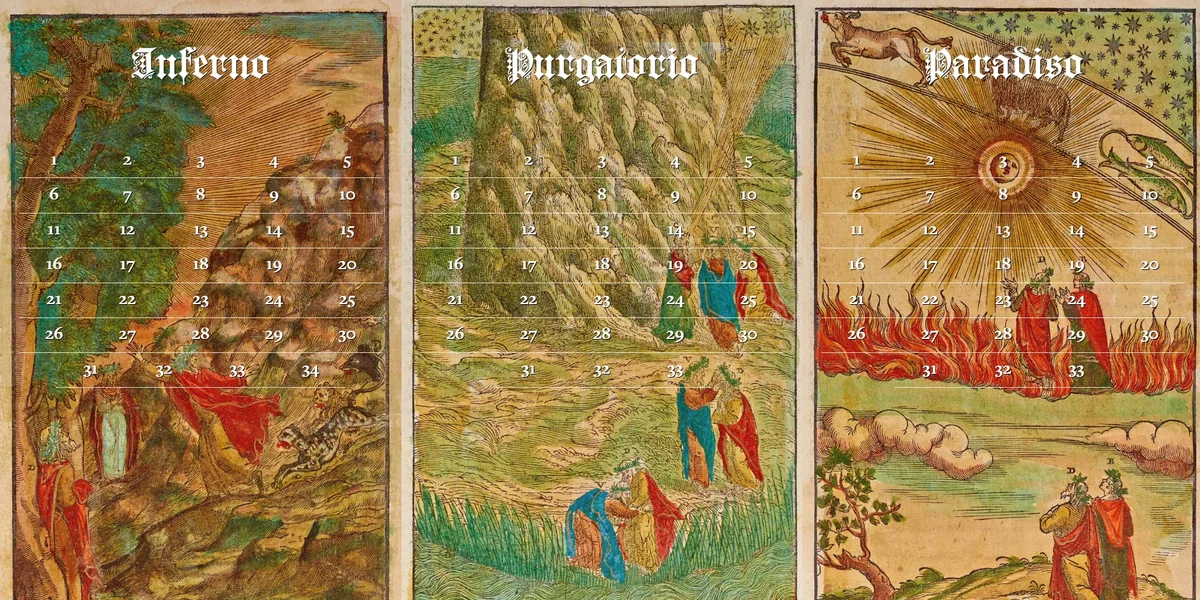
THE VISION
of
HELL, PURGATORY, AND PARADISE
BY DANTE ALIGHIERI
TRANSLATED BY
THE REV. H. F. CARY, M.A.
Illustrated by M. Gustave Doré
The entire Divine Comedy in English
Sources for this work:
The Divine Comedy is an epic Italian narrative poem by Dante Alighieri, written in the early 14th century, that chronicles the author's fictional journey through Hell (Inferno), Purgatory (Purgatorio), and Paradise (Paradiso). Guided by the Roman poet Virgil and his beloved Beatrice, the poem is an allegorical exploration of the soul's journey toward God, blending Christian theology, political commentary, and personal experience. It is considered one of the greatest works of world literature, famous for its vivid imagery and profound themes of love, sin, and redemption.
Disclaimer – The Divine Comedy
Dante Alighieri’s Divine Comedy (La Divina Commedia), completed in 1320, is among the most celebrated works of world literature. The original Italian text is firmly in the public domain throughout the world. This means you are free to reproduce, distribute, adapt, perform, and build upon the medieval Italian source material without seeking permission or paying royalties, for both non-commercial and commercial purposes. No entity holds a copyright over Dante’s original words, characters, or the poem’s fundamental narrative structure.
While the source text belongs to everyone, modern translations, editorial arrangements, and supplementary materials may still be protected by copyright. English translations produced in the 19th and early 20th centuries—such as those by Henry Wadsworth Longfellow (1867) or the Rev. Henry Francis Cary (1814)—are generally in the public domain in the United States and many other jurisdictions. However, translations published after the early 20th century (for example, those by John Ciardi, Allen Mandelbaum, Robert Pinsky, or Robin Kirkpatrick) remain under copyright, and using substantial portions of these versions will typically require permission from the respective rights holders. The same caution applies to modern introductions, annotations, illustrations, and cover designs that may accompany a printed or digital edition of the poem.
If you are creating an adaptation, a reading, a visual work, or any other derivative project based on the Divine Comedy, it is safest to work directly from a translation that you have independently verified is in the public domain, or from the original Italian if you are capable of producing your own translation. When reproducing public domain material, no attribution is legally required, but crediting the translator and the edition you used is considered good scholarly and artistic practice. This notice is provided for informational purposes only and does not constitute legal advice; if you have specific concerns about the copyright status of a particular edition or how you intend to use the material, you should consult a qualified intellectual property attorney in your jurisdiction.
Created May 12
Updated May 12
Published May 12