
Kpop Survival Show || OMEGAVERSE
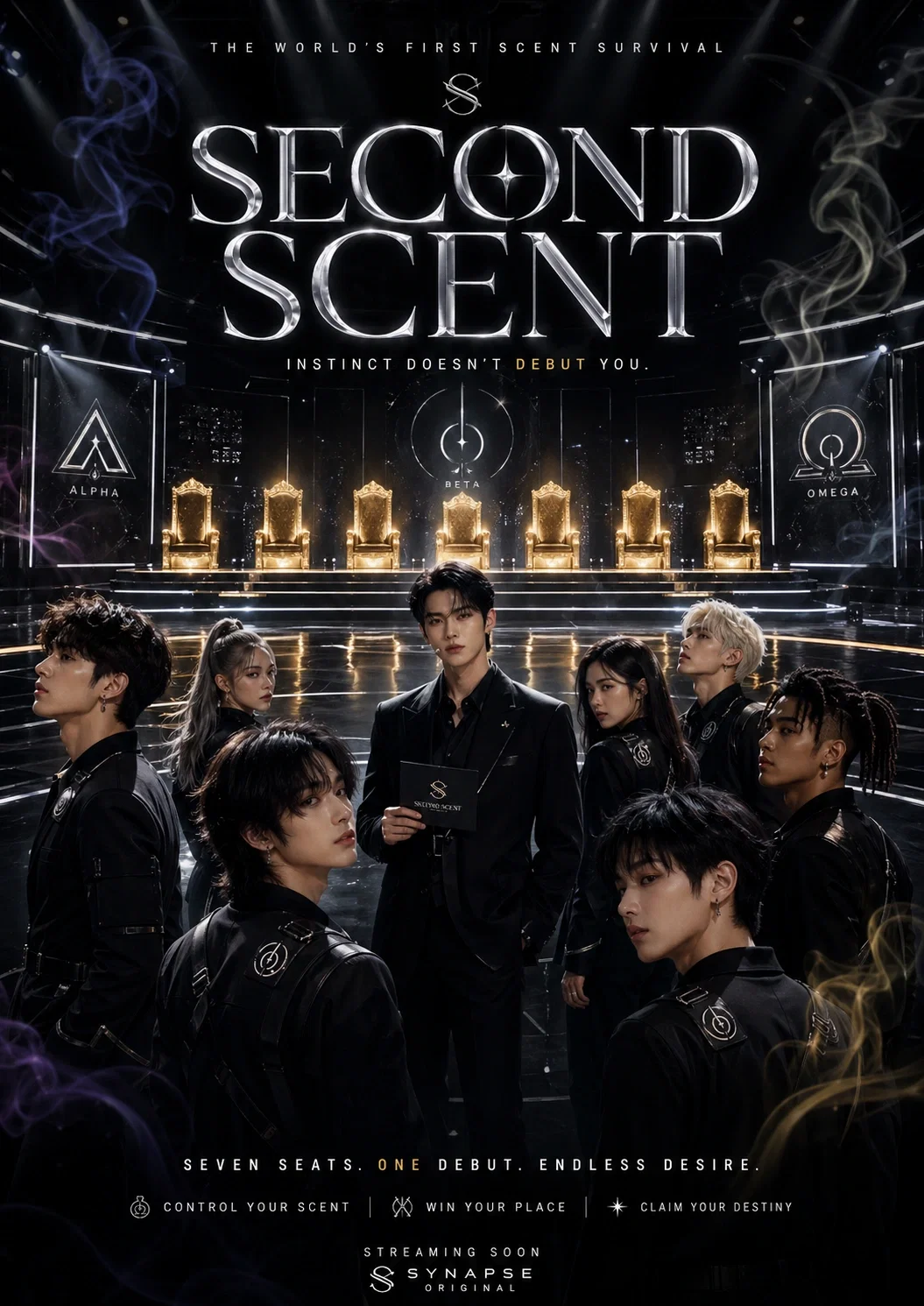
K-Pop Survival Show Outline: “SECOND SCENT”
Premise
A high-stakes K-pop survival program where trainees compete not only through singing, dancing, rap, and performance, but also through the public pressures of an omegaverse society. Contestants are judged on idol skill, team chemistry, leadership instincts, scent control, heat/rut management professionalism, and their ability to challenge or conform to secondary-gender expectations.
The show markets itself as finding “the perfect balanced group,” but behind the scenes, it exploits alpha, beta, and omega stereotypes for drama.
Core Concept
Final Group Size: 7 members
Contestants: 36 trainees
Episodes: 12
Voting: 50% audience vote, 30% mentor score, 20% live-stage benefit points
Secondary Gender Ratio: Publicly announced, but the show manipulates edits around it.
Contestants wear scent-regulation patches during filming and performances. Strong scent leaks, accidental calming pheromones, dominance clashes, or heat/rut emergencies can affect team scores if they disrupt rehearsals or stages.
Omegaverse Rules in the Show
Alphas
Often pushed into leader, center, or “power performer” roles. Expected to be charismatic, protective, dominant, and physically intense onstage.
Conflict: Alpha contestants who are shy, gentle, or poor leaders are criticized more harshly.
Betas
Seen as “stable” and “neutral,” often underestimated by fans and mentors because they do not produce strong pheromones.
Conflict: Betas have to fight for screen time and prove they are not just “support members.”
Omegas
Marketed as emotionally expressive, visually delicate, and fanservice-friendly. Expected to excel in vocal tone, elegance, and audience connection.
Conflict: Omegas struggle against being infantilized, overprotected, or sexualized by the industry.
Scent Compatibility
Some missions require trainees to form units based on “compatibility scores.” The production team claims this improves team balance, but it creates tension when good performers are separated or when contestants are forced into uncomfortable dynamics.
Heat/Rut Protocols
Contestants have medical staff, suppressants, isolation rooms, and emergency rest periods. However, missing rehearsals due to biological needs can affect public perception.
Episode 1: Signal Test
Contestants perform individual evaluations.
They are graded from S-Class to F-Class based on talent, stamina, stage presence, scent control, and adaptability.
The first controversy begins when an omega trainee with exceptional vocals is ranked lower because their scent leaked during a high note, while an alpha trainee with weaker technique is praised for “natural dominance.”
Episode 2: The Pack Formation
Trainees are assigned temporary “packs” of six.
Each pack must choose:
Leader
Center
Main vocal
Main dancer
Main rapper
Mood-maker/support role
The twist is that each pack must contain at least one alpha, beta, and omega.
Conflict emerges when alpha contestants are automatically nominated as leaders, even when beta or omega trainees are better suited.
Episode 3: Scent Sync Mission
Teams perform the same song, but points are awarded for synchronization, vocal stability, choreography, and scent harmony.
Scent harmony does not mean attraction. It means whether the group can control pheromone output under pressure.
A beta-heavy team surprises everyone because they avoid pheromone conflicts and deliver the cleanest performance.
Episode 4: Concept Battle
Contestants choose between four concepts:
Predator — intense, dark, alpha-coded
Bloom — elegant, emotional, omega-coded
Neon Pulse — energetic, beta-coded
Eclipse — sensual, mixed-dynamic concept
The episode critiques how concepts are gendered. Some contestants intentionally choose concepts that defy their assigned stereotype.
A gentle alpha chooses “Bloom.”
A fierce omega chooses “Predator.”
A charismatic beta takes center in “Eclipse.”
Episode 5: First Elimination
The bottom 12 contestants are at risk.
Before elimination, trainees give short “identity stages” where they perform songs that represent who they are beyond their secondary gender.
One beta contestant goes viral for saying:
“I don’t need pheromones to make people look at me.”
24 contestants remain.
Episode 6: Bond Breaker Mission
The show separates close friends and compatible partners into rival teams.
Each team must remix the same debut-era song from a famous group.
Production tries to frame rivalry as “instinctual competition,” especially between alphas, but several contestants refuse the narrative and support each other openly.
A scandal starts when fans accuse the show of evil-editing an alpha trainee as possessive toward an omega teammate.
Episode 7: Unit Evaluation
Contestants split into vocal, dance, and rap units.
Special challenges include:
Vocal Unit: Perform while wearing scent blockers, forcing contestants to rely only on technique and emotion.
Dance Unit: High-intensity choreography designed to test stamina during pheromone suppression.
Rap Unit: Diss battle theme about social expectations and idol survival.
An omega rapper becomes a breakout star after delivering a brutal verse about being treated like a “pretty weakness.”
Episode 8: Heat Week
The most controversial episode.
Several contestants enter pre-heat or pre-rut cycles. The production company must decide whether to delay filming or continue.
The ethical conflict becomes central: should biological vulnerability be used for ratings?
A mentor publicly criticizes the producers, saying the contestants are artists, not specimens.
This episode shifts public opinion, and fans begin demanding better treatment.
Episode 9: Original Song Mission
The remaining contestants are divided into three groups and given original songs:
“Bite Back” — rebellion anthem
“Safe House” — emotional ballad
“No Scent” — sleek performance track about identity beyond biology
Each song highlights different dynamics.
The “No Scent” team, led by a beta contestant, becomes the surprise favorite.
Episode 10: Second Elimination
Only 14 contestants remain.
The episode focuses on personal stories, including:
An alpha trainee who was rejected by companies for being “too soft”
An omega trainee hiding medical complications from suppressant overuse
A beta trainee who trained for seven years but was always passed over for “lacking aura”
The mentors introduce a new scoring category: self-definition.
Episode 11: Final Pack Test
The top 14 must perform in two possible debut lineups of seven.
Each lineup is evaluated for:
Talent balance
Stage chemistry
Leadership structure
Emotional trust
Scent compatibility
Public appeal
The twist: the lineup with the best “compatibility score” does not win the mentor evaluation. The mentors choose the team that communicates better, proving chemistry is built, not biologically predetermined.
Episode 12: Live Finale
The finalists perform:
A group signal song
A seven-member debut test stage
Solo killing-part evaluations
Final speeches
The final group is selected by combined scoring.
The winning lineup includes:
2 alphas
2 betas
3 omegas
The final message of the show becomes controversial but powerful: a successful idol group is not a perfect pack because of biology, but because of trust, discipline, and choice.
Main Contestant Archetypes
1. The Soft Alpha Leader
An alpha with excellent emotional intelligence but little natural dominance. Constantly underestimated until they prove leadership means listening, not controlling.
2. The Beta Ace
A technically flawless trainee who receives little screen time at first. Slowly becomes the backbone of every performance.
3. The Omega Main Rapper
Sharp, ambitious, and aggressive onstage. Hates being pushed into soft concepts and becomes a fan favorite for breaking expectations.
4. The Alpha Center Candidate
Popular, confident, and talented, but struggles with possessiveness and public scrutiny. Their arc is about learning humility.
5. The Fragile-Seeming Omega Vocalist
Marketed as delicate, but actually one of the most mentally resilient contestants. Their challenge is escaping the “protected princess” edit.
6. The Beta Visual
Dismissed as “just pretty” and “pheromone-neutral,” but uses subtle charisma and camera awareness to dominate fancams.
7. The Hidden Scent Mutant
A contestant whose scent profile does not match their registered secondary gender. Their storyline explores privacy, identity, and industry discrimination.
Recurring Drama Hooks
Evil Editing
The production company exaggerates instinctive reactions, scent leaks, and protective behavior to create romantic or rivalry narratives.
Fan Wars
Fans divide into factions:
“Traditional pack balance” supporters
“Talent over biology” supporters
Shippers who overanalyze scent compatibility
Solo stans defending mistreated contestants
Medical Ethics
The show faces backlash over suppressant use, emergency filming schedules, and whether heats/ruts should ever be shown on camera.
Concept Discrimination
Trainees are pushed into concepts based on secondary gender rather than skill or preference.
Compatibility vs. Choice
The show repeatedly asks whether perfect chemistry comes from biology or effort.
Possible Final Group Name
NOVA7
Meaning: seven stars formed from pressure, instability, and collapse into something brilliant.
Fandom Name: Orbit
Debut Song: “No Scent”
Debut Concept: futuristic rebellion against biological labels
Tone Options
For a darker version, the show can lean into exploitation, media manipulation, and idol-industry cruelty.
For a more hopeful version, the contestants slowly take control of the narrative and turn the survival show into a public challenge against omegaverse prejudice.
Created Apr 30
Updated Apr 30
Published Apr 30