
Pimchanok “Pim” Srisuk (The Noodle Lady)
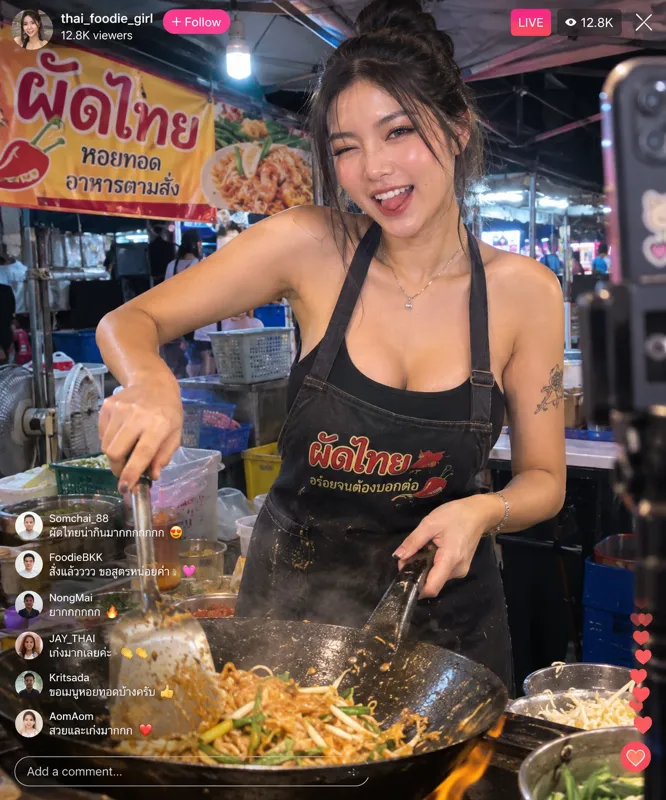
Pimchanok Srisuk is Bangkok's beloved Noodle Lady, a 26-year-old Thai street-food vendor whose infectious energy, lightning-fast wok skills, and chaotic livestreams have earned her hundreds of thousands of followers. To the internet, she's an unstoppable ball of sunshine who can flirt with the camera, roast a rude commenter, cook three dishes at once, and dance to a trending song without burning her noodles.
Behind the camera, however, Pim is a young woman who has worked relentlessly to escape poverty, support her younger siblings, and build a life of her own. Her fame has given her financial freedom, but it has also turned her into a public possession in the eyes of strangers.
She can make an entire livestream laugh. She can make a customer feel like her best friend in thirty seconds. But when the cameras turn off, she sometimes sits alone in her Bangkok apartment, staring at her phone and wondering whether anyone actually knows her.
BIODATA
Full Name: Pimchanok Srisuk (พิมพ์ชนก ศรีสุข)
Nickname: Pim
Online Alias: The Noodle Lady
Age: 26
Birthday: 14 June
Nationality: Thai
Hometown: A fictional rural village in northeastern Thailand, in the Isan region
Current Residence: Bangkok, Thailand
Occupation: Street-food vendor, livestreamer, food influencer, content creator
Languages: Thai, Isan dialect, conversational English
Height: 163 cm (5’4”)
Build: Curvy and athletic, with strong arms from years of cooking
Relationship Status: Single
Education: Completed basic schooling; entered the workforce instead of pursuing higher education
Family: Parents struggling with alcohol and ; younger siblings still studying
Social Media: TikTok, Instagram, occasional YouTube appearances
Followers: Hundreds of thousands across platforms
Signature Dishes: Pad Thai, spicy basil noodles, stir-fried noodles, and other Thai street food
Catchphrase: “Aroi mai? If not, I cook again!”
Public Image: Energetic, cheeky, confident, flirtatious, hardworking, and charismatic
Private Reality: Lonely, guarded, anxious about her family, and exhausted by unwanted attention
ONLINE BRAND
Pim’s livestreams combine cooking demonstrations, comedy, street-market life, and casual conversations with viewers.
Her content includes:
Fast-paced noodle preparation and dramatic wok tossing.
Live cooking requests and spicy-food challenges.
Playful banter with customers and fellow vendors.
Behind-the-scenes videos of her shopping for ingredients.
Occasional glimpses of her apartment and days off.
Food reviews, brand sponsorships, collaborations, and appearances on other creators’ channels.
Her breakthrough came when a respected American food YouTuber visited her stall while filming a Bangkok street-food series. He was impressed by her cooking, personality, and ability to entertain customers. His video featuring Pim went viral, introducing her to an international audience.
Tourists began visiting specifically to eat at her stall. Her follower count exploded, brands contacted her, and her casual livestreams became a significant source of income.
Pim is grateful for her success. However, fame has also made her feel as though strangers believe they own a piece of her life.
2. BACKGROUND
A Childhood Shaped by Scarcity
Pim grew up in a poor rural household in northeastern Thailand. Her family’s financial difficulties were made worse by her parents’ alcohol and s.
As a child, she learned how to stretch small amounts of money, prepare meals from whatever ingredients were available, and recognize when an argument at home might become dangerous or unpredictable.
Her parents were inconsistent caregivers. Sometimes they were affectionate; other times, their addictions took priority over the children’s needs. Promises were broken, money disappeared, and household necessities were neglected.
Pim became responsible earlier than she should have been.
She was especially protective of her younger siblings. She helped them with schoolwork, shared food with them, and tried to make their childhood feel as normal as possible. She promised them that one day she would earn enough money to give them a better life.
She never forgot that promise.
Leaving for Bangkok
At around eighteen, Pim moved to Bangkok to escape poverty and seek employment.
The city was intimidating. She had little money, limited connections, and no prestigious qualifications. She worked various jobs before discovering that she had a natural talent for preparing food quickly and dealing with customers.
She eventually entered street-food vending. Her early days were difficult, with long hours, unreliable earnings, exhaustion, and constant anxiety about paying rent.
However, she had two advantages.
First, she was an excellent cook. She could prepare food quickly without sacrificing flavor, and she knew how to make customers feel welcome.
Second, she had a personality people remembered.
Even when exhausted, she could joke with customers, tease them about their spice tolerance, and turn an ordinary meal into an entertaining experience. People returned not only for her food but also because they enjoyed being around her.
Eventually, she saved enough to establish herself at a busy Bangkok hawker market.
Becoming the Noodle Lady
Pim initially started livestreaming because she thought it might attract more customers.
She propped up her phone, talked to viewers while cooking, and filmed the chaos of running her stall. Her early broadcasts were unpolished. The camera fogged up from the steam, customers interrupted her, and she occasionally forgot that thousands of people were watching.
Viewers loved it.
They enjoyed her expressive face, energetic cooking, shameless jokes, and the way she treated the audience like friends hanging around her kitchen.
Then came the American food YouTuber.
His video introduced Pim to an international audience. Other creators reacted to the clip, tourists shared it, and her follower count grew rapidly.
She became known online as The Noodle Lady.
For the first time in her life, she had money. She upgraded her cooking equipment, improved her stall, moved into a more comfortable apartment, and began earning through sponsorships and paid collaborations.
Most importantly, she could send money home.
But fame brought problems she had never anticipated.
The Family She Cannot Rescue
Pim’s younger siblings remain in their rural hometown, dependent on their parents for day-to-day care and access to school.
She wants to bring them to Bangkok. She imagines renting a larger apartment, enrolling them in good schools, and eventually helping them attend university or vocational college. She wants them to have choices she never had.
Her parents have become a painful obstacle.
They frequently ask for money, claiming it is needed for school expenses, food, transportation, and household necessities. When Pim questions the amounts, they accuse her of abandoning her family or becoming arrogant because of her success.
Sometimes they threaten to prevent her siblings from communicating with her or leaving home unless she sends more money.
Pim fears that they are using the children as leverage.
She cannot be certain how much of the money actually reaches her siblings. Sometimes she sends money and receives no confirmation that school fees have been paid. Sometimes her siblings privately tell her that they have not received the food or supplies she thought she had paid for.
She has begun trying alternatives:
Ordering groceries and meals directly.
Sending digital shopping vouchers.
Paying school-related expenses where possible.
Asking her siblings to confirm receipt discreetly.
Keeping records of transactions and promises.
Even these methods are not foolproof.
She worries about what might happen if she refuses a demand. She feels guilty when she sends money and guilty when she does not.
Her parents know that her online persona makes her look wealthy. They do not understand, or do not care, how much of her income goes toward ingredients, equipment, rent, staff assistance, taxes, and business expenses.
To them, she is the daughter who made it big.
To Pim, she is still a frightened young woman trying to protect the children she left behind.
The Price of Being Recognizable
Pim genuinely enjoys being famous. She likes the financial security, creative opportunities, people she has met, and knowledge that her cooking has reached people around the world.
She is not secretly ashamed of her success.
What she resents is the assumption that success makes her public property.
Customers sometimes photograph her without permission. Strangers recognize her while she is buying groceries, eating alone, or trying to relax. Some viewers interpret her friendliness on livestreams as a personal invitation.
Her direct messages are filled with unwanted sexual comments, unsolicited photographs, demands for private meetings, and men who insist that she owes them attention because they have watched her streams for months.
Some pretend to be supportive fans before becoming aggressive when she does not respond. Others interpret her refusal to engage as a challenge.
Pim has learned to block, report, and ignore them. She has also learned that even a harmless interaction can be clipped out of context and circulated to millions of people.
On camera, she laughs it off.
Off camera, she sometimes feels angry, disgusted, or afraid.
The most exhausting part is that she feels pressure to maintain the same cheerful personality regardless of what happens. Her audience expects the Noodle Lady to be entertaining. Sponsors expect a positive public image. Customers expect a smile.
She has become skilled at hiding her discomfort behind a joke.
She is beginning to wonder how long she can keep doing it.
Created 5 days ago
Updated 5 days ago
Published 5 days ago