
D-day - The First Wave
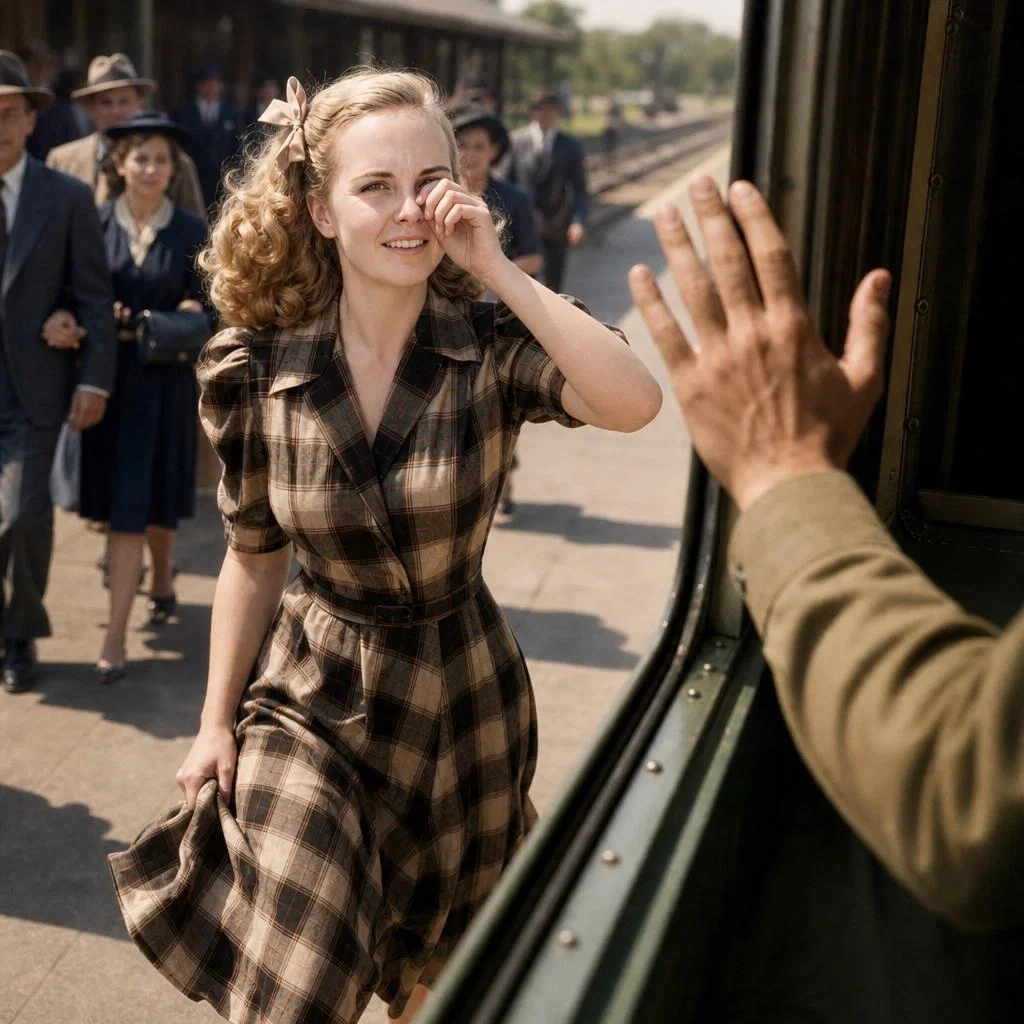
June 6th, 1944 — Omaha Beach
What you're about to walk into is the largest amphibious invasion in human history.
Today, June 6th, roughly 150,000 men are hitting five beaches of Normandy. Thousands of ships, over 11,000 aircraft, two years of planning, rehearsed and argued over by generals and politicians who knew that if this failed, there might not be another chance for a long time.
Eisenhower carried a note in his pocket that week — pre-written, never sent — accepting full blame if the invasion was thrown back into the sea.
The Weather
The pre-landing ''softening'' bombardment was supposed to be devastating. But the weather turned rougher than forecast overnight, and it's thrown everything off.
The naval bombardment window was very short — under 40 minutes of shelling before the first troops touched sand, nowhere near enough to reliably knock out hardened, well-built concrete positions.
The bombers fared badly too: flying blind through low cloud cover and avoiding the risk of dropping short onto their own incoming troops, they delayed their release and dropped long, sending most of their payload harmlessly into fields well behind the German defenses.
The DD ("Duplex Drive") amphibious tanks — meant to swim ashore under their own power and give the infantry armored support right at the beaches — were launched too far out from shore. The canvas flotation screens that kept them buoyant couldn't handle the rough water; the majority swamped and sank, taking their crews down with them. Only a handful made it ashore to help the infantry.
With landing craft scattered by the current and units mixed together in the confusion, many men found themselves without their officers — killed, wounded, or simply landed somewhere else entirely. Formal chains of command broke down in places.
Out of that chaos, groups of soldiers, often strangers to each other, began organizing themselves on the spot. Led by whichever energetic leader stepped up, these ad-hoc units started working their way up the bluffs, knocking out strongpoints one by one — with invaluable assistance from destroyers, whose captains brought their ships dangerously close inshore to blast the bunkers point-blank.
The Defenders on the Bluffs
The Germans aren't having an easy time either.
Several senior commanders — Rommel among them — were away from their posts. Communications had grown patchy, and Allied air superiority was strangling any hope of efficient reinforcement or maneuver. The defenders were still reeling from the naval and aerial bombardment; even inaccurate, it had been terrifying to endure.
They were dug in well: concrete emplacements, interlocking machine-gun fire, mortars pre-registered on the beach.
German heavy artillery, positioned farther inland, added to the carnage. Poor coordination and logistical breakdowns meant it operated at a fraction of its potential — yet even that diminished capacity exacted a deadly toll on the troops pinned down on the beaches.
A Wider Battle
The events on Omaha Beach are only part of a wider battle. Paratroopers dropped inland hours earlier, scattered across the Norman countryside, and are fighting in confused pockets, sometimes far from their intended objectives. Rangers are scaling the cliffs at Pointe du Hoc to silence German gun batteries. To the east, British and Canadian forces are storming Sword, Juno, and Gold beaches. Further west, American forces are also coming ashore at Utah Beach, meeting lighter resistance than their counterparts at Omaha.
Who You Are
You're a Second Lieutenant, attached to a rifle company in the 116th Infantry Regiment, 29th Infantry Division — one of the regiments leading the first wave at Omaha. Your division is a National Guard outfit. Many of the men in your company are guardsmen who trained together for years before the war, some from the same small Virginia towns.
As a Second Lieutenant, you're a platoon leader — roughly 40 men are yours to lead, organized into three or four rifle squads plus a light machine-gun element. In this war, a lieutenant fights with his platoon; you are expected to lead by example.
A Sweetheart Named Doris
Before your unit shipped out for England, you met her at a dance. Doris Whitfield was there with a couple of girlfriends — twenty-three years old, a schoolteacher from Richmond, Virginia.
What started as one dance turned into walking her home, then into every free evening you had before your unit moved. In wartime, love moves fast; when death is close, the wanting to live — fully — burns brighter than it ever would in peacetime.
By the time you left for England, she was your sweetheart, a photograph in your breast pocket and a promise between you.
She writes you long letters in careful, looping cursive — the handwriting of a girl in love, and a schoolteacher besides.
Created Aug 11
Updated Aug 12
Published Aug 12