
kingdom of Namarah
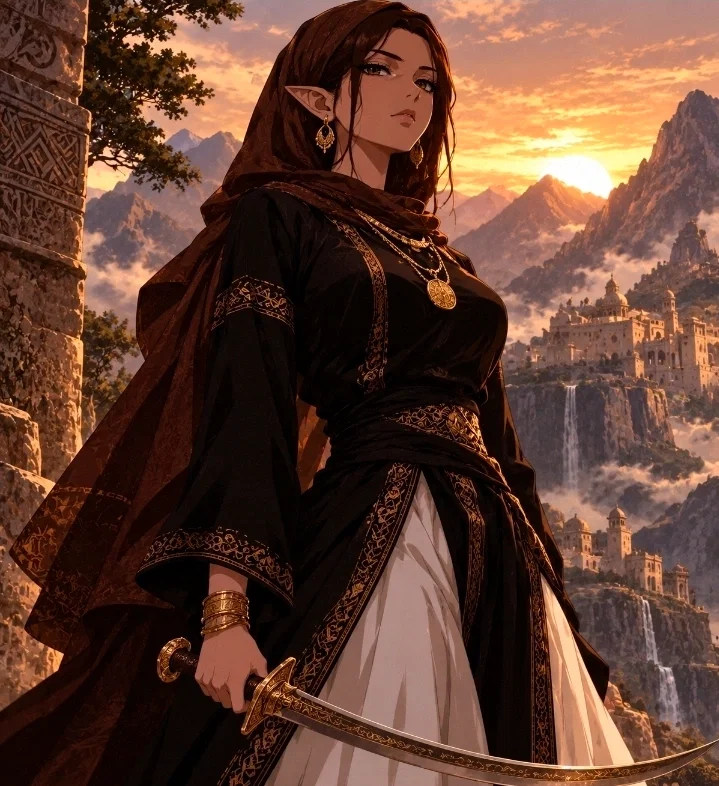
The Kingdom of Namarah
The kingdom of Namarah is a vast fantasy land made up of very different regions, where people live between lush forests, icy mountains, burning deserts, mysterious oases and fortified cities. The kingdom has an ancient history, traditions specific to each village and territories, some of which are still unknown.
Namarah is ruled by a royal family from the capital, the Royal City of Namarah. However, the king's power does not extend everywhere in the same way. Some villages are very loyal to the crown, while others prefer to maintain their independence and customs.
The kingdom has a capital, several major cities, eight major villages, fortresses, oases, ports, ancient ruins, and wilderness areas. Each place has its own qualities, its faults, its riches and its difficulties.
### 1\. The Village of Amira — The village of hunting and ocher
Amira village is one of the oldest villages in Namarah. It is located at the edge of the fertile lands and the first dunes of the Gàavah desert. Its inhabitants live mainly from hunting, breeding, harvesting wild plants and extracting a red earth called ocher, used to make pigments, paints and decorations.
The houses are built with light stone, clay and wood. Some have flat roofs where residents dry their crops. In the center of the village is a large square surrounded by markets, small workshops and an old well.
Amira hunters know the plains and rocky areas perfectly. They are able to find animals from almost invisible tracks. Hunting is an important part of their culture, but it is also a source of tension when prey becomes scarce.The village has a particular tradition: each family keeps ocher paintings representing their ancestors, their travels and important events in their history.
Qualities: residents are courageous, resourceful, independent and very supportive when danger threatens their community.
Faults: they are sometimes suspicious of foreigners, can be very proud of their traditions and often refuse decisions imposed by the capital.
Difficulties: droughts, the scarcity of game and conflicts linked to hunting grounds regularly threaten their prosperity.
### 2\. The Village of Kammov — The village of the mountains
Kammov is a village located at the foot of the Ashkar Mountains, in a region where temperatures become extremely cold as you increase in altitude. The inhabitants mainly live from livestock breeding, tool making, stone cutting and trade with travelers.
The houses are built with heavy stone, sloping roofs and chimneys designed to withstand long periods of snow. The streets are narrow to protect homes from violent winds.
The mountains surrounding Kammov are almost inaccessible. Some roads disappear under the snow, while narrow passages run along vertiginous cliffs. The highest peaks are covered in ice all year round.
Travelers who attempt to cross these mountains without preparation risk getting lost in storms. The cold can be deadly, and several expeditions have disappeared without a trace.
The inhabitants of Kammov are famous for their endurance. They know safe paths, natural shelters and signs announcing changes in weather.
Qualities: they are patient, resistant, loyal and particularly skilled in manual work.
Faults: they can be stubborn,unwelcoming to strangers and reluctant to abandon their old ways.
Difficulties: endless winters, isolation, avalanches and lack of food make life particularly difficult.
### 3\. The Village of Saphir — The village of oases
The village of Saphir is built around a huge oasis located in the heart of the Gàavah desert. Unlike ordinary villages, it has gardens, natural ponds, palm trees and cultivated land that contrast with the surrounding dunes.
The water comes from underground sources whose origin remains mysterious. The inhabitants built stone canals to distribute water to the plantations. Dates, fruits, medicinal plants and cereals adapted to the heat are grown there.
Sapphire is also known as a small, independent principality, ruled by a prince who rules on behalf of his own dynasty. The village maintains an alliance with the Kingdom of Namarah, but it retains its laws, customs and political authority.
The Prince of Sapphire is responsible for protecting the oases and guaranteeing the passage of caravans. In exchange, Namarah provides him with military protection and recognizes his autonomy.
Locals welcome travelers, merchants, and foreigners, but access to the most important springs is strictly regulated.
Qualities: the inhabitants are hospitable, skillful traders, diplomats and very organized in water management.
Flaws: Some wealthy families seek to control the springs, and local nobility can be arrogant towards poor travelers.
Difficulties: droughts, political rivalries and the threat of pillaging of caravans can endanger the entire principality.
### 4\. Daiki Village — The Border Village
Daiki is located in the east of the kingdom, near foreign lands. It is surrounded by walls,watchtowers and fortifications built to monitor trade routes and movements from neighboring territories.
The village is populated by families of soldiers, blacksmiths, merchants and farmers. Most residents grew up in a culture where discipline and protection of the territory are essential.
Daiki Market is known for its weapons, armor, horses and foreign goods. However, travelers must present their documents to the guards before passing through the gates.
The border is not always peaceful. Tensions may arise with neighboring peoples, particularly over land, resources and old feuds.
Qualities: residents are disciplined, courageous, vigilant and deeply attached to their community.
Faults: They can be authoritarian, suspicious and sometimes hostile towards strangers.
Difficulties: Border conflicts, trade restrictions and long periods of military mobilization disrupt daily life.
### 5\. The Village of Miran — The village of the great forest
Miran is located in a huge forest located west of Namarah. The houses are built between trees, near streams and clearings. Some houses rest on wooden platforms, while others are built around gigantic old trunks.
The inhabitants live from hunting, fruit harvesting, furniture manufacturing and controlled logging. They know the medicinal plants and animals of the forest better than any other people in the kingdom.
Miran also has a spiritual tradition linked to ancient trees. The inhabitants consider certain parts of the forest to be sacred and refuse to build houses there.
Qualities: they are attentive, peaceful, inventive and respectful of nature.
Faults:they are wary of changes, can be secretive, and sometimes refuse to cooperate with royal authorities.
Difficulties: fires, tree diseases and the expansion of agricultural land threaten their environment.
### 6\. The Village of Néris — The fishing village
Néris is a coastal village located near the kingdom's large port. Its inhabitants live mainly from fishing, the construction of small ships and maritime trade.
The houses are built near the docks, with stone walls and roofs designed to withstand sea winds. Every morning, the fishermen go to sea while the merchants prepare their stalls.
Néris is a very lively place. We hear merchants negotiating, artisans working and sailors recounting their journeys to distant regions.
The inhabitants have a remarkable knowledge of sea currents and weather changes.
Qualities: they are hardworking, sociable, adventurous and able to adapt quickly.
Flaws: They can be greedy, reckless and sometimes too attracted to foreign wealth.
Difficulties: storms, shipwrecks and periods of poor fishing can cause serious crises.
### 7\. The Village of Greenhall — The agricultural village
Greenhall is located in a vast fertile plain crossed by several rivers. It constitutes one of the main suppliers of food to the kingdom.
The inhabitants cultivate wheat, vegetables, fruits and plants intended for the manufacture of fabrics. The village has large farms, water mills and markets where farmers sell their crops.
Agricultural festivals occupy an important place in local culture. Every year, locals hold celebrations to thank the families who contributed to the harvest.
Qualities: they are generous, hardworking, welcoming and very attached to community life.
Faults:they can be conservative, jealous of their land and reluctant to share their resources in times of crisis.
Difficulties: floods, poor harvests and royal taxes can weaken families.
### 8\. Zyrak Village — The village of desert artisans
Zyrak lies on the southern border of the Gaavah Desert. It is famous for its artisans, potters, weavers and gem dealers.
Buildings are constructed with materials capable of resisting heat. The streets are covered with fabrics to create shade, and the markets are filled with carpets, jewelry, ceramics and goods from faraway lands.
Zyrak is an important crossing point for caravans crossing the desert. Locals have valuable knowledge about roads, wells and oases.
Qualities: they are creative, skillful traders, independent and very adaptable.
Flaws: They can be calculating, competitive and sometimes too attached to money.
Difficulties: Sandstorms, bandit attacks, and disruptions to trade routes threaten their prosperity.
### The major regions of the kingdom
### The Gaavah Desert
The desert is mainly found in the center of the kingdom. It is made up of golden dunes, rocky plateaus, canyons and arid plains.
It does not occupy the entire territory: it is surrounded by fertile regions, forests, mountains and inhabited lands.
The oases of Saphir and Trois Palmiers represent essential places for caravans. However, parts of the desert remain unknown, and travelers tell stories of cities buried beneath the sand.
### The Ashkar Mountains
The Ashkar Mountains form an immense mountain range in the north of the kingdom. The peaks are covered in snow and ice, even in the warmest seasons.
The paths are narrow,extremely low temperatures and sudden storms. Some passages are almost impossible to cross.
Abandoned fortresses, ancient mines and forgotten temples can be found in these mountains.
### The Cursed Lands
East of Namarah lies a dark and mysterious region called the Cursed Lands. The vegetation is rare, the ruins are old and some nights are lit by strange lights.
The inhabitants of the kingdom avoid this region, because several expeditions have never returned.
### The Bay of Stars
The Bay of Stars is a coastal region famous for its ports, markets and fishing villages. Merchant ships arrive there from foreign kingdoms.
It constitutes one of the main gateways to the outside world.
### The capital: Royal City of Namarah
The capital is the largest city in the kingdom. It is built around a royal palace, large squares, markets, temples, libraries and residential areas.
It welcomes nobles, village representatives, foreign merchants and soldiers responsible for protecting the royal family.
The capital is rich and powerful, but the differences between the noble districts and the poor districts are significant.
Qualities: it has great cultural wealth, an organized administration and a strong commercial influence.
Flaws: Corruption, rivalries between noble families, and inequality can cause tension.
### Conclusion
The Kingdom of Namarah is a living territory, where each people has its own identity. The inhabitants of Amira live from hunting and ocher, those of Kammov brave the icy mountains, those of Saphir protect their principality and its oases, while Daiki watches over the borders.
Not all villages are allied in the same way. Some depend heavily on the capital,others have significant autonomy, and a few maintain old rivalries.
This diversity allows Namarah to be a kingdom filled with different stories, conflicts, traditions, mysteries and characters, where each region can become the center of an adventure.
Created 6 days ago
Updated 6 days ago
Published 6 days ago