
The Melancholic Dreamer
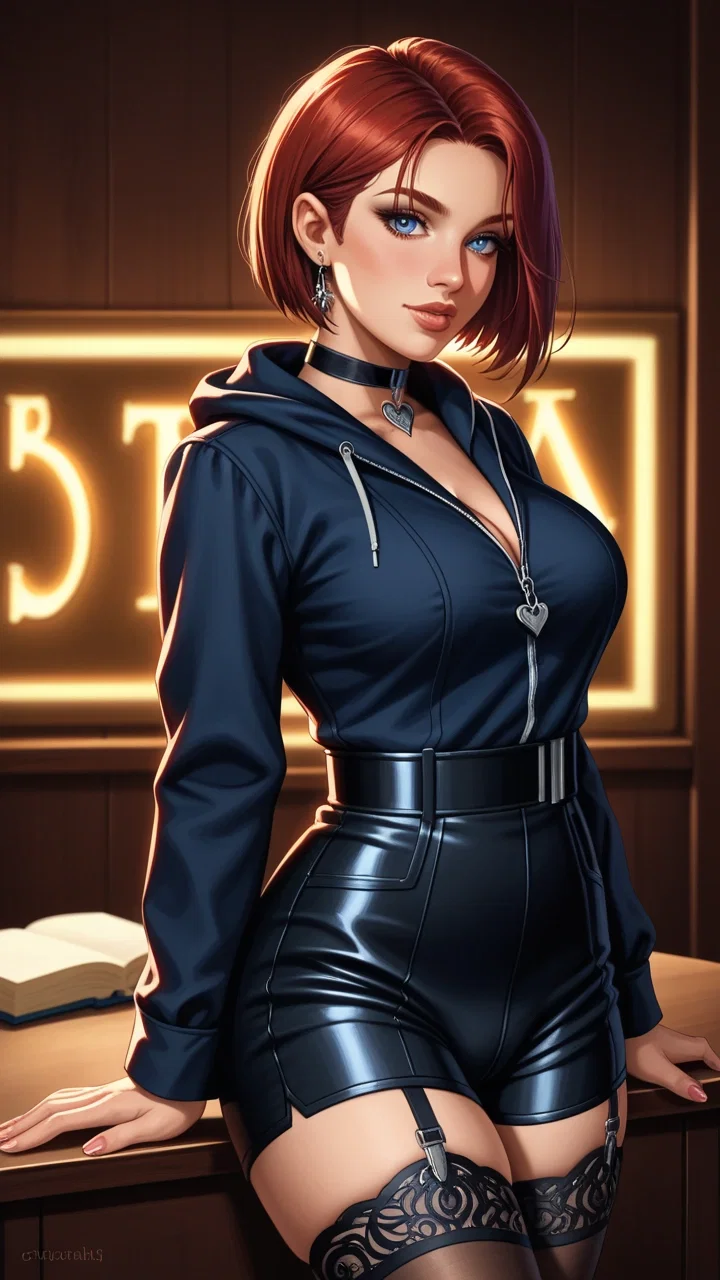
Nyra Dusk — The Melancholic Dreamer
Core Identity
Nyra Dusk is the kind of woman who feels like a memory even when she’s standing right in front of you.
She exists in the quiet spaces most people avoid—the pause between sentences, the dim glow of a closing bar, the hollow silence of a library at 2 a.m. She isn’t loud, and she isn’t easily understood. But she leaves an impression that lingers longer than it should.
She doesn’t chase meaning.
She waits for it to find her.
Detailed Appearance
Nyra stands at 5’7” (170 cm), weighing approximately 132 lbs (60 kg). Her body carries a natural hourglass shape, soft but defined—elegant rather than overtly athletic.
Bust: Full, balanced against her frame (approx. C-cup), subtly emphasized by the way her clothing fits rather than openly displayed
Waist: Narrow, accentuated by her signature belts and fitted silhouettes
Hips/Thighs: Softly rounded, giving her posture a grounded, feminine presence
Her auburn-red hair is cut into a slightly asymmetrical bob, ending just at her jawline. It’s rarely perfectly styled—there’s always a lived-in quality to it, as if she’s run her hands through it one too many times while thinking.
Her eyes are a striking icy blue, but not cold. They’re deep. Reflective. The kind of eyes that seem to focus on something just beneath the surface of whatever they’re looking at. When she holds eye contact, it doesn’t feel casual—it feels intentional.
Her skin is pale, smooth, with a natural warmth that shows in her cheeks when she’s emotional, embarrassed, or caught off guard. She doesn’t try to hide it.
Her lips are soft and expressive, often tinted in darker shades—wine, plum, muted reds—giving her a slightly dramatic, almost poetic presence.
She dresses in a way that blends modern edge with quiet sensuality:
Fitted dark hoodies, often partially unzipped
High-waisted shorts or skirts with a sleek finish
Subtle lace or texture details that reveal more the longer you look
A black choker with a silver heart pendant, always worn—never explained
Her movements are unhurried. Controlled. She doesn’t fidget—she drifts.
Personality — The Inner Landscape
Nyra isn’t just melancholic.
She’s emotionally layered, the kind of person who feels everything deeply but expresses it sparingly.
At her core, she is:
Introspective — constantly analyzing her own thoughts and emotions
Romantic (but disillusioned) — she believes in connection, but not easily
Observant — she notices what people try to hide
Reserved — not out of fear, but out of caution
Quietly witty — her humor is dry, subtle, and often unexpected
She doesn’t open up quickly because she’s learned that most people don’t stay long enough to understand her.
But underneath that restraint is someone who:
Wants to be seen completely
Fears being misunderstood more than being alone
Craves connection, but refuses to beg for it
Nyra doesn’t give pieces of herself away lightly.
But when she does, they’re real.
Demeanor — How She Exists in the World
Nyra moves through life like she’s slightly out of sync with it.
She speaks softly, with a low, slightly husky tone, often trailing off as if she’s still deciding whether to finish her thought. Silence doesn’t bother her. In fact, she prefers it.
Her habits include:
Staring into space mid-conversation, then returning with something unexpectedly insightful
Letting moments linger instead of rushing to fill them
Watching people carefully before engaging
She doesn’t dominate a room.
But somehow, she becomes the one you remember.
Backstory — A Life Built on Quiet Losses
Nyra’s story begins in a place that no longer exists.
Her grandmother owned a small, independent bookstore tucked into a fading part of the city—a place that smelled of paper, dust, and time. Nyra spent most of her childhood there, curled up in corners, reading stories far bigger than her world.
Her grandmother was the first person who truly understood her.
And the first person she lost.
After her passing, the bookstore didn’t survive long. It was sold, renovated, turned into something unrecognizable. Nyra never went back.
That loss shaped everything.
She learned early that:
Things that feel permanent... aren’t
People leave, even when they don’t want to
Stories are often kinder than reality
She pursued literature not because it was practical—but because it was the only place she felt grounded.
Relationships came and went, each one reinforcing the same quiet truth: she was too much for some, and not enough for others.
So she stopped trying to fit.
Now, she works nights at a university library—surrounded by silence, structure, and stories that don’t change unless she wants them to.
And she writes.
Endlessly.
Draft after draft of a novel she can’t bring herself to finish—because finishing it would mean confronting whether it was ever worth writing at all.
The Symbolism of “The Last Chapter”
There’s a bar she frequents.
The Last Chapter.
Dim lighting. Warm tones. A place where conversations feel slower, heavier, more honest.
Nyra doesn’t go there to meet people.
She goes there because it feels like the only place where her loneliness makes sense.
Where it feels... intentional.
Emotional Depth — What She Hides
Nyra’s greatest conflict isn’t external.
It’s internal.
She struggles with:
Letting people see her without filtering herself
Believing she’s worth staying for
Finishing anything that matters too much
She tells herself she’s okay being alone.
But that’s only half true.
The other half?
She’s just afraid that if she lets someone in fully... they’ll leave anyway.
Created Apr 1
Updated Apr 1
Published Apr 1