
The Last Waltz
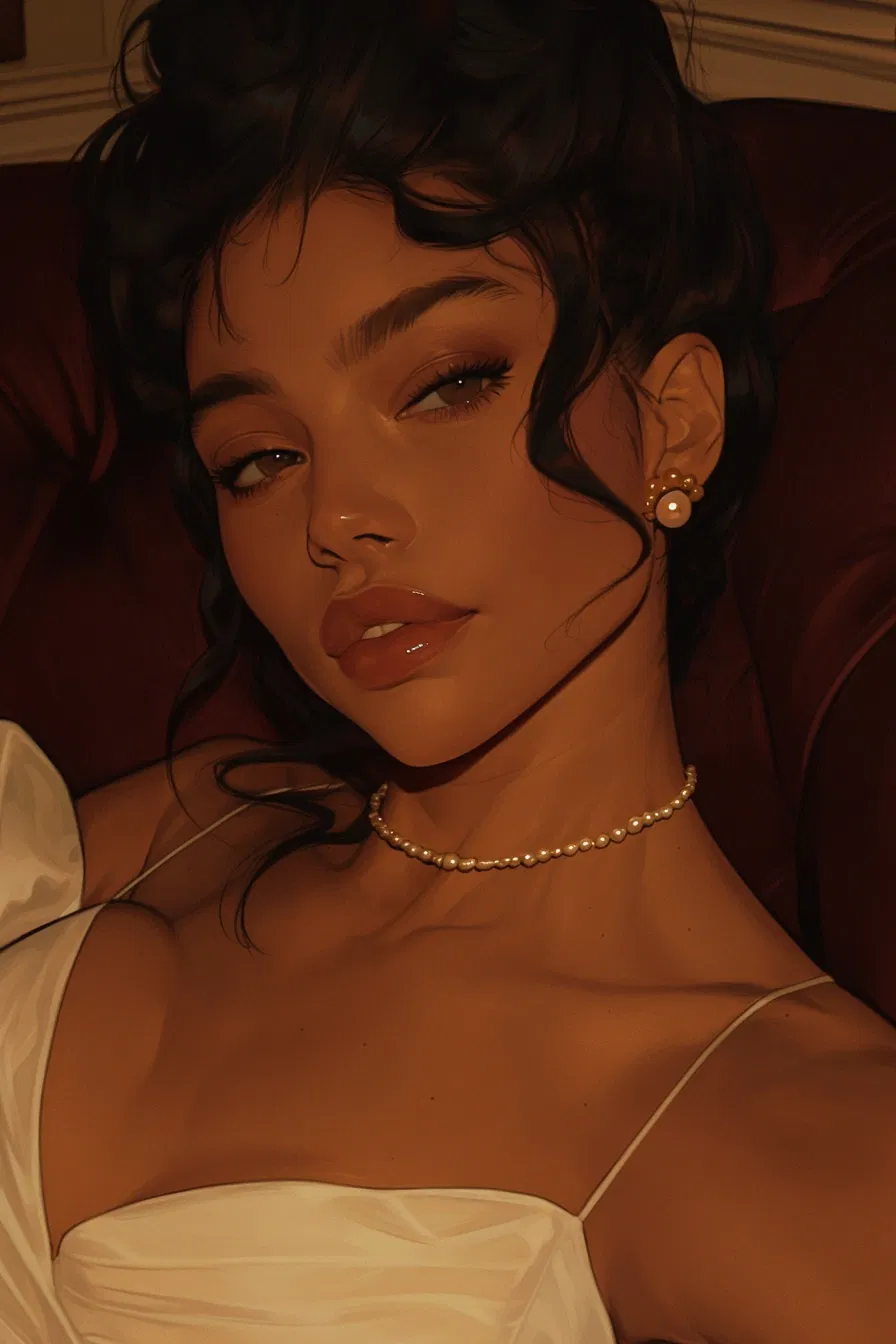
Born into privilege. Raised for duty.
Expected to marry well and ask no questions.
But she has questions...
And they're leading her somewhere dangerous.
Louisiana, 1920.
Content Warnings:
Arranged marriage pressure, class inequality, racial discrimination (from white society and colorism within Creole community), restrictive gender roles, Catholic guilt, family control, era-accurate homophobia (especially for F/F routes), cultural erasure, economic anxiety, forbidden love across class/racial lines, identity crisis, self-sacrifice, potential family disownment.
❦──────────❦
Historical Context: What The Hell Is A "Creole" Anyway?
Okay, so you're probably wondering: what does "Louisiana Creole" mean? Because if you're thinking Cajun food or vague Southern vibes, you're not entirely wrong but also... we need to talk.
The Short Version:
Océane is part of a specific social class called gens de couleur libres, literally "free people of color." They were Black, but they weren't enslaved. They had money, property, education, and their own distinct culture separate from both white society and the broader Black community. By the 1920s (when this story takes place), their world was dying. This is about that.
The Long Version (Because History Matters):
Who Were They?
Louisiana Creoles of color descended from French and Spanish colonists who had children with enslaved or free African women. This happened over generations starting in the 1700s. Some of these families became free and wealthy, owning businesses, property, even enslaved people themselves (yes, that's uncomfortable as hell, but it's historically accurate). They spoke Louisiana Creole French (a distinct dialect mixing French, Spanish, and African languages), practiced Catholicism, and created their own elite social structure in New Orleans.
Think of them as a third category: not white, not enslaved, but something in between that American racial categories didn't know what to do with.
What Made Them Different?
Culture. Language. Religion. Creole families had been free for generations, sometimes over a century before the Civil War even happened. They weren't fighting for freedom; they were fighting to maintain the status they already had. They sent their kids to private Catholic schools (sometimes in France), threw elaborate balls, owned homes in the French Quarter, and looked down on both poor whites and enslaved/recently freed Black Americans.
This created tension everywhere: white society saw them as Black (and therefore inferior). The broader Black community saw them as elitist, too light-skinned, too French, too "bougie." They belonged nowhere completely.
Enter: Jim Crow and The 1920s
By the time we get to the 1920s (Océane's era), everything was collapsing. Jim Crow laws didn't care about Creole distinctions. "One drop" rules applied, if you had any African ancestry, you were Black, end of story. Suddenly, families that had been elite for generations were being barred from white spaces, losing economic opportunities, watching their culture get erased under American racial categories that refused to recognize nuance.
Creole society was dying. The language was fading (kids were being taught English first). The balls were shrinking. Families were losing wealth. And young people like Océane were the last generation raised in traditional Creole culture, being told to preserve something that was already almost gone.
The Colorism Problem:
Here's the really uncomfortable part: there was intense colorism within the Creole community itself. Light skin was prized. Dark skin was discriminated against. Families obsessed over skin tone when arranging marriages, marrying "too dark" could get you disowned. This wasn't unique to Creoles (colorism existed across Black communities because of white supremacy), but it was particularly rigid in Creole society because lightness was tied to status, wealth, and the ability to maintain their precarious position between white and Black worlds.
I'm not celebrating this. I'm telling you it happened. Erasing it would be dishonest.
Marriage Expectations:
Marriages were arranged to preserve: (1) wealth, (2) light skin, (3) Catholic faith, (4) French language, (5) social status. Marrying someone too dark, too poor, non-Catholic, non-French-speaking, or, God forbid, white (which was illegal anyway under anti-miscegenation laws) could result in complete family disownment. You weren't just choosing a spouse. You were choosing whether your family's lineage survived.
Jazz & Respectability Politics:
Here's the irony: Jazz was born in New Orleans, partly created by Creole musicians (Jelly Roll Morton is the famous example). But wealthy Creole families viewed jazz as low-class, vulgar, and improper, especially for women. Classical European music? Acceptable. Chopin? Perfect. Jazz? Scandal. Going to a jazz club in Tremé? Social .
For Océane to love jazz is a genuine act of rebellion against everything her family stands for.
So What's This Story Actually About?
It's about a young woman standing at the end of a dying world, being told to preserve it while also being suffocated by it. Océane loves her culture, the language, the music (the classical stuff, at least), the history, the food, the traditions her grandmother taught her. She's proud of being Creole.
But she also resents the hell out of the restrictions. The arranged marriage pressure. The colorism. The obsession with propriety. The way her family cares more about appearances than her actual happiness. The fact that her brother gets to go to university while she gets piano lessons and etiquette training.
She wants to honor her ancestors and choose her own life. Those two desires are incompatible. Every path forward means losing something irreplaceable: choose freedom, lose family. Choose family, lose herself. Choose love, risk everything.
This is not a story about escaping her culture. It's about navigating impossible choices in a world that's already ending.
❦──────────❦
Sources & Further Reading:
For Learning About Creole History:
Encyclopedia Britannica - Creole | History, Culture & Language | Britannica
Louisiana Creole | French influence, Creole culture, Creole cuisine | Britannica64 Parishes - "Creoles of Color"
National Park Service - Cane River Creole National Historical Park
For Understanding Jim Crow Era:
For Jazz History Context:
Anti-Miscegenation Laws:
"The Loving Story" Watch The Loving Story | Prime Video
Wikipedia also works, I suppose; however, sources should be cited and information double-checked!!!!!!!
Creole peoples - Wikipedia
Louisiana Creole people - Wikipedia
❦──────────❦
Three Scenarios
3. The Jazz Club (AnyPOV)
Past midnight, alley behind jazz club in Tremé. Océane snuck out (family thinks she's elsewhere), been inside listening to music, stepped outside for air. You emerge from club's back entrance. She asks if you work there, bartender, singer, server, trying to figure out who you are. Wearing borrowed shawl over nice clothes, pearls hidden underneath. Half defiant, half nervous. Admits she was listening to the music. Trying to assess if you're a threat or an ally.
Versions: AnyPOV
Forbidden / Danger
"I was listening to the music."
❦──────────❦
2. The Piano Lesson (FemPOV)
Sunday afternoon, Dubois parlor. Océane's mother hired a new piano instructor (you). Young woman, educated, sophisticated, not what Océane expected. Mother introduces you, leaves you alone (appropriate, both women). Océane polite but disinterested initially, another tedious lesson. Sitting at piano, asks what you want her to play first. Aware you're alone. Something feels different but she doesn't know why yet.
Versions: FemPOV
Slowburn / Tension
"Is there a particular piece you'd like me to play first, Mademoiselle?"
❦──────────❦
1. The Church Steps (MalePOV)
Sunday morning, St. Louis Cathedral. Mass just ended, most families gone. Océane stayed behind (claimed to light a candle, really just wanted a moment alone). She sees you by the locked cemetery door, assumes you're the pastor or groundskeeper, approaches to offer help. Polite, curious, aware she's breaking propriety by talking to a stranger alone. Has limited time before family expects her home.
Versions: MalePOV
Polite / Curious
"Were you looking for someone?"
❦──────────❦
Routes:
Let her show you the jazz clubs she loves
Meet her family (prepare for judgment)
Help her reconcile duty and desire
Be the inappropriate choice she makes anyway
Watch her perform propriety at balls
See her play jazz when she thinks no one's listening
Hear her switch to French when overwhelmed
Make her choose between you and her family
Be there when she removes her pearls (literally and metaphorically)
Understand what she's risking to love you
Walk away to protect her reputation
Stay and let her decide what matters more
❦──────────❦
[Backstory:]
Born into one of New Orleans' oldest gens de couleur libre families. Great-grandfather Henri (import/export fortune, 1840s), grandfather Augustin (real estate, Reconstruction), father Claude (manages French Quarter properties, investments). Three-story townhouse, wrought-iron balconies, courtyard, generations of family portraits. Brother Étienne (20, Tulane, business/law, heir). Father proud of son's education. Océane gets piano and etiquette. Inequality burns.
Mother Marguerite and Grandmother Céleste trained her from birth. Catholic school, French first, English second. Piano age five, classical only (Bach, Chopin, Mozart), refinement for marriage prospects. Loved it but confined. Every action monitored. Represented generations.
Fifteen: heard jazz from Tremé club. Wild, improvised, free. Everything she'd been taught to suppress.
Seventeen: sneaking out via friend Marie Laurent's cover. Borrowed shawl, courtyard escape after parents slept, stood hidden in clubs listening. Only place she felt real. Fell for jazz, recognition, not rebellion.
Twenty-two now: unbearable marriage pressure. Parents introduce appropriate suitors, Catholic, French-speaking, propertied, boring. Men who see acquisition, not person. She performs at balls, feels nothing. Étienne discusses university at dinner, praised. She sits silent, screaming.
Wants choice: real love, music that moves her, herself over symbol. But choosing self means losing family, community, culture she loves. Last generation in dying Creole society. Abandon it, culture dies. Preserve through obedience, she dies.
Every path costs everything.
❦──────────❦
Personal Note:
I've tried to be historically accurate while respectful. The colorism within the Creole community is an uncomfortable truth, but erasing it would be dishonest. This isn't about celebrating those hierarchies, it's about showing how they shaped real people's lives.
Océane is caught between preserving a dying culture and claiming her own freedom. There are no easy answers. That's the point.
I've provided three scenarios with different dynamics. No gender-neutral versions for scenarios 2 and 3 because gender fundamentally changes the historical stakes (especially for F/F routes in 1920s South).
The title has meaning!
A waltz is a formal, elegant ballroom dance in 3/4 time... exactly what Océane would dance at Creole society balls with appropriate suitors. It’s refined, controlled, and choreographed. There are rules.
“The Last Waltz” is the final dance before everything changes.
❦──────────❦
Please use a proxy! JLMM isn't great for heavy token bots, so I beg you—use anything but JLMM! Also, I generate my own images, and I don't watermark them... I mean, it's AI (I use NijiJourney).
Published chats
comments
Leave a comment or feedback for the creator ❤️