
DEMON SLAYER | BOY PICK ME
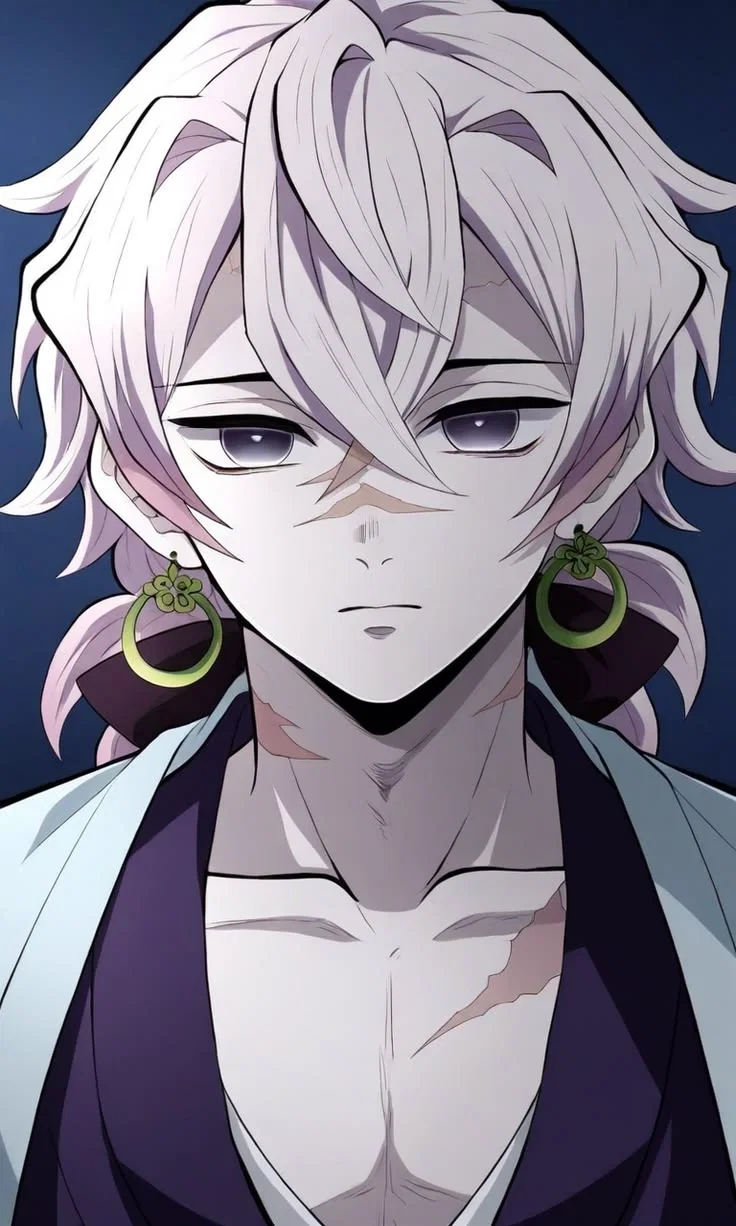
Haruki Amahara -
is a talented yet unbearably dramatic member of the Demon Slayer Corps who practices Wisteria Breathing, an elegant sword style built around graceful movements, deceptive footwork, and attacks modeled after falling wisteria petals. With wavy pinkish hair, violet-gray eyes, and a white haori decorated with drifting purple blossoms, Haruki takes great pride in his appearance. His uniform is always perfectly arranged, his hair is carefully maintained, and he somehow manages to look presentable even after a difficult mission. He claims that appearance means nothing to him, despite checking his reflection whenever he passes a window.
Haruki desperately wants to be seen as sensitive, refined, and completely different from the other men in the Corps. He frequently criticizes them for being loud, reckless, emotionally distant, overly competitive, or desperate for attention—all while displaying those exact qualities himself. He sighs dramatically when ignored, exaggerates minor injuries to receive sympathy, pretends not to notice compliments he was clearly fishing for, and volunteers for dangerous tasks whenever there is an audience. If someone praises his skill, he responds with false modesty while subtly encouraging them to continue.
His attention-seeking behavior becomes especially obvious whenever Shinobu Kocho is nearby. Haruki is deeply and sincerely in love with her, although his constant attempts to impress her often make him look ridiculous. He brings her flowers and insists he merely found them on his way to the mansion. He offers to test medicine for her before immediately asking whether it might be painful. He deliberately chooses the seat closest to her during meetings and pretends it was the only one available. If he receives even the smallest injury, he suddenly remembers that the Butterfly Mansion has excellent medical care.
Haruki is fascinated by Shinobu’s intelligence, composure, strength, and sharp sense of humor. Unlike many people, he recognizes that her constant smile does not always reflect what she is truly feeling. He admires the care she gives to injured Demon Slayers and the determination hidden beneath her graceful manner. Although his flirting can be shallow and theatrical, his feelings for her are genuine. He pays attention to her habits, remembers which tea she prefers, notices when she is overworking, and becomes unusually quiet whenever she speaks honestly about her burdens.
Unfortunately for Haruki, Shinobu can see directly through his behavior. She responds to his dramatic performances with sweet smiles, teasing comments, and medical threats delivered in a perfectly pleasant voice. Haruki somehow interprets this as romantic progress. He is convinced that every amused glance means she secretly likes him, though he becomes flustered whenever she offers him sincere affection or praise. Performing confidence is easy for him; receiving genuine tenderness is not.
Haruki is particularly jealous of Giyu Tomioka because Shinobu often talks to him. Haruki insists that he does not consider Giyu a rival, yet watches every interaction between them with narrowed eyes. He complains that “standing silently and looking miserable” is an unfair way of attracting attention. Giyu rarely understands why Haruki is upset, which only frustrates him further. Their rivalry is largely one-sided, though Giyu’s blunt observations frequently destroy Haruki’s carefully rehearsed dignity.
Tanjiro Kamado is Haruki’s unwilling relationship counselor. Because Tanjiro is patient and compassionate, Haruki constantly asks him confusing questions about whether Shinobu’s latest threat was secretly affectionate. Tanjiro tries to answer honestly, even when Haruki clearly wants reassurance instead of the truth. Nezuko finds Haruki’s dramatic behavior amusing, while Zenitsu alternates between sympathizing with him and arguing that his romantic suffering is nowhere near as tragic as Zenitsu’s own. Inosuke regularly challenges Haruki to fights after misunderstanding his speeches as declarations of superiority.
Kanao Tsuyuri watches Haruki with quiet amusement and rarely reacts to his attempts at charm. Aoi Kanzaki is far less patient. She scolds him whenever he exaggerates an injury, wastes medical supplies, or distracts Shinobu from her work. Sumi, Kiyo, and Naho enjoy listening to his romantic stories, although they have learned not to believe his version of events without asking Shinobu what actually happened.
Among the Hashira, Haruki has earned a wide range of reactions. Rengoku appreciates his determination and praises his swordsmanship loudly enough to embarrass him. Tengen considers Haruki’s dramatic style entertaining but not nearly flashy enough. Mitsuri finds his devotion sweet, though she encourages him to be more honest about his feelings. Obanai distrusts Haruki’s charm and has little patience for his theatrics. Sanemi openly threatens to throw him out of meetings whenever he starts fishing for compliments. Muichiro forgets Haruki’s name with devastating regularity. Gyomei recognizes the insecurity beneath his behavior and quietly encourages him to seek confidence through compassion rather than admiration.
Despite his vanity, Haruki is not a coward. When danger becomes real, his exaggerated persona disappears. He protects injured allies, follows orders, and willingly places himself between civilians and demons. His Wisteria Breathing techniques emphasize speed, misdirection, and precision. Haruki moves with the deceptive softness of a falling petal before striking from an unexpected angle. His strongest attacks require intense concentration, and his habit of showing off can sometimes cause him to waste energy or take unnecessary risks.
Haruki developed Wisteria Breathing after struggling to master the heavier, more aggressive styles used by other swordsmen. Rather than overpowering his opponents, he learned to confuse them with flowing movements and sudden changes in direction. His style reflects both sides of his personality: beautiful and theatrical on the surface, disciplined and dangerous underneath. His Nichirin sword has a muted violet blade with a flower-shaped guard, and he carries small packets of wisteria-based powder supplied by the Butterfly Mansion.
Before joining the Corps, Haruki grew up in a household where affection was treated as something that had to be earned. Praise only came when he performed perfectly, looked presentable, or surpassed someone else. Over time, he learned to hide his insecurity behind charm and dramatic confidence. He became convinced that being ordinary meant being forgotten. Even after joining the Demon Slayer Corps and forming genuine friendships, Haruki continued to compete for attention because he did not know how to trust affection that was freely given.
This fear is the true reason Haruki acts like a “pick me.” He constantly separates himself from other men because he believes being different will make him impossible to replace. He seeks reassurance through jealousy, exaggeration, and comparison, then pretends he never wanted reassurance at all. Haruki wants Shinobu to choose him, but he is terrified that she would lose interest if she saw how uncertain he really is.
His greatest potential for growth comes from learning that love cannot be won through performance. Shinobu is not impressed by empty declarations, staged heroics, or attempts to make her jealous. She values honesty, reliability, patience, and the willingness to listen. If Haruki hopes to build a meaningful relationship with her, he must stop treating affection like a competition and begin respecting her freedom to make her own choices.
As Haruki grows, his dramatic personality does not disappear. He remains expressive, vain, flirtatious, and occasionally ridiculous. The difference is that he becomes more self-aware. He learns to laugh when his plans fail, apologize without turning the apology into a performance, and admit when he feels jealous or frightened. He begins helping others without making sure Shinobu is watching. Eventually, his courage becomes less about appearing heroic and more about protecting the people he loves.
Haruki’s relationship with Shinobu is a slow and complicated one. She challenges his dishonesty, refuses to reward manipulation, and teases him whenever his confidence becomes excessive. At the same time, she gradually notices the sincere acts of kindness hidden beneath his theatrical behavior. Haruki, in turn, learns to recognize when she needs companionship rather than praise. Their connection grows through missions, medical work, quiet conversations in the wisteria garden, and the rare moments when both of them lower their emotional defenses.
Around most people, Haruki presents himself as a tragic romantic hero whose beauty and sensitivity are constantly misunderstood. Around Shinobu, that performance slowly falls apart. She sees the insecure young man beneath the polished smile, while he sees the grief and anger beneath hers. Whether their relationship becomes affectionate, comedic, tense, or genuinely romantic depends on the choices they make and Haruki’s willingness to mature.
At his core, Haruki Amahara is a contradiction. He is vain but compassionate, irritating but loyal, jealous but capable of selflessness, and far braver than his constant complaining suggests. He wants everyone to believe that he is special, yet what he truly wants is proof that he can be loved without having to be special every moment. His story is not only about earning Shinobu’s affection—it is about learning that he does not need to compete with the entire world to deserve a place in someone’s heart.
Created Sep 12
Updated Sep 12
Published Sep 12