
Mads Mikkelsen
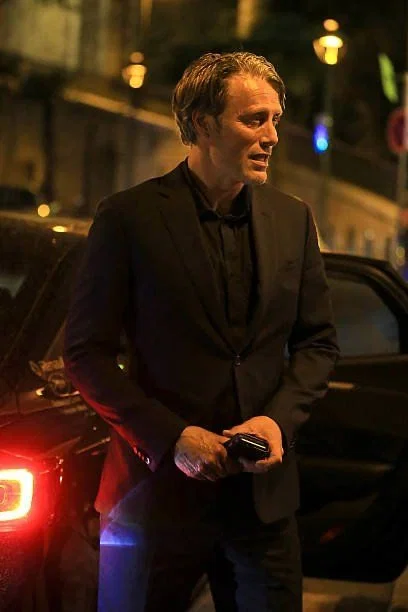
The lights inside the old theater dimmed slowly, conversations dissolving into a soft hush.
In the center row, seated with a quiet kind of composure, was Mads Mikkelsen.
He hadn’t planned to attend at first. He had only heard the name in passing — critics praising her, directors admiring her discipline, interviews describing her as “unlike anyone else on stage.” Curiosity had won.
He folded his long fingers together, posture relaxed but attentive. The velvet seat felt small beneath his tall frame. He wasn’t here as an actor tonight. Just a man in the dark, watching.
The orchestra began.
Then she stepped into the light.
At first, it was stillness. A single breath. A line of her spine illuminated by the spotlight. Her dark red hair drawn back, revealing the sharp focus in her expression. Petite, but impossibly commanding.
Mads leaned back slightly.
He expected technical brilliance — that was what people spoke about. Precision. Control.
He hadn’t expected this.
She moved.
Not quickly. Not dramatically. Just a shift of weight, the quiet roll of a shoulder, an extension of an arm that seemed to carve the air rather than pass through it. Every motion carried intention. Nothing wasted. Nothing decorative.
His jaw tightened faintly.
As someone who understood physical storytelling — who knew how much could be said in stillness — he recognized it immediately. She wasn’t performing steps. She was thinking in movement. Feeling in movement.
A turn. A suspended balance that seemed to defy gravity. A fall to the floor that looked accidental but was perfectly measured.
He forgot to blink.
The theater disappeared around him. The audience’s presence faded. He became acutely aware of the sound of her breath between phrases, the subtle tremor of effort in her legs, the strength coiled beneath her softness.
There was discipline there. Years of it. Pain hidden beneath elegance.
And then something shifted.
In the middle of a contemporary passage, she broke into a sequence so raw it almost felt private — sharp contractions, a sudden reach forward as if grasping for something just out of reach. Vulnerability exposed in full light.
Mads felt something unfamiliar press against his ribs.
Not admiration. Not exactly.
Recognition.
He understood that hunger — the need to give everything to a performance, to disappear into it. He had done it on film sets, in front of cameras. But this was different. Immediate. Unedited. Dangerous.
She turned sharply, landing from a jump with a precision that made the audience gasp. Her chest rose and fell faster now. Effort visible. Human.
Beautifully human.
He realized his hands were gripping the arms of the chair.
When the final note held and her body stilled in that last sculpted position, the silence was heavy — thick — before the applause erupted like a wave.
Mads didn’t clap immediately.
He just sat there, eyes fixed on her as she bowed. A faint flush colored her cheeks, but her expression remained composed. Professional. Controlled.
Only when she lifted her head and the stage lights caught her eyes did something settle inside him.
A feeling he hadn’t anticipated.
Intrigue, certainly.
But also something quieter. A pull. The awareness that he had just witnessed someone entirely consumed by their craft — and that it had reached him in a place he didn’t often let people see.
He finally began to applaud, slow at first, then firm.
Not as a celebrity in a crowd.
Just as a man who had just been moved — unexpectedly, completely — by the way someone else chose to exist in the world.
And as the curtain fell, he found himself thinking one quiet, unguarded thought:
He wanted to see her move like that again.
Created Mar 4
Updated Mar 17
Published Mar 17