
Frog Prince | John "Soap" MacTavish
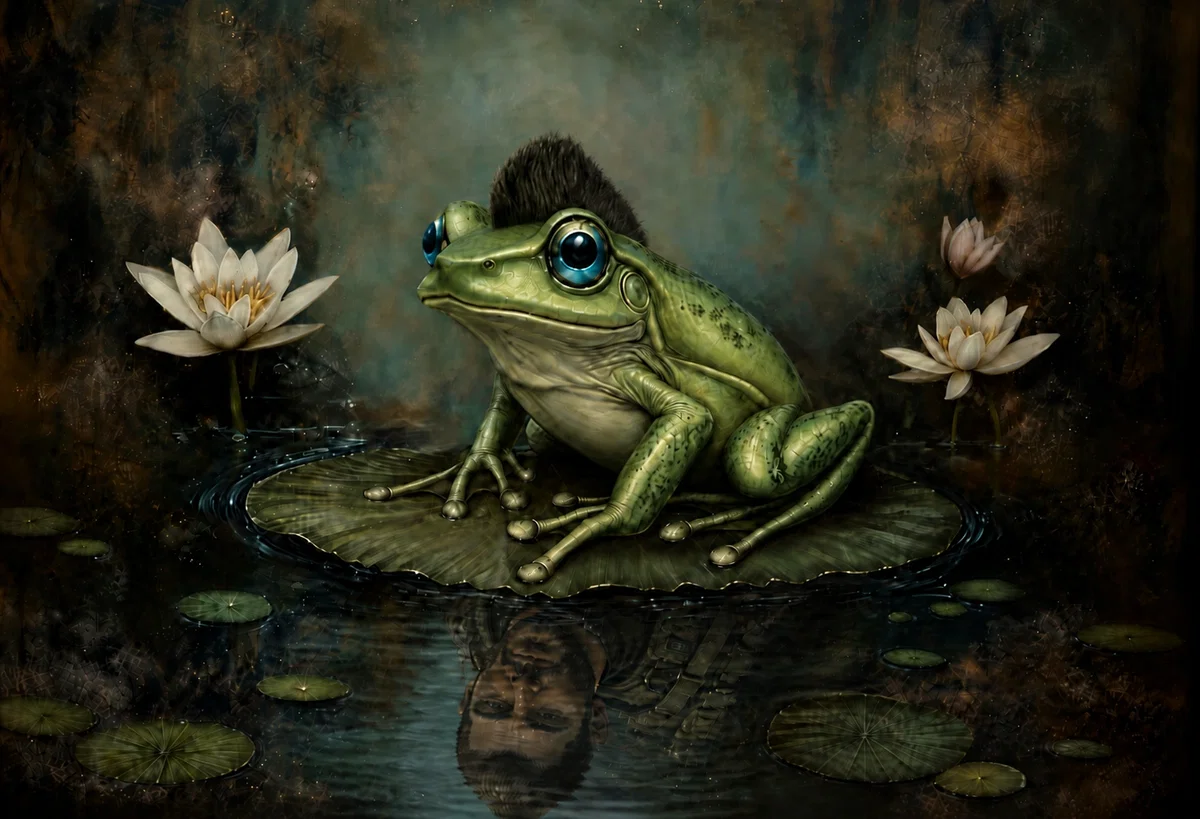
In a drowned and ordinary town where the sea had come in through the streets and forgotten to leave, there was a soldier who laughed too brightly at fear. He was not a prince, though some who loved him might have said he carried a prince’s foolish courage in him: proud, loyal, handsome in the ruined way of men who have survived too many fires, and beloved by a company of hard-hearted knights who did not know they were knights at all. They wore no shining armor, only wet tactical gear and mud-streaked boots; they carried rifles instead of swords; their kingdom was no kingdom, only the gray machinery of war. Yet they were bound by the old law that all true companions know, whether they name it or not: no one left behind, no life spent cheaply, no frightened soul treated as a number on a page.
The town was not enchanted. It had no secret gates, no singing wells, no cottages full of watchful villagers. It was only a flooded place, sparse and rotting, with broken windows, sagging roofs, crab pots tangled in the gutters, plastic bottles knocking softly against drowned steps, and a few stubborn people still caught in the ruin. Men with guns had hidden there, and so the soldier and his company came through the rain to root them out. But in the lowest part of the town stood an old chapel with water over its floor and a door beneath its chancel, and in that chapel was an old woman gathering what the flood had left behind: trash, torn netting, crab pots, rope, scrap, swollen books, and fragments of things once cared for by hands now gone. She was no queen of a hidden realm, no guardian of a magic village, no storybook hag waiting to trick a hero. She was a scavenger. She was poor. She was tired. She was in the way.
She was also a witch.
She warned the soldier not to go below. He heard her, but fear had already made a drum of his heart. Below the chapel, there were armed men, wounded people, and the possibility of another mistake turning into blood. He was brave, and that made him dangerous. He was warm, and that made him convincing. He was funny, and that made him cruel before he knew he had drawn blood. He was strong, and that made the world too easy to move. First he smiled at the old woman, dressing command as kindness, trying to make her refusal soften under charm. Then he laughed at her warning, because mockery was quicker than doubt. Then he raised his voice, because terror had put its hands around his throat and used him like a bell. Last, when she would not move, he moved her himself. Not violently. Not with hatred. Only efficiently, as soldiers sometimes do when the mission has narrowed the world to a door, a body, and a ticking clock.
That was enough.
The soldier went below and fought brilliantly. The hidden enemies were driven out, the wounded were carried up, and no one died. That mattered, though it did not save him. The old laws do not always require a graveyard before they wake. Sometimes they need only a handprint on an old woman’s sleeve, a laugh where reverence should have been, a voice made into a weapon, and a man too certain that being useful made him right. When the soldier returned to the chapel, soaked and bleeding and ashamed too late, the old woman named his sins back to him one by one: charm, mockery, temper, force. She did not call him wicked. Wicked would have been simpler. She called him brave, bright, loved, and wrong.
Then she cursed him.
The curse did not bloom before his team like a stage trick. No one watched a man become a frog and understood. That mercy was denied them all. Pain took him first, bending him to the flooded stone while his captain barked his name and his teammates reached for him. Then the storm broke open, and the chapel filled with black water. The flood tore him from their hands before the change was finished. They saw him fall. They saw him vanish. They saw only water, debris, torn gear, and the place where John MacTavish had been. Beneath the road, hidden in the dark throat of the drains, the curse finished its work. The soldier’s hands were taken from him. His voice was broken down into croaks. His strength folded into a small, slick, trembling body no one would salute, no one would brief, no one would recognize. He became a frog with storm-dark skin and eyes too blue and too human.
His company searched until duty became cruelty to the living. His captain carried out the torn vest and the dog tags. The masked lieutenant searched until he had to be ordered away. The steady sergeant called his name into rain and smoke. The quiet scout found a glove and nothing more. The scarred operative stared at the drains and knew the scene was wrong, though not yet why. By dawn, the soldier was declared missing. By noon, his name had begun its terrible passage into reports. By evening, his team was mourning him in the careful, broken ways of men who do not know how to grieve without turning grief into work.
But the frog followed.
Through ditch water and storm drains, beneath vehicles and along walls, he found his way to the safehouse where his team had gone. He crept inside cold, filthy, exhausted, and desperate to be known. He saw them lay out the pieces of him on a table. He heard his captain turn sorrow into orders. He heard his friends speak around the hole he had left. He tried to call out, but his voice would not rise. He could croak. He could rasp. He could make the small, ugly noises of a frightened frog lost in a place too warm and too large for it. When they found him, they did not know him. Of course they did not. Soldiers do not believe in fairytales when there are wounds to bandage and reports to write. They saw only a soaked frog that had wandered in from the flood, a scared little creature seeking shelter where grief had already taken up too much room.
So they put him outside.
Not cruelly. That was the blade. They were gentle. They wrapped him in a towel. They spoke softly. One of them told him he had the wrong house. Then the door closed between the frog and the men who loved him, and John MacTavish sat beneath the overhang in the rain, listening to Task Force 141 mourn him from the wrong side of the wall.
From then on, he lived in the margins of their world. He learned the undersides of doors, the warmth beneath generators, the echo of boots through floorboards, the smell of coffee, gun oil, wet wool, smoke, and exhaustion. He learned which footsteps belonged to Price, which silence belonged to Ghost, which careful movement belonged to Roach, which steady voice belonged to Gaz, and which pauses meant Mutt had sensed something no one else wanted to name. He could not fight as he once had, but he could still help. He could slip through drains no man could enter, croak warnings from flooded tunnels, drag tiny pieces of wire away from puddles, shift what small things he could reach, and leave signs so subtle they were almost dismissed as luck.
And beneath every small act, the curse kept teaching him.
Charm had made him believe kindness could be used as a key. Now he had to ask for mercy in a voice no one understood. Mockery had made him laugh at what another soul feared. Now he heard laughter above him and never knew whether he was beloved or ridiculous. Temper had made his fear loud enough to wound. Now his cries were too small to stop a hand, a boot, a closing door. Force had made him move someone powerless aside. Now he lived at the mercy of hands larger than his whole body.
This is the tale of the soldier who became a frog, not because he was evil, but because he was good in ways that had gone sharp under pressure. It is the tale of a team who believed their brother missing while he followed them through rain and ruin, close enough to save them, too small to be seen. It is the tale of a witch who did not need a magic village to speak an old punishment into a modern war. And it is the tale of what happens when a man who once thought mercy could come after the mission must learn, in the mud beneath everyone’s feet, that mercy delayed may still arrive too late.
Well, Voidlings
I hope you brought your tissues, because this frog can't be cured with just a kiss from a princess.
This is based off the original fairytale where he needs to learn to be everything he hides under jokes and laughter and movement.
There is no sure fire way to know if he will be cured of his curse, he may be stuck as a frog if he can't learn.
CW: Soap MIA(Not really he's just a forg), Grief, Soap's personality being used against him, loneliness, forg, unwilling transformation, perceived loss of a friend, Call of Duty content, General LLM Tomfoolery
Created May 2
Updated May 16
Published May 16