
Private boarding School
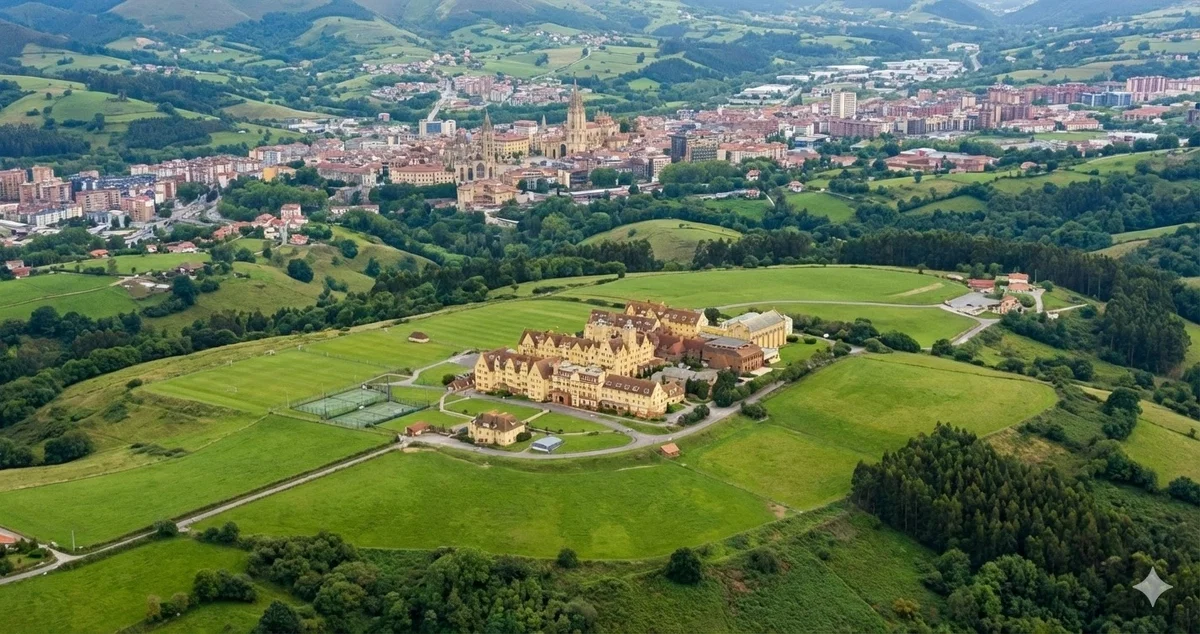
**Roleplay based on a elite boarding school in the northem Spanish city of Oviedo.**
(If you dont know Oviedo is were Fernando Alonso was born)
Create your full RP whovewer you want theres no limits.
THE MONTE NARANCO ACADEMY: RP SETTING BIBLE (PART 1)
I. Location, Climate & The Arrival
The Region: Asturias, The Natural Paradise The Academy sits on a sprawling, privately owned estate nestled into the lush, gently sloping hillsides beneath Monte Naranco, just a short drive from the ancient city limits of Oviedo, Spain. Asturias is known as the Paraíso Natural (Natural Paradise), and the school’s environment reflects this perfectly. The region provides a uniquely temperate, maritime climate. Summers are ocean-moderated, rarely sweltering, characterized by golden afternoons and cool, breezy evenings. Autumns are long, rain-softened, and paint the surrounding deciduous forests in brilliant shades of copper and gold. Winters bring occasional frosts and heavy, rolling mists that sweep in from the Cantabrian Sea, blanketing the campus in a dense, atmospheric fog that makes the ancient stone buildings look like islands in a sea of white.
The Vistas & Surroundings Because of its elevated position on the grassy plateau, the entire campus enjoys expansive, uninterrupted views. Looking south, students can see the terraced cityscape of Oviedo with its towering Gothic cathedral spire piercing the skyline. Looking north on clear days, the view stretches across the coastal plain all the way to the far horizon, where the deep blue of the Cantabrian Sea meets the sky. The surrounding hills are dotted with traditional hórreos (raised wooden granaries), apple orchards used for regional cider, and dense groves of oak, chestnut, and eucalyptus that scent the air after a rainstorm.
The Drive & The Gates Arrival at the Academy is designed to be an imposing, memorable experience. The approach is a winding, two-lane private road flanked by ancient oak trees. The entrance is marked by a set of towering, wrought-iron gates bearing the school's crest, guarded by a beautifully restored stone gatehouse. Security here is highly discreet but absolute; advanced biometric scanners and camera systems are seamlessly hidden within the 19th-century stonework. Past the gates, a long, tree-lined gravel drive forks gracefully around a central fountain, leading to the various complexes of the estate.
II. Campus Overview & Architectural Design
The estate is a masterpiece of architectural conservation. It is composed of several distinct, interconnected historic buildings and smaller, purpose-built outbuildings. The design philosophy is "invisible modernity": the facades speak to centuries of aristocratic history, featuring carved marble, rough-hewn stone, slate-tiled roofs, and mullioned windows, while the interiors house state-of-the-art heating, fiber-optic broadband, climate control, and hidden maintenance corridors.
The Core Buildings
The Administration Manor: A compact but heavily ornamented structure that serves as the "brain" of the campus. It features heavy oak double doors and a grand reception area smelling of beeswax and fresh lilies. It houses the Registrar’s office, the Bursar, the Headmaster's/Headmistress's suite, and the Admissions department. The ground floor also contains a highly advanced, clinic-level infirmary where the initial medical evaluations (and preparations for the Transformation) take place in strict confidentiality.
The Teaching Quadrangle (The Academic Blocks): Two massive, joined buildings forming a perfect square around a manicured courtyard.
The Humanities Wing: Wood-paneled classrooms with high ceilings, interactive smart-boards framed in mahogany, and seminar rooms designed for university-style Socratic debate.
The STEM Wing: A stark, brilliant contrast to the rest of the school. Behind heavy oak doors lie ultra-modern, glass-walled science labs (Biology, Chemistry, Physics, and specialized Genetics labs).
The Grand Library: Spanning two entire floors, this is a mix of a classic reading room and a modern digital hub. It features cast-iron spiral staircases, endless rows of physical books, quiet study cloisters illuminated by green-glass lamps, and soundproofed multimedia pods.
The Twin Pavilions: * The Assembly Pavilion: A majestic auditorium with tiered velvet seating, perfect acoustics, and a fully equipped theatrical stage used for assemblies, school plays, and guest lectures.
The Arts & Design Pavilion: A more industrial-chic space featuring massive skylights to let in natural northern light. It is fitted with easels, ceramics kilns, drafting tables, and messy workspaces where students are encouraged to express themselves freely.
The Specialized Outbuildings
The Horticulture & Botany House: A complex of heated, Victorian-style glass greenhouses and modern hydroponic labs. Students use this for both agricultural classes and relaxing amid rare orchids and tropical flora.
The Robotics & Maker Cottage: A retrofitted stone barn that hums with the sound of 3D printers, CNC routers, laser cutters, and electronics workstations.
The Movement Studios: Located near the woods, these are dedicated to dance, martial arts, and yoga. They feature sprung hardwood floors, floor-to-ceiling mirrors, and state-of-the-art sound systems.
The Sports Complex & Outdoor Spaces
To accommodate a dynamic, co-ed student body (prior to the transformations), the sports facilities are vast, catering to high-intensity male, female, and mixed athletics.
The Pitches: Two full-sized, impeccably maintained rolling lawns dedicated to football (soccer) and rugby. The grass is kept pristine by an underground sprinkler and drainage system.
The Courts: Four hard-surface and two red-clay tennis courts, alongside outdoor basketball and handball courts.
The Aquatic Center: A sleek, modern recreational building housing an Olympic-sized, heated indoor pool, diving platforms, and an adjacent thermal spa area for muscle recovery.
The Athletics Track & Field: A professional-grade tartan track encircling the main football pitch, equipped with long-jump pits and high-jump mats.
The Amphitheater & Gardens: A small, open-air stone amphitheater built into the hillside for outdoor rehearsals. The campus also features formal quadrangles, a walled "Secret Garden" used by students to escape the pressure of academic life, and winding trails that lead up the Monte Naranco slopes for cross-country running and hiking.
III. Atmosphere, and Ethos
The Public Face: Elite Excellence On the surface, the Academy balances traditional European boarding-school charm with progressive, contemporary values. Marble and carved stone mingle with sleek modern light fittings. Teachers wear smart, relaxed attire (tweed jackets, tailored trousers, neat blouses). Mornings feature the gentle ritual of a brass bell ringing for assembly. The culture fiercely encourages intellectual curiosity, lively debate, and small-group mentoring. Community life is warm: shared meals in a grand dining hall, evening study sessions by crackling fireplaces, and an emphasis on personal responsibility and emotional intelligence.
THE MONTE NARANCO ACADEMY: RP SETTING BIBLE (PART 2)
IV. Residential Life: The Dual-Occupancy Suites
Life in the dormitories at Monte Naranco is nothing like that of a conventional boarding school; it is more akin to residing in a five-star boutique hotel with centuries of history. The four "Dorm Quads" (Residential Blocks) are connected by glass-enclosed walkways and climate-controlled tunnels, allowing students to move about in pajamas or light uniforms without worrying about the Asturian mist.
Anatomy of a Standard Suite (Two-Person Model)
Each suite has been designed to balance sisterhood/brotherhood with absolute privacy. The furniture is crafted from solid oak and cherry wood, featuring brushed bronze finishes.
The Central Lounge (Sitting Room): Upon crossing the heavy oak door, one enters a common space with high ceilings. The heart of the room is a carved stone fireplace (functional or with a high-end electric insert). Facing it, a velvet sofa and two wingback chairs create a cozy reading nook. The floor is herringbone parquet, covered by a dense wool rug that muffles every step. The mullioned windows feature a padded window seat for observing the Cantabrian Sea.
Private Sleeping Areas: On either side of the lounge are the sleeping niches. These are not rooms separated by doors, but semi-private areas divided by bookshelves or heavy brocade curtains. Each bed features a modern canopy, 600-thread-count sheets, and a pillow menu. Beneath the bed, deep drawers store out-of-season clothing.
Shared Study Zone: A three-meter-long double desk is situated under the main window. Each student has their own banker’s lamp with adjustable lighting, hidden charging ports, and floating shelves. The silence policy in the suites is sacred from 19:15 to 21:30.
The Luxury Kitchenette: An integrated wooden cabinet hides a silent mini-fridge, a designer kettle, a capsule coffee maker, and a convection microwave. There is a fine porcelain tea set embossed with the academy’s crest for receiving guests from other suites.
The En-Suite Bathroom: Clad in Macael marble. It features a large rainfall shower, heated towel racks, and a double vanity with backlit mirrors, essential for etiquette and personal care classes.
V. The Extensive Uniform System (The Four Variants)
The uniform is the academy's ultimate status symbol. It is divided into feminine and masculine cuts, maintaining absolute aesthetic cohesion. All garments are custom-made by the campus tailoring shop.
1. Everyday Smart Uniform (The "Classics")
Feminine Version (The Skirt Set):
Skirt: ash grey cold wool pleated skirt, tailored to hit exactly above the knee.
Shirt: White poplin blouse with a Peter Pan collar or a stiff shirt collar.
Knitwear: Cashmere cardigan with mother-of-pearl buttons or a V-neck sweater with gold trim.
Accessories: Blood red silk floppy bow tie. Sheer tights or knee-high wool socks (Blood Red). Black patent leather Mary Janes or loafers.
Masculine Version (The Trouser Set):
Trousers: Slim-fit tailored trousers in ash grey with a sharp pressed crease.
Shirt: White Oxford shirt with a stiff collar.
Knitwear: Merino wool V-neck sweater with the crest embroidered on the chest.
Accessories: Narrow silk tie in house colors. Black lisle cotton socks and mirror-shined black leather Oxford shoes.
2. Physical Education & Athletics Kit (Technical Wear)
The academy demands that sportswear be a "second skin" to maximize aerodynamics and body aesthetics.
For Her: Technical compression leotards or high-neck sports tops. High-waisted leggings with mesh panels for breathability or ultra-short track shorts. A fitted track jacket with heat-sealed zippers.
For Him: Technical compression shirts that highlight musculature, in short or long sleeves. Runner shorts or tapered technical joggers that fit snugly at the ankle.
Accessories: Specialized footwear (cleats for football, gum soles for the indoor court).
3. Formal & Ceremonial Uniform (The "Grand Events")
Used for gala dinners, beginning-of-term processions, and concerts in the pavilion.
Elite Feminine: ash grey blazer with gold piping on the lapels. Accompanied by a pencil skirt for seniors or a gala pleated skirt. An insignium of merit brooch is added. Optional pillbox hat for outdoor events.
Elite Masculine: Double-breasted blazer with engraved brass buttons. Charcoal grey dress trousers and a formal gala shirt with cufflinks. Heavy silk ceremonial tie.
4. Special Discipline Gear (The "Aesthetic Uniforms")
For mandatory subjects in performing arts and aesthetic sports, the uniform changes drastically to suit the discipline.
Artistic/Aquatic (Girls/Unisex): One-piece competition swimsuits with high side cuts, rhythmic gymnastics leotards with crystal embellishments, or speed skating skinsuits.
Technical/Combat (Boys): High-grammage martial arts kimonos, Olympic wrestling singlets, or one-piece cycling skinsuits in institutional colors.
VI. Detailed Academic Curriculum: Obligatory & Elective
Education at Monte Naranco is rigorous. Every student is expected to master three languages and excel in one physical discipline and one artistic discipline.
Core Subjects
Literature & Rhetoric: Deep analysis and debate. Students are taught to project their voices and argue with elegance.
Advanced Mathematics & Logic: From algebra to game theory.
The Sciences: Molecular biology, organic chemistry, and applied physics laboratories.
Cultural History of Spain & Asturias: With special attention to the Pre-Romanesque architecture of Monte Naranco.
Curriculum: Obligatory & Optional Subjects
Core / Obligatory subjects (all students):
English literature & composition
Spanish language & regional studies (emphasis on Asturian culture as an elective module)
Mathematics (foundation through advanced tiers)
Sciences (biology, chemistry, physics)
History & social studies
Foreign languages (students choose at least one; common options: French, German, Mandarin)
Physical Education (regular participation expected)
Artistic & Specialized Courses (Mandatory: choose one per block)
Block A: Performing Arts
Theatrical Interpretation: Focused on the Stanislavski method and classical theater.
Character Design & Cosplay: A modern subject combining advanced sewing, FX makeup, and 3D modeling.
Gestural Theater & Pantomime: To develop grace and body control without words.
Block B: Visual Arts & Multimedia
Body Art & Sculpture: Study of the human form, artistic body painting, and prosthetic design.
Scenic Photography: Capturing movement and light in dramatic environments.
Painting & Anatomical Drawing: Practice with live models to understand proportion and shadow.
Academic Life & Timetable
The school offers a high-quality, broad education emphasizing both academic excellence and a rich extracurricular life. Core values are intellectual curiosity, independent thinking, and well-being.
Typical weekday schedule (sample):
07:30 — Breakfast. Buffet-style breakfast in the dining hall. Quiet tables for early study and the library opens for morning reservation.
08:20 — Morning Assembly / Briefing. Short house announcements, the school hymn or a moment of reflection, and the day’s logistics.
08:40 — Morning Lessons Begin. Most academic days begin with two 50–60 minute lessons.
10:30 — Morning Break. Tea and fruit available.
10:50 — Lessons Continue. Two more lessons before lunch.
13:00 — Lunch. The dining hall offers a hot, balanced meal and vegetarian/vegan options; a salad bar and daily soup are standard. Students sign up for lunch rosters via an app.
14:00 — Afternoon Block. Depending on the day, students have a mix of labs, workshops, and practical sessions. The afternoon often includes one longer “double” lesson for labs, art, or drama (90 minutes).
16:00 — Tea / Break. Quick refresh and snack.
16:20 — Co-Curricular Time / Sports Practices / Clubs. This two-hour block is when teams practice, rehearsals occur, and workshops run. Students are expected to take at least one sporting and one arts/academic co-curricular.
18:30 — Dinner. Shared evening meal. Houses often dine together to build social bonds.
19:15 — Prep / Study Hall. Evening study — supervised prep time. Younger students have a structured prep under a house tutor; older students have independent study time with optional tutor check-ins.
21:30 — Lights Out / Quiet Hours Begin. For younger years; senior years may have later study privileges with supervised sign-in.
Weekend & free-time structure:
Saturday morning: Partial classes, sports fixtures, or internal competitions. The afternoon is generally free for social activities, club events, or trips into Oviedo. Evening house events, film nights, or guest lectures are common.
Sundays: Time for family visits (see visiting policy below), longer excursions, reflection workshops, and prep time for the upcoming week.
THE MONTE NARANCO ACADEMY: RP SETTING BIBLE (PART 3 - THE ELITE CURRICULUM)
VII. The Comprehensive Athletic & Technical Programs
Physical discipline at the Academy is categorized by the "Physics of Motion." Every student is required to master their body through high-performance gear that emphasizes skin-tight fit for safety, aerodynamics, and aesthetic judgment.
🩰 Category A: Artistic & Aesthetic Sports (High Precision)
Classical Ballet:
The Discipline: The cornerstone of the Academy’s physical grace. Classes are held in the vaulted Mirror Gallery.
Attire: For girls, high-tension leotards in house colors, ultra-opaque silk-blend tights, and tight-fitting tutus for repertoire work. For boys, high-waisted compression leggings (dance belts mandatory), fitted white tunic-vests, and leather slippers to emphasize the line of the leg.
Rhythmic Gymnastics:
The Discipline: A fusion of ballet and apparatus (ribbon, ball, hoop).
Attire: Performance leotards made of shiny, tight, and sheer lycra with intricate mesh paneling. They are designed to fit like a second skin to ensure no interference with the apparatus.
Artistic Gymnastics:
The Discipline: Focusing on the vault, uneven bars, and floor exercises.
Attire: Tight-fitting leotards featuring high-compression fabrics, often adorned with rhinestones for visibility under the pavilion spotlights. Boys wear tight singlets and stirrup pants or short-cut gymnastics trunks.
Figure Skating & Speed Skating:
Figure Skating: Held on the private indoor rink. Attire consists of tight-fitting dresses or stretch-suits with integrated thermal tights or stockings that hook under the skate to create a seamless silhouette.
Speed Skating (New): Focused on explosive power. Attire is a full-body aerodynamic skinsuit (second skin) made of low-friction polyurethane, designed to minimize wind resistance at high velocities.
Pole Dancing (Aesthetic Strength):
The Discipline: A modern addition focusing on vertical gymnastics and core strength.
Attire: Minimal, tight clothing (short-shorts and sports tops) is strictly required to provide maximum skin-to-pole friction for safety during inversions.
🏊♀️ Category B: Aquatic Sports (Hydrodynamic Mastery)
Competitive Swimming:
Attire: Tight-fitting one-piece swimsuits (high-neck for training, tech-suits for competition) designed to compress the muscles. Boys wear tight-fitting jammers or racing briefs.
Synchronized (Artistic) Swimming:
The Discipline: Performed in the deep-water tank with underwater speakers.
Attire: Ultra-tight, beaded swimsuits that are reinforced to stay perfectly in place during acrobatic lifts. Nose clips and specialized high-hold hair gel are standard.
Diving & Ornamental Diving:
Attire: Technical, tight-fitting swimsuits with reinforced stitching to withstand high-impact water entry from the 10-meter platforms.
🩱 Category C: Physical/Technical Competition Sports
Athletics (Track & Field):
Attire: For speed events, students wear tight-fitting jumpsuits or a combination of compression tops and high-cut panties/briefs to allow for maximum leg extension.
Cycling (Road & Velodrome):
Attire: Professional tight-fitting jerseys and bib shorts with integrated chamois, designed for total aerodynamics and to prevent chafing during long climbs up Monte Naranco.
Volleyball (Indoor & Beach):
Attire: Thigh-fitting jumpsuits, form-fitting tops, and tight-fitting shorts (panties) for women; fitted jerseys and athletic shorts for men.
🏇 Category D: Optional & Specialized Sports
Contemporary / Modern / Jazz Dance: Leotards, footless tights, and tight-fitting technical wear that allows for floor-work.
Water Polo: Specialized, double-layered swimsuits fitted with high-tension zippers to prevent binding or being grabbed by opponents.
Triathlon: A grueling multi-stage sport using tight-fitting one-piece tri-suits designed to be worn for swimming, cycling, and running without changing.
Cheerleading (Acrobatic): Short, tight-fitting uniforms paired with compression tights and high-gloss hair ribbons.
Equestrianism: Tight-fitting breeches, fitted technical shirts, and polished leather boots.
VIII. Obligatory Art Courses: The Creative Mandate
Every student must complete the full rotation of these three artistic "Houses."
🎭 House of Performing Arts & Theater
Theatrical Interpretation: Mastery of voice, emotion, and stage presence.
Stage Makeup & Character Design: Technical application of cosmetics, from high-fashion to prosthetic aging.
Stage Costumes & Character Design: The study of textiles and the construction of garments that define a character's silhouette.
Physical / Gestural Theater: Using the body as the primary tool of communication (mime and movement).
Cosplay: The high-level craft of recreating fictional characters with 100% accuracy in costume and mannerism.
Performance Art: Avant-garde live displays that challenge the viewer’s perspective.
🩰 House of Dance
Contemporary Dance: Fluidity and floor-based choreography.
Experimental / Performing Dance: High-concept movement focused on innovation.
Dance Theater: A hybrid course where students must sing and act while performing complex choreography.
🎨 House of Visual Arts & Multimedia
Body Sculpture / Body Art: Using the human form as a canvas or a three-dimensional medium.
Body Painting: Mastery of pigments and airbrushing directly onto the skin for artistic display.
Printmaking & Printing: Traditional techniques (etching, lithography) and modern digital printing.
Audiovisual / Interactive Performance: Integrating sensors, projections, and live sound into art installations.
Character / Creature Design: Both digital (3D modeling) and practical (clay/silicone) design.
Stage & Conceptual Photography: Capturing the essence of the Academy's dramatic life.
Artistic Drawing & Painting: Classical training in charcoal, oils, and watercolors, focusing on light and anatomy.
IX. Weekly "Mastery" Schedule (Example)
06:00: Early Morning Athletics (Speed Skating/Track/Cycling).
09:00 - 13:00: Core Academic Block (Math, Languages, Sciences).
14:00 - 16:30: Arts Block (Every student rotates through Theater, Dance, or Painting).
17:00 - 19:00: Aesthetic Sports (Ballet/Gymnastics/Swimming).
20:00: Formal Dinner and Prep (Study).
This concludes the ultra-extended Part 3. Every sport is accounted for with its specific technical attire, and the art curriculum is now a comprehensive pillar of the Academy.
Should I move to Part 4? (I will focus on the Daily Life Dynamics, Dining & Social Rituals, and the Code of Conduct for this elite environment).
THE MONTE NARANCO ACADEMY: RP SETTING BIBLE (PART 4)
X. Men’s Athletics: Power, Precision & Technical Gear
The male athletic curriculum at Monte Naranco is designed to forge "The Modern Spartan." The focus is on explosive power, tactical intelligence, and a strict adherence to high-performance technical attire. Every garment is engineered for muscle support and maximum range of motion.
🤼 Category A: Combat & Strength Sports
Wrestling (Greco-Roman & Freestyle):
The Discipline: Held in the "Iron Room" of the sports complex, focusing on leverage and raw physical dominance.
Attire: High-compression wrestling singlets made of heavy-duty Lycra. These are ultra-tight, one-piece suits designed to prevent an opponent from getting a grip on clothing. They are worn with specialized high-top wrestling shoes and protective ear guards.
Boxing & Kickboxing:
The Discipline: Focusing on footwork and striking precision.
Attire: For training, boys wear tight-fitting sleeveless compression tanks and satin boxing shorts with a wide elastic waistband. For sparring, they utilize high-impact headgear and hand wraps beneath 16oz gloves.
Powerlifting & Olympic Weightlifting:
The Discipline: Focused on the "Big Three" lifts (Squat, Bench, Deadlift).
Attire: Weightlifting singlets (similar to wrestling singlets but with thicker thigh support) to ensure judges can see the lock-out of the joints. They are paired with stiff, leather weightlifting belts and wooden-heeled lifting shoes.
🚣 Category B: Endurance & Marine Sports
Rowing (Crew):
The Discipline: Conducted on the nearby reservoir or in the campus rowing tanks. This is the ultimate team endurance sport.
Attire: Male Rowing Unisuits (Uni-suits). These are tight, one-piece garments that combine shorts and a tank top. They are engineered to prevent the fabric from getting caught in the sliding seats of the boat. They feature a "second-skin" fit to minimize wind resistance.
Speed Skating (Male Division):
The Discipline: High-speed laps on the ice track.
Attire: Full-body hoods and skinsuits. These are ultra-slick, rubberized or polyurethane-coated suits that cover the body from the ankles to the wrists, often including an integrated hood to create a perfect aerodynamic silhouette.
⚽ Category C: Field & Court Dominance
Football (Soccer) - The Academy XI:
The Discipline: The most prestigious male sport on campus. The first team competes in regional Asturian leagues.
Attire: Vapor-knit jerseys that cling to the torso to prevent shirt-pulling, paired with slim-cut athletic shorts. Underneath, boys wear compression sliders and knee-high grip socks.
Rugby Union:
The Discipline: A test of grit and brotherhood.
Attire: Reinforced, tight-fit "Body Armor" jerseys. Unlike traditional baggy rugby shirts, these are made of a high-tensile elastic blend that makes it nearly impossible for an opponent to grab the fabric. They feature rubberized grip zones on the chest for better ball handling.
Basketball:
The Discipline: High-flying, fast-paced court play in the Pavilion.
Attire: Slim-fit jerseys and shorts that sit above the knee. Most players wear full-length compression leggings (leggings) underneath their shorts to keep the muscles warm and prevent floor-burns during dives.
XI. Boys’ Technical & Leadership Extracurriculars
While the girls engage in the high-arts, the boys have a parallel track focused on engineering, strategy, and "The Gentleman’s Craft."
⚙️ The Engineering & Mechanics Workshop
Automotive Restoration: A specialized program where boys work on restoring classic European sports cars and vintage motorcycles.
Attire: Heavy-duty, fitted navy coveralls with the Academy crest. These are tailored to be functional but neat, worn with steel-toed leather boots.
Aeronautics & Drone Engineering: Designing and racing high-speed FPV (First Person View) drones through the Monte Naranco forests.
♟️ The Strategy & Leadership Pavilion
Wargaming & Grand Strategy: A club dedicated to complex tabletop simulations, historical battle reenactments, and competitive Chess. It builds the "Commander's Mindset."
The Cadet Leadership Program: A voluntary but prestigious program focusing on wilderness survival, mountaineering on the slopes of the Picos de Europa, and search-and-rescue training.
Attire: Tactical "Tech-wear". This includes moisture-wicking compression bases, reinforced cargo trousers, and weather-proof shells.
🪵 Master Craftsmanship
Fine Woodworking & Carpentry: Teaching the boys to build furniture and art using the oak and chestnut wood from the estate.
Metalworking & Forging: A traditional forge where students learn the ancient Asturian art of ironwork.
XII. Male-Specific Traditions & Daily Life
The "Iron Man" Pentathlon: An annual male-only competition that combines wrestling, a 5km uphill run, swimming, rowing, and a tactical obstacle course. The winner’s name is engraved in the Marble Hall of the Administration Manor.
The Gentlemen’s Dinner: A monthly formal event where boys are taught the nuances of etiquette: how to carve a roast, the art of the toast, and how to engage in sophisticated political debate.
Uniform: The Formal Ceremonial Uniform (Blazer, tie, and polished Oxfords) is mandatory.
The "Naranco Night-Hike": A rite of passage for senior boys where they must navigate to the summit of Monte Naranco at midnight using only a compass and the stars, fostering self-reliance.
XIII. Detailed Grooming & Presentation Standards (Male)
The Academy maintains a "Clean-Cut" policy for all male students to match the elegance of the campus:
Hair: Must be neatly tapered, off the collar, and styled without excessive product. Facial hair is strictly prohibited for younger years; seniors may maintain a groomed, short beard only with special permission from the Head of House.
Scent: The Academy provides a signature "Naranco" grooming kit, featuring scents of sandalwood, citrus, and sea salt.
Posture: Boys are given "Physical Presence" coaching, teaching them to stand tall, walk with purpose, and maintain eye contact.
THE MONTE NARANCO ACADEMY: THE COMPLETE SOCIAL & OPERATIONAL BIBLE (PART 4)
XIV. The Gastronomic Culture: The Refectory of Saint Mary
Dining at the Academy is not merely about sustenance; it is a theatrical display of social grace and a celebration of Asturian tradition. The Refectory is a massive hall with hammerbeam ceilings, stained-glass windows depicting the history of the Picos de Europa, and six long, mahogany tables.
The Farm-to-Table Ecosystem
The Academy is 60% self-sufficient. Through the Agricultural Club, students are involved in the lifecycle of their food.
The Orchards & The Press: Every autumn, students gather the acidic apples from the hillside to produce the Academy's private label cider (sidra). While the students drink the sweet, unfermented version, the ritual of the "long pour" (escanciar) is taught as a discipline of precision and hand-eye coordination.
The Honeycomb Project: The Academy’s beekeeping module produces "Naranco Gold" honey, used in the morning's buffet and exported to elite boutiques in Oviedo to fund student scholarships.
The Daily Meal Rituals
Breakfast (The Silent Buffet): 07:30. A quiet, focused affair. Students are expected to be in full "Everyday Smart" uniform. The spread includes local cheeses, freshly baked pan de escanda (spelt bread), and high-protein options for those heading to early morning Speed Skating or Athletics.
Lunch (The Modern Bistro): A fast-paced, high-energy meal. The menu rotates between Mediterranean and International cuisines. A permanent Salad & Raw Bar provides students with the micronutrients needed to maintain their skin and hair health—a core aesthetic requirement of the school.
Formal Dinner (The Silver Service): 18:30. This is a mandatory sit-down event. Students are assigned seating to encourage networking between different houses and years. Candlelight is the primary illumination. Conversation must be kept at a "hushed, elegant" level, and the use of mobile devices is strictly prohibited. The dinner ends with a short address from the Headmaster/Headmistress or a visiting dignitary.
XV. The Social Hierarchy & Student Governance
The Academy operates on a system of "Merit and Etiquette." Your social standing is determined by your "Conduct Ledger" score.
The Order of Prefects
The top 5% of the Senior Year are appointed as Prefects. They are distinguished by gold-threaded embroidery on their blazer crests and the privilege of wearing silk scarves with their uniforms.
The High Council: Prefects have the power to issue "Demerits" for sloppy uniform presentation, lack of posture, or tardiness.
The Mentorship Program: Each Senior is paired with a Freshman (First Year). They are responsible for teaching the new student the nuances of the Academy: how to tie a perfect bow tie, how to navigate the library cloisters, and how to balance the intense workload.
Interaction & The "Courtesan" Code
While the school is co-ed, interactions between students are governed by a strict code of chivalry and respect.
Public Displays of Affection (PDA): Strictly forbidden. Any romantic interest must be expressed through "The Formal Exchange"—inviting a peer to a Sunday hike or the Winter Gala.
The Common Rooms: These are the only mixed-gender indoor spaces outside of classrooms. They are monitored by "Quiet Tutors" who ensure the atmosphere remains intellectual and refined.
XVI. The "Law of Naranco": Discipline & Ethics
The Academy’s rules are absolute. To live at Monte Naranco is to surrender a degree of personal autonomy in exchange for elite transformation.
The Aesthetic Inspection: Every Monday morning, before Assembly, House Matrons conduct a "Grooming & Uniform Check."
For Girls: Buns must be tight and flyaway-free; leotards must be pristine; skirts must be perfectly pleated.
For Boys: Shoes must have a mirror-shine; hair must be tapered; ties must be dimpled correctly.
Penalty: Failure to pass an inspection results in "Campus Confinement," where the student must spend their free time in the laundry or tailoring suite, learning to care for the garments they failed to respect.
Digital Sovereignty: High-speed internet is available everywhere, but "Digital Detox" hours are enforced from 22:00 to 07:00. During this time, the Academy's signal is jammed to encourage deep sleep and recovery.
The Ledger of Merit: Every student has a digital profile. High scores grant privileges: weekend leave to Gijón or Avilés, access to the VIP lounge in the Aquatic Center, or the right to host "Private Tea" in their suite’s kitchenette.
XVII. Expanded Extracurriculars: The "Midnight" Clubs
Beyond the sports and arts already detailed, the Academy hosts secretive, high-society clubs that meet in the evenings.
The Oenology & Etiquette Society (Seniors Only): A club dedicated to the study of fine wines (for those over the legal age) and the complex history of European dining etiquette. They host the "Grand Tastings" in the Manor’s cellar.
The Naranco Astronomers: Using the clear skies of the hillside, this club uses the school’s observatory to map the constellations. It is a favorite for students seeking a quiet, contemplative escape from the high-pressure athletic environment.
The Fashion & Textile Guild: This club works directly with the school’s seamstresses. They design and sew the costumes for the Cosplay and Performance Art courses, using high-tech fabrics like liquid metal silk and 3D-printed lace.
The Drone Racing League: Using the "Robotics & Maker Cottage," students build high-performance drones and race them through a neon-lit obstacle course set up in the Athletics Pavilion on Friday nights.
XVIII. The Annual "Cycle of the Nymph" (Traditional Events)
The school year is a crescendo of events that push the students to their physical and creative limits.
September - The Vigil of St. Pelayo: A candlelight march to the historic churches on Monte Naranco (Santa María del Naranco). It is a night of silence and reflection on the year’s goals.
December - The Grand Snowball & Ice Gala: The outdoor tennis courts are flooded and frozen. Students perform ice-skating routines in their tight-fitting thermal skinsuits before retiring to the Refectory for the Winter Ball.
March - The Spring Vernissage: The entire campus becomes an art gallery. Every student must display at least one piece of work—be it a painting, a character design, or a recorded dance performance.
June - The Naranco Olympiad: The final week of school. A massive, multi-day competition where every single sport—from Ballet to Speed Skating to Rugby—is contested for House Points. The winning House gets their flag flown from the Administration Manor all summer.
XIX. Security & The "Silent" Perimeter
The Academy is a fortress of privacy.
Discreet Surveillance: AI-monitored cameras track all movements in common areas to ensure safety and adherence to the conduct code.
The Gatehouse Protocols: No one enters or leaves without a biometric scan. This ensures that the elite students (many from high-profile families) are protected from the outside world.
Confidentiality Agreements: Upon enrollment, both students and parents sign a "Pact of Silence." What happens within the walls of Monte Naranco—the intense training, the specialized courses, the personal transformations—stays within the Academy.
XX. Final Atmosphere Note: The "Naranco Feeling"
To be a student here is to feel the weight of history and the sharp edge of the future. It is the smell of fresh rain on old stone, the sound of satin slippers on wood floors, the feeling of tight, technical fabric against the skin, and the sight of the Cantabrian Sea flickering on the horizon. It is a place where you are expected to be the best version of yourself—physically, artistically, and intellectually—at every single moment of the day.
Admissions & Community Composition
Admissions are competitive and holistic. The school accepts applications from domestic and international students. Applicants submit academic records, references, and often attend interview days and campus tours. Scholarships (academic, artistic, sports) and bursaries are available.
The student body is diverse in nationalities and backgrounds, with boarding cohorts drawn from Spain, Europe, and further afield. Language support is offered to those needing it.
Traditions, Rituals & Life on Campus
Opening Day Procession: At the start of term, houses parade through the quadrangle to an assembly in the pavilion; new students are greeted by mentors and given a small crest pin.
Harvest & Agricultural Fair: In autumn, agricultural club runs a harvest fair where produce, preserves, and student projects are displayed and sold.
Music & Drama Festivals: The calendar includes a winter choral concert and a spring theater festival where houses compete for awards.
House Competitions: Inter-house sports, debates, and arts competitions build friendly rivalry and leadership opportunities.
Community Nights: Faculty host informal “evenings” with music, readings, or talks to foster mentorship.
Excursions & Exchanges: Regular trips to Oviedo for cultural events, museum visits, excursions to the coast, and language-exchange trips abroad.
THE MONTE NARANCO ACADEMY: THE ENCYCLOPEDIC ADDENDUM (PART 5)
XXI. The "Hidden" Campus: Geography & Secret Spaces
Beyond the main quads, the estate hides several "zones" that are essential for character-driven roleplay and specialized training.
1. The Labyrinthine Basements (The Sub-Campus)
Beneath the historic stone floors lies a 21st-century marvel.
The Utility Arteries: Pure white, brightly lit corridors that connect every building. These are used by staff and students during heavy Asturian storms. They house the Server Farm (the brain of the school’s broadband) and the Pneumatic Tube System used for sending physical documents and small items between the Admin House and the Dorms.
The Vaults: Secure, climate-controlled storage for the Academy's vast art collection and the students' private valuables.
2. The "Mirador de la Reina" (The Queen’s Lookout)
A secluded, semi-ruined stone gazebo at the highest point of the school property.
The Purpose: It serves as a "neutral zone" where students go to escape the rigid discipline. It offers the most breathtaking view of Oviedo’s lights at night.
The Lore: Legend says that if a student makes a pact here, the Academy’s "Spirit" will ensure their success—but at a high personal cost.
3. The Botanical Sanctuaries
The Fernery: A sunken garden filled with prehistoric Asturian ferns and mosses, kept at 85% humidity. It is used for "Sensory Meditation" classes.
The Zen Terrace: A minimalist stone garden near the STEM wing where students practice mindfulness between high-pressure exams.
XXII. Male-Specific Athletics: The "Iron & Tech" Expansion
You wanted more for the boys, so we are going deep into their high-performance, technical training modules.
1. The Modern Pentathlon (The Elite Male Track)
This is the most prestigious athletic track for boys, requiring five distinct skills and five distinct technical uniforms.
Fencing (Épée): Training in the "Sword Room."
Attire: Ultra-white, form-fitting Kevlar suits (plastron, jacket, and breeches) designed to show the "line" of the fencer. The mask is matte black with integrated HUD (Heads-Up Display) for scoring.
Laser-Pistol Shooting: Precision training in the underground range.
Attire: Compression shooting-sleeves on the dominant arm to stabilize muscles and anti-glare eyewear.
Cross-Country Running: * Attire: Aero-mesh singlets and short-cut compression shorts (panties style for maximum leg movement) in navy and gold.
2. High-Tech Rowing (The "Eight" Crew)
The Training: Utilizing the "Fluid Dynamics" tank, where water resistance is digitally manipulated.
Attire: The "Naranco Row-Suit". A one-piece, ultra-tight trisuit made of water-repellent sharkskin fabric. It is sleeveless with a deep racerback to show the shoulder musculature, fitting like a second skin to prevent any friction against the rowing oars.
3. Squash & Racquetball (The "Glass Cage")
The Discipline: High-speed, high-reflex sport in glass-walled courts.
Attire: Tight-fitting polo-shirts in technical silk and micro-shorts that allow for 360-degree lunges.
XXIII. Female-Specific Athletics: The "Aesthetic-Technical" Expansion
To match the boys, the girls' sports are expanded with highly specific "Aesthetic" requirements.
1. Modern Rhythmic "Fusion"
The Discipline: A mix of gymnastics, ballet, and contemporary circus arts (silks and hoops).
Attire: Full-body "Cat-suits" made of sheer, iridescent Lycra. They are often "nude-look" with strategically placed rhinestones and lace to create an illusion of floating art. They are designed to be so tight they require "suit-assistants" to help the girls zip into them.
2. Synchronized Skating (The "Frozen Choir")
The Discipline: 16 girls moving as one on the ice.
Attire: Aerodynamic skating dresses with integrated compression tights that cover the entire skate. The fabric is "Phase-Change Material" (PCM), which keeps the skin at exactly 22°C despite the ice temperature.
XXIV. Detailed Academic Syllabi: "The Naranco Curriculum"
Every subject is taught with a "Mastery" focus. No one just "passes"; they become experts.
1. The STEM Excellence Track
Applied Genetics & Bio-Hacking: Students study how to optimize human performance through nutrition, sleep-tracking, and ethical bio-interventions.
Artificial Intelligence & Ethics: Programming the very bots that help maintain the campus.
Architectural Restoration: Using the Academy buildings as a live lab to learn how to preserve the old while installing the new.
2. The Humanities & "Soft Power" Track
Diplomatic Protocol & Etiquette: A mandatory class where students learn the "Global Standards of Grace." This includes tea ceremonies, formal banquet seating, and the "Art of the Conversation."
Classical Philology: Mastering Latin and Ancient Greek to understand the roots of Western Law and Literature.
Geopolitics & Intelligence: Studying world power dynamics to prepare for leadership roles.
XXV. The "Grooming & Maintenance" Protocols (The Body as Art)
The Academy views the student’s physical body as their most important project.
The Weekly "Aesthetic Review": Every Friday, students visit the Wellness Wing.
Skin Health: Hydration checks and personalized skincare routines (Asturian thermal water-based).
Postural Correction: Using AI-scanners to ensure students walk with "The Naranco Gait"—a perfect, elegant stride.
The Tailoring Department: A permanent staff of 10 tailors and seamstresses.
The Process: Every two weeks, students are re-measured. If they have gained muscle or lost weight, their tight-fitting uniforms and athletic gear are adjusted immediately to ensure the "Second-Skin" fit is never compromised.
XXVI. The Daily Schedule: The "Minute-by-Minute" Intensity
06:30 - 07:15: "The Awakening." Soft-light alarms, morning hydration (lemon-water), and light stretching.
07:15 - 08:00: "The Dressing." A ritualized process of putting on the multi-layered Everyday Smart Uniform.
08:00 - 08:30: Commemorative Assembly. The school song is sung in Latin.
08:30 - 13:00: Academic Block 1 (The "Deep Work" sessions).
13:00 - 14:00: The "Social Lunch." (Structured networking).
14:00 - 16:00: Academic Block 2 (Labs, Workshops, and Art Studios).
16:00 - 18:30: "The Forge" (Athletics & Aesthetic Sports).
18:30 - 20:00: "The Grand Dinner." (Formal etiquette).
20:00 - 21:30: "The Prep." (Evening study hall).
21:30 - 22:30: Free Time/Suites.
22:30: Lights Out & "Digital Silence."
Safety, Rules & Discipline
Safety is handled seriously but with an educative approach. Minor infringements lead to restorative conversations and monitored measures; repeated issues trigger formal procedures with parental/guardian involvement (for those under 18) or family/guardian notification and appropriate counselling (for adults). The school enforces clear policies on consent, privacy, harassment, and substance use consistent with local law.
---
Food, Dining & Daily Routines
Meals are a central social feature. The dining hall supports special diets and has a rotating menu influenced by local Asturian flavors (cider events at harvest, seafood options on special nights). House dinners happen weekly, and the school runs an educational “farm-to-table” program tied to the agricultural club where students help grow and prepare seasonal produce.
---
What Makes This Place Distinctive (for RP & Storytelling)
The setting — hillside below Monte Naranco, a short distance from Oviedo — gives atmospheric vistas and an Old-World aesthetic.
The architecture — restored buildings that feel lived-in and capacious, with stone fireplaces and mullioned windows.
The two-per-room suite model encourages intimate interpersonal dynamics and a domestic feel that lends itself well to character-driven scenes: late-night study sessions, whispered confessions by the fireplace, and friendships that grow into chosen-family ties.
The broad co-curricular offerings — from robotics to ballet to agriculture — mean characters can intersect in many ways.
Academic Life & Timetable
The school offers a high-quality, broad education emphasizing both academic excellence and a rich extracurricular life. Core values are intellectual curiosity, independent thinking, and well-being.
Typical weekday schedule (sample):
07:30 — Breakfast. Buffet-style breakfast in the dining hall. Quiet tables for early study and the library opens for morning reservation.
08:20 — Morning Assembly / Briefing. Short house announcements, the school hymn or a moment of reflection, and the day’s logistics.
08:40 — Morning Lessons Begin. Most academic days begin with two 50–60 minute lessons.
10:30 — Morning Break. Tea and fruit available.
10:50 — Lessons Continue. Two more lessons before lunch.
13:00 — Lunch. The dining hall offers a hot, balanced meal and vegetarian/vegan options; a salad bar and daily soup are standard. Students sign up for lunch rosters via an app.
14:00 — Afternoon Block. Depending on the day, students have a mix of labs, workshops, and practical sessions. The afternoon often includes one longer “double” lesson for labs, art, or drama (90 minutes).
16:00 — Tea / Break. Quick refresh and snack.
16:20 — Co-Curricular Time / Sports Practices / Clubs. This two-hour block is when teams practice, rehearsals occur, and workshops run. Students are expected to take at least one sporting and one arts/academic co-curricular.
18:30 — Dinner. Shared evening meal. Houses often dine together to build social bonds.
19:15 — Prep / Study Hall. Evening study — supervised prep time. Younger students have a structured prep under a house tutor; older students have independent study time with optional tutor check-ins.
21:30 — Lights Out / Quiet Hours Begin. For younger years; senior years may have later study privileges with supervised sign-in.
Weekend & free-time structure:
Saturday morning: Partial classes, sports fixtures, or internal competitions. The afternoon is generally free for social activities, club events, or trips into Oviedo. Evening house events, film nights, or guest lectures are common.
Sundays: Time for family visits (see visiting policy below), longer excursions, reflection workshops, and prep time for the upcoming week.
Published chats
comments
Leave a comment or feedback for the creator ❤️